

When comparing the Western literary canon and Indian classics, you’ll find unique themes of identity, justice, and morality. Western works often prioritize individualism, while Indian epics highlight familial and ethical bonds. Colonialism’s impact on Indian literature transformed storytelling, intertwining it with social reform. Despite challenges like Eurocentrism in curriculum, there’s a push for inclusivity in literature education. Exploring these rich traditions can broaden your perspective on global literature’s role in shaping cultural identity. There’s more to uncover.
Key Takeaways
- The Western literary canon is historically grounded in key authors and texts, while Indian classics emphasize spirituality, ethics, and cultural narratives.
- Both traditions explore themes of identity, with Western works focusing on individualism and Indian epics emphasizing familial and ethical bonds.
- Justice is depicted through moral dilemmas in both canons, reflecting different cultural contexts and conceptions of Dharma and social ethics.
- Colonial influences have altered the landscape of Indian literature, creating hybrid forms that challenge traditional narratives and promote resistance.
- Curriculum reform is essential for incorporating diverse literary perspectives, fostering a richer understanding of global literature beyond Eurocentric narratives.
Understanding the Western Literary Canon

The Western literary canon refers to a collection of essential works that have shaped and defined literary quality within Western culture. This canon serves as a benchmark, deriving from a Greek word meaning “measuring rod.” It encompasses texts that greatly contribute to human thought and artistic achievement, focusing mainly on established authors like Shakespeare, Dante, and Tolstoy. Historically, the Bible provided a foundational canon until the Renaissance fostered a parallel set of classics. Over centuries, a rough consensus emerged on key authors like Cervantes and Goethe. Selection criteria center on aesthetic quality and influence, but debates regarding representation, particularly concerning the dominance of “dead white males,” have intensified since the 1960s. Consequently, the canon remains a dynamic entity subject to ongoing revision, reflecting the changing dynamics of society as new voices and perspectives are considered. Engaging with the canon may also enhance one’s critical thinking skills, allowing for a deeper understanding of differing viewpoints. This process can be particularly valuable when evaluating bias in information within non-fiction literature, as it promotes a more discerning reading approach.
Key Characteristics of Indian Literary Traditions
Indian literary traditions are rich and diverse, showcasing a blend of religious, philosophical, and cultural influences that have evolved over millennia. These traditions are marked by key characteristics, reflecting a deep intertwining of spirituality and creativity. Additionally, bibliotherapy illustrates how literature can be a transformative medium for emotional well-being. Engaging with these literary traditions often promotes lifelong reading, which can enhance cognitive function and mental agility.
| Characteristic | Description | Examples |
|---|---|---|
| Religious Foundation | Rooted in piety and devotion, emphasizing liberation. | Vedas, worship of Vach |
| Epic Tradition | Epic narratives reflecting historical epochs. | Ramayana, Mahabharata |
| Devotional Movements | Poetic expressions of personal and mystical devotion. | Bhakti and Sufi poetry |
| Philosophical Depth | Exploration of existence and ethics. | Didactic texts on various topics |
These elements create a profound legacy, making Indian literature a unique and essential part of global literary heritage. Additionally, the Vedas are considered the oldest known literature in India, embodying a tradition of spiritual depth and insight.
The Influence of Colonialism on Indian Literature
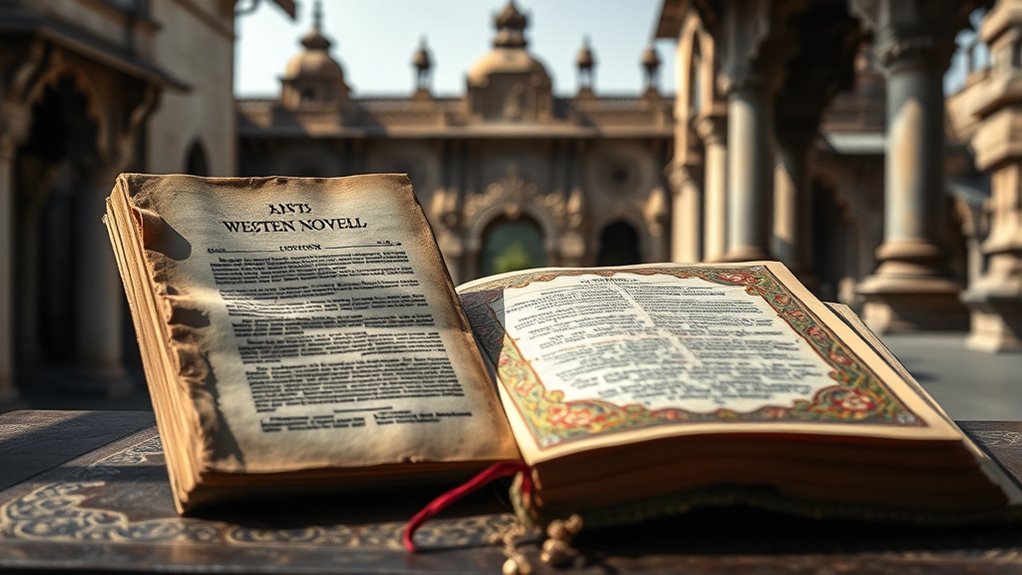
While the impact of colonialism on Indian literature is profound, its effects can be seen in various dimensions, from language to themes. English became a medium of instruction, marginalizing indigenous languages like Sanskrit and Tamil. This led to hybrid forms where writers, like Toru Dutt, used English to assert their national identity. Western literary forms — such as novels and essays — transformed Indian storytelling, evident in works by Mulk Raj Anand and Salman Rushdie. Literature also focused on themes of identity, resistance, and social reform, addressing issues like caste discrimination. The enduring benefits of re-reading beloved texts can illuminate these evolving narratives and enhance our understanding of cultural identity. The lasting impacts of colonial rule are reflected in the blending of traditional and Western elements, creating a rich tapestry of narratives that engage with both cultural identity and aspirations for equality. Moreover, literature serves as a vehicle for understanding diverse faiths, amplifying the dialogues around cultural identity and societal issues. Even post-independence, colonial legacies remained, influencing contemporary narratives and maintaining a dialogue about cultural identity and aspiration for equality.
Comparative Analysis of Western Classics and Indian Epics
When you compare Western classics with Indian epics, you’ll notice profound cultural significance and heritage woven into both. Themes of identity and justice resonate throughout these narratives, reflecting their societies’ values and struggles. Understanding these connections can deepen your appreciation for how each tradition addresses universal human experiences. The Rāmāyaṇa, for instance, serves as a repository of images representing the Hindu nation and illustrates the intertwining of religion and national identity in its portrayal of heroism and societal ideals. Furthermore, engaging with these texts fosters critical thinking that contrasts with the superficial data consumption prevalent in today’s digital world. Reading these works also cultivates continuous learning, which is essential for adapting to the complexities of modern careers.
Cultural Significance And Heritage
Though the Western literary canon is often celebrated for its rich array of themes and philosophical inquiries, the cultural significance of Indian classics offers a profound counterpoint that deepens our understanding of human experience. Indian epics like the Mahabharata and Ramayana serve as cultural touchstones, embedding ethics, duty, and familial bonds within their narratives. These texts reflect a shared historical heritage, illustrating the interconnections of spirituality and daily life in Indian society. Furthermore, engaging with fiction enhances your ability to improve critical thinking, allowing readers to delve into complex themes presented in both Western and Indian literary traditions. Notably, adopting a polymathic approach to reading can further enhance one’s ability to appreciate and analyze these diverse narratives. In contrast, Western classics emphasize individualism and often explore existential dilemmas. By engaging with both literary traditions, you gain insights into diverse cultural values, shaping a more nuanced worldview. This comparative exploration enriches your appreciation of how literature influences cultural identity and societal values across civilizations.
Themes Of Identity And Justice
Identity and justice stand as pivotal themes within both Western classics and Indian epics, offering rich landscapes to explore moral complexities and personal narratives. In Western literature, works like *To Kill a Mockingbird* highlight racial injustice, while *Middlesex* navigates the intricacies of self-discovery and identity. Conversely, Indian epics like the *Mahabharata* present Dharma-driven justice, where Arjuna’s dilemmas embody personal and social ethics. Characters like Rama during his exile illustrate duty’s weight on identity. Though the methods differ, both traditions emphasize the interplay between justice and personal identity, prompting you to reflect on your values and societal roles, as you grapple with the same themes across diverse cultures. This exploration enriches understanding of global narratives while acknowledging that themes are woven subtly through various story elements, enhancing their depth and resonance.
Impact of Western Literature on Education

When you look at education today, it’s hard to ignore how much Western literature dominates the curriculum. Canonical texts often shape what you read in school, which can overshadow the diverse narratives that reflect a broader cultural heritage. It’s essential to reflect on how this imbalance impacts your learning experience and the preservation of global literary traditions. This imbalance is further compounded by the emphasis on standardized testing, which prioritizes certain literary texts over others, limiting the exposure to a variety of cultural perspectives.
Canonical Texts Influence Curriculum
As educators increasingly navigate the complexities of curriculum design, the influence of canonical Western texts remains a defining factor in shaping educational outcomes. Your choices in literature shape not only student engagement but also their critical thinking skills. Here are three ways canonical texts impact your curriculum:
- Cultural Critique: Many Western texts challenge societal norms, allowing you to explore themes like exploitation and gender stereotypes.
- Historical Significance: These texts provide a foundation for understanding various historical periods, enriching your students’ perspectives. Their importance is further highlighted by the observation that world literature is gaining traction among students in a global context.
- Curricular Flexibility: Despite standardized frameworks, research shows you can still integrate diverse texts, enhancing the learning experience without fully abandoning canonical works.
Western Narratives Dominate Education
Despite efforts to diversify educational curricula, Western narratives continue to dominate the landscape of literature in schools. Courses often feature texts by authors like Dickens and Shakespeare, while voices from diverse backgrounds receive minimal representation. For instance, only 12% of American Literature courses include authors of color. This imbalance persists even in advanced courses, where over 93% of titles in AP English Literature are by White authors. Additionally, a recent consensus among educators pointed out the need for systemic change to ensure broader representation of diverse voices in the curriculum.
| Category | Statistics | Impact |
|---|---|---|
| AP Course Availability | 55% of high schools offering | Limited access to diverse texts |
| Global Academic Language | 75-90% of papers in English | Asymmetrical knowledge systems |
| Literature Representation | 2% of books sold are translations | Marginalizes non-Western voices |
Cultural Heritage Preservation Necessity
While the dominance of Western literature in education has shaped curricula, it is crucial to take into account the necessity of preserving cultural heritage through a more diverse literary representation. Embracing diverse texts not only enriches your understanding of the world but also addresses significant gaps in education.
- Diverse literature improves reading motivation; students engage more genuinely and develop skills. Deep literacy skills are essential for students to critically analyze and appreciate varied cultural narratives.
- Inclusion of LGBTQIA+ narratives boosts reading scores and fosters empathy among students.
- Culturally relevant curricula enhance academic performance, contributing to decreased achievement gaps.
How Language Diversity Shapes Indian Literature
Because India boasts a staggering array of languages, the nation’s literary landscape flourishes with remarkable diversity. This richness not only influences themes and styles but also enhances cross-cultural dialogue. The varying linguistic traditions create a tapestry of literature that reflects regional identities and experiences, evident in works across the 22 scheduled languages. Moreover, India’s linguistic diversity fosters a unique environment where literature evolves simultaneously in multiple languages, enriching the overall narrative fabric of the country. Let’s explore how this diversity manifests in literature:
| Language | Major Themes | Literary Impact |
|---|---|---|
| Hindi | Social Issues | Expanding audience and reach |
| Bengali | Cultural Heritage | Rich scene for adaptations |
| Urdu | Poetry and Romance | Strong diasporic connections |
This linguistic complexity makes Indian literature a fascinating field, inviting global insights while challenging the homogenizing trends often seen in the Western canon.
Main Challenges Hindering Global Literary Canon Inclusion
The vibrant diversity of Indian literature shines a light on how unevenly global literary canons are constructed. Several challenges hinder the inclusion of diverse voices in the canon:
- Eurocentrism: The dominance of Western literature marginalizes non-Western works and perpetuates the idea that other cultures are inferior.
- Publishing Bias: Women and authors of color face significant hurdles in getting published, limiting the range of voices represented in the literary landscape. Canonical texts often overshadow these diverse voices, further reinforcing established narratives.
- Curriculum Inertia: Fear of diverging from traditional texts keeps educators from incorporating diverse literature, leaving students unexposed to essential cultural narratives.
These issues contribute to a global literary canon that’s not reflective of the world’s rich and varied literary contributions.
Strategies for Inclusivity in Literary Education
To create an inclusive literary education, you need to embrace cultural plurality by diversifying your reading list. This means not only including works from various cultures but ensuring those texts represent a broad spectrum of voices and experiences. By doing so, you can help students connect with literature that reflects their identities and worldviews. Moreover, incorporating individualized learning approaches in your teaching can further enhance students’ engagement with diverse literary works.
Embracing Cultural Plurality
While engaging with diverse literary traditions, educators can create a more inclusive classroom by embracing cultural plurality in their teaching strategies. By doing this, you not only validate students’ cultural identities, but also enhance their learning experiences. Here are three effective strategies to contemplate:
- Culturally Responsive Teaching: Infuse students’ cultural backgrounds into your curriculum to affirm their identities and make learning accessible.
- Multicultural Activities: Provide opportunities for students to share their customs and traditions, helping to improve cultural awareness and foster a positive classroom climate. Positive intergroup contact often results from such interactions, further enriching the educational environment.
- Collaborative Learning: Encourage student-led discussions and co-construct knowledge, enhancing engagement and promoting a sense of belonging among all students.
Incorporating these approaches will help create a richer, more interconnected educational experience.
Diversifying Reading List
Engaging with diverse literary traditions naturally leads to the need for a more inclusive reading list in classrooms. You’ll want to expand your selections beyond the typical canon, integrating diverse texts that reflect varied experiences and perspectives. Although 93% of high school English teachers report using diverse literature, many limit it to 50% or less of their reading materials. By actively seeking titles with BIPOC and LGBTQ+ characters, and prioritizing complex representations, you can foster stronger reader identities. Addressing barriers like district mandates and funding is essential; advocate for resources that embrace a diverse range of voices. Ultimately, enriching your reading list benefits students’ engagement and scores, boosting both their reading motivation and comprehension skills. Recent findings indicate that literature diversity in classrooms is increasingly aligning with evolving attitudes among educators.
Lessons From Western and Indian Literary Canons
As we explore lessons from both the Western and Indian literary canons, it’s clear that each offers valuable insights into the complexities of cultural representation and educational practices. Here are three key takeaways:
- Linguistic and Cultural Diversity: The Indian canon highlights the richness of multiple languages, while the Western canon often leans towards a singular narrative, stressing the importance of integrating diverse voices in education. This need for a broader canon is echoed in the push for inclusion of Indic, Sinic, and Islamicate works in contemporary discussions.
- Gender Representation: Both canons reveal challenges in adequately representing women’s contributions to literature, showing a need for curriculum reform to include more diverse authors.
- Institutional Influence: The Western canon’s centralized approach contrasts with India’s fragmented literary landscape, prompting discussions about how institutional frameworks shape what is taught in classrooms.
Exploring Contemporary Challenges in Canon Formation?
Though the landscape of literary canon formation has evolved, contemporary challenges persist in defining what is deemed essential for inclusion. Canon building often mirrors imperial structures, where certain works dominate while others are marginalized. You might notice how academic standards, like citation expectations, reinforce Global North perspectives, sidelining diverse voices. Institutional mechanisms guarantee that teachings replicate cultural capital, prioritizing syllabus over the literature itself. Additionally, shifting syllabi can blur the lines between pedagogy and canon, complicating representation for minority viewpoints. As society grapples with crises, including racism and sexism, these biases skew selection processes, challenging the equity of literary canons. To expand canon inclusivity, you’ll need to confront these systemic issues and rethink traditional narratives. This is evident as the sociological canon is often entangled with imperial narratives that legitimize certain bodies of knowledge while marginalizing others.