
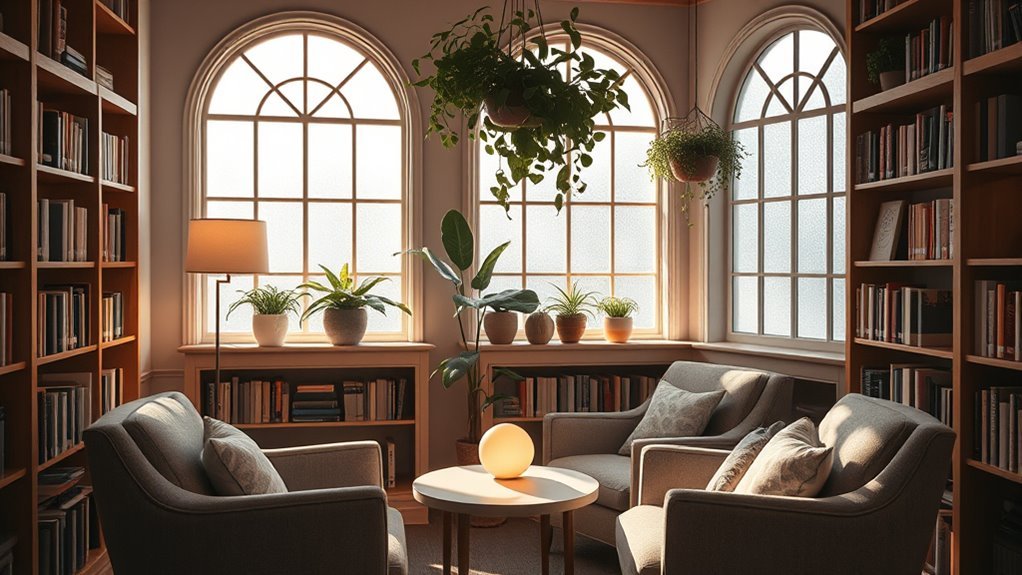
To create a sensory-friendly reading environment, use ambient noise like soft instrumental music or gentle nature sounds to mask distractions. Choose adjustable task lighting with warm LED bulbs to reduce eye strain and create a cozy atmosphere. Arrange your space thoughtfully with comfy seating and easy access to materials. Designate quiet zones using sound-absorbing materials or white noise machines. Personalize your space with plants or art. There’s much more to explore in crafting the ideal space.
Key Takeaways
- Utilize natural light or adjustable task lighting to minimize glare and reduce eye strain for better focus.
- Incorporate soothing ambient sounds like gentle rain or ocean waves to mask disruptive noises and enhance concentration.
- Use soft instrumental music at low volumes to create a calming backdrop that supports cognitive engagement without distraction.
- Leverage white noise machines or apps to create personalized soundscapes that cater to individual ambient sound preferences.
- Designate quiet zones with sound-absorbing materials and clear signage to maintain a tranquil reading atmosphere.
Create Calm With the Right Ambient Noise
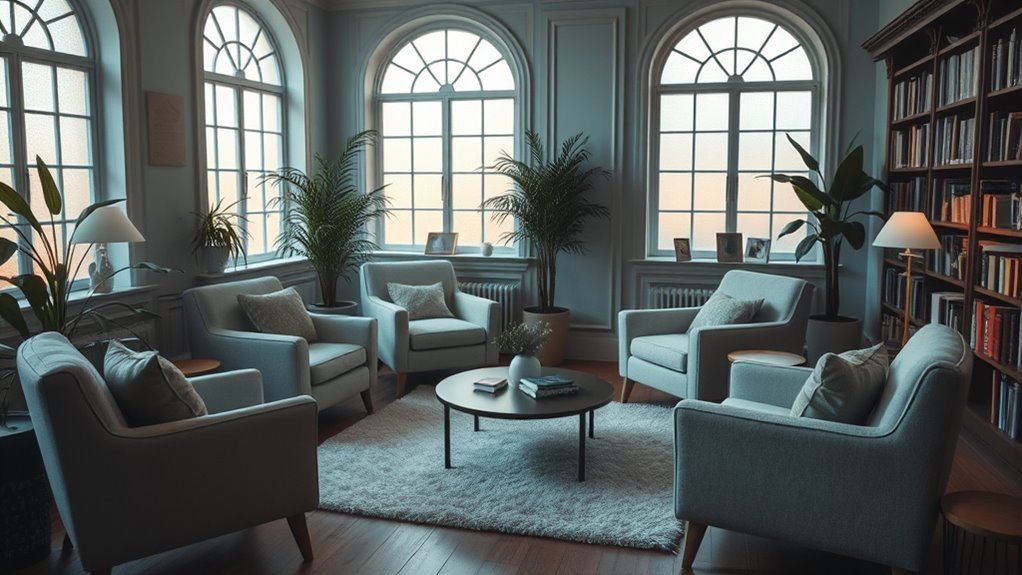
Designing a sensory-friendly reading environment involves more than just lighting and furniture. To create a sanctuary for reading, don’t overlook the power of ambient noise. Your auditory landscape can profoundly influence focus and relaxation. Start by selecting soothing sounds, like gentle rain or ocean waves, to mask disruptive noises. You might find that soft instrumental music, particularly at lower volumes, enhances concentration without distraction. Incorporating audiobooks into your listening routine can also optimize information retention, allowing readers to engage with the material on a deeper level.
Consider using a white noise machine or an app designed for this purpose. Be strategic by tailoring soundscapes to the preferences and needs of the reader. Experiment with different levels until you strike the right balance. Remember, it isn’t about overwhelming silence, but crafting an atmosphere that harmonizes with your reading experience—helping you journey deeper into the text. Reading aloud can also amplify these benefits, as auditory engagement significantly improves comprehension and retention of information.
Choose Lighting That Eases Eye Strain
When building a sensory-friendly reading space, easing eye strain through mindful lighting choices is crucial. You’ve got to balance comfort and functionality while considering how different lighting types affect your focus and energy levels. Here’s a list to guide your lighting choices:
- Natural Light: Utilize natural light when possible. It’s gentle on the eyes and boosts mood and alertness, contributing to a more fulfilling emotional experience as described in dopamine reset.
- Task Lighting: Incorporate adjustable lamps for individualized focus. Guarantee they target your reading material, not your eyes.
- Soft White Bulbs: Opt for soft white or warm LED bulbs (around 2700K-3000K) to create a cozy environment without harsh glare.
- Dimmers: Install dimmer switches to allow flexibility in brightness, adapting to different times of day or personal preference.
Prioritize these elements for an excellent reading nook. Additionally, creating a calming environment may enhance engagement in deep work, which fosters productivity and creativity.
Enhance Focus With Soundscapes

Though often overlooked, soundscapes can significantly enhance your focus and create a more immersive reading experience. By choosing the right auditory environment, you’ll find it easier to concentrate and block out distractions. Natural sounds, like gentle rain or ocean waves, can calm your mind, while ambient music provides a subtle yet effective backdrop for any genre.
Consider experimenting with various soundscapes to find what truly works for you. Apps and streaming services offer a range of sound options tailored to enhance concentration. Just remember, the key is subtlety. Sounds should complement, not overshadow, your reading. By carefully selecting your audio landscape, you create a space that taps into the power of sound, allowing your mind to dive deeper into the content. Establishing connections can greatly influence your reading experience and help to optimize your comprehension.
How to Make Your Reading Space Work for You
Your reading space should cater to your unique needs, acting as both a refuge and a launchpad for your imagination. Crafting such a space requires careful consideration of elements that align with your personal preferences and reading goals.
- Lighting: Choose adjustable lighting to fit various times of the day, ensuring it’s not too harsh or dim. A lamp with a warm hue might work wonders, especially if you enjoy the sensory experience of reading under softer light.
- Seating: Opt for a comfortable, supportive chair or cushion. Your posture matters, especially during extended reading sessions.
- Layout: Arrange your books and materials within easy reach. An organized space minimizes distractions and enhances focus.
- Personal Touches: Introduce items like favorite plants or art to make the space uniquely yours, encouraging relaxation and concentration.
- Book Selection: Consider building a collection with budget-friendly sources like thrift stores or community exchanges. Each element should work in harmony, creating a nurturing environment tailored to you.
Designate Quiet Zones for Zero Distractions
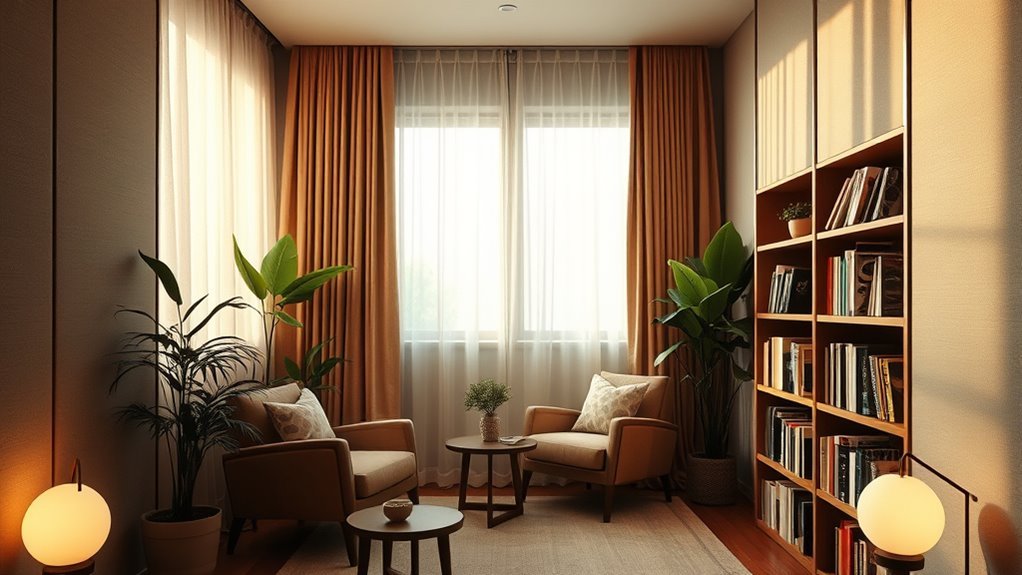
Creating a quiet zone is essential for minimizing environmental noise and enhancing focus in a sensory-friendly reading environment. It’s about carving out a space where distractions are kept to a minimum, allowing you to fully immerse yourself in the text. By prioritizing silence, you’re not only fostering concentration but also reducing stress and sensory overload. Incorporating effective tools and resources can also help streamline the selection process for the reading material you choose. Additionally, storytelling techniques can be utilized in these spaces to engage readers and enhance their overall reading experience.
Quiet Zone Importance
Establishing quiet zones in sensory-friendly reading environments drastically enhances focus and comprehension by eliminating distractions. You’ll create spaces where readers can immerse themselves in books without interruption. While crafting these zones, consider how essential they are for maintaining a reader’s engagement. Here’s why having designated quiet zones matter:
- Promotes Deep Focus: Without interruptions, your mind can fully engage with the material, increasing retention and understanding.
- Reduces Stress: Noise and chaos induce stress. Quiet environments help you relax, fostering a better reading performance.
- Enhances Productivity: Concentration levels soar when you’re not bombarded with extraneous noise, making every reading session effective.
- Encourages Longevity: A calm ambiance invites you to linger, increasing the time and enjoyment you spend with your reading materials.
Minimize Environmental Noise
Eliminating environmental noise is essential in crafting sensory-friendly reading environments where both focus and tranquility are paramount. Identifying and designating specific quiet zones helps mitigate distractions effectively. Start by identifying areas where noise reduction can be prioritized—perhaps away from bustling entrances or common areas.
You can employ sound-absorbing materials like carpets and curtains in these zones to dampen echoes. Strategically situating bookshelves can also act as barriers against noise. Clear signage is vital, politely reminding visitors to keep their voices low. Additionally, using white noise or sound-masking devices can provide a steady auditory backdrop, helping to obscure intermittent disturbances.
Customize for Your Sensory Needs
Although everyone’s sensory preferences differ, tailoring your reading environment can greatly enhance comfort and focus. By understanding your unique sensory needs, you can create a space where reading becomes effortless and enjoyable.
- Lighting: Choose lighting that doesn’t strain your eyes. Natural light is often ideal, but if unavailable, opt for warm, soft bulbs over harsh, white fluorescents.
- Temperature: Maintain a temperature that keeps you alert yet comfortable. Too hot or too cold settings can be distracting.
- Seating: Select a seat that supports your posture to prevent discomfort during longer reading sessions.
- Textures: Surround yourself with textures you find soothing. Consider a soft blanket or a smooth wooden desk—elements that subtly comfort and ground you.
Create a space that feels uniquely yours.
Use Tech to Keep Distractions at Bay
How can technology transform your reading nook into a distraction-free sanctuary? Think smart lights, noise-canceling headphones, and reading apps. Smart lights let you adjust brightness and color, enhancing focus. Noise-canceling headphones are perfect for drowning out ambient noise. Meanwhile, reading apps can help track your progress and reduce digital eye strain. Here’s how each tool can assist:
| Tool | Purpose | Benefit |
|---|---|---|
| Smart Lights | Adjustable brightness & color | Enhance concentration |
| Noise-Canceling Headphones | Reduce ambient noise | Maintain focus |
| Reading Apps | Monitor reading & eye comfort | Improve engagement |
With these technologies at your fingertips, you’re equipped to create a calming, sensory-friendly zone that caters to your reading needs, free from unwelcome distractions.
Add Natural Touches for Relaxation
To create a relaxing reading environment, consider incorporating natural elements to boost tranquility and comfort. By doing so, you can craft a space that feels serene and harmonious. Here’s how to enhance your reading nook:
- Indoor Plants: Introduce greenery to purify the air and create a calming atmosphere. Simple, low-maintenance plants are ideal.
- Natural Materials: Opt for furniture and decorative items made from wood, bamboo, or cotton, reflecting earth’s touch.
- Water Features: A small tabletop fountain or an aquarium adds a soothing auditory element.
- Natural Scents: Use essential oils like lavender or eucalyptus to subtly enhance the ambiance without overwhelming the senses.
Integrating these elements creates a sensory-friendly oasis, ensuring you’re both relaxed and focused.
Draw Inspiration From Successful Examples
Once you’ve established a calming environment with natural touches, look at spaces that have successfully embraced sensory-friendly designs. The Autism Resource Center at Young Memorial’s design is a great example. They’ve implemented adjustable lighting and soundproofing to optimize focus for easily distracted readers. Similarly, the P.S. 76 library in Queens has soft, natural lighting and noise-canceling headphones available for students—simple yet effective strategies to reduce overstimulation.
You’ll want to explore how these spaces cater to varied sensory needs. Notice their emphasis on soft color schemes and flexible seating arrangements, creating a personalized reading experience. Learning from these examples, incorporate adaptable elements that provide your readers with comfort and better engagement, ultimately enhancing their reading experience amid distractions.