

To keep your interest in general literature while tackling competitive exam guides, combine both activities. Set clear, achievable goals using the SMART principle to balance study and leisure. Engage with diverse genres to expand your perspectives and maintain motivation. Use active reading techniques and time management strategies to boost retention and efficiency. Finally, create a structured study schedule that includes enjoyable literary pursuits, ensuring a rewarding break from mock tests. Discover more strategies to enhance your experience.
Key Takeaways
- Set clear, SMART reading goals that balance exam guides and literature to maintain motivation and interest in both areas.
- Integrate diverse literature genres alongside exam preparation to broaden perspectives and enhance enjoyment while studying.
- Create a structured daily schedule that alternates between mock tests and engaging reading sessions to prevent burnout and maintain enthusiasm.
- Use active learning techniques such as summarizing and questioning to enhance engagement with exam guides and sustain interest.
- Reward yourself with literature breaks after completing study sessions to create a positive association with exam preparation.
Why Combining Exam Guides and Literature Is Important
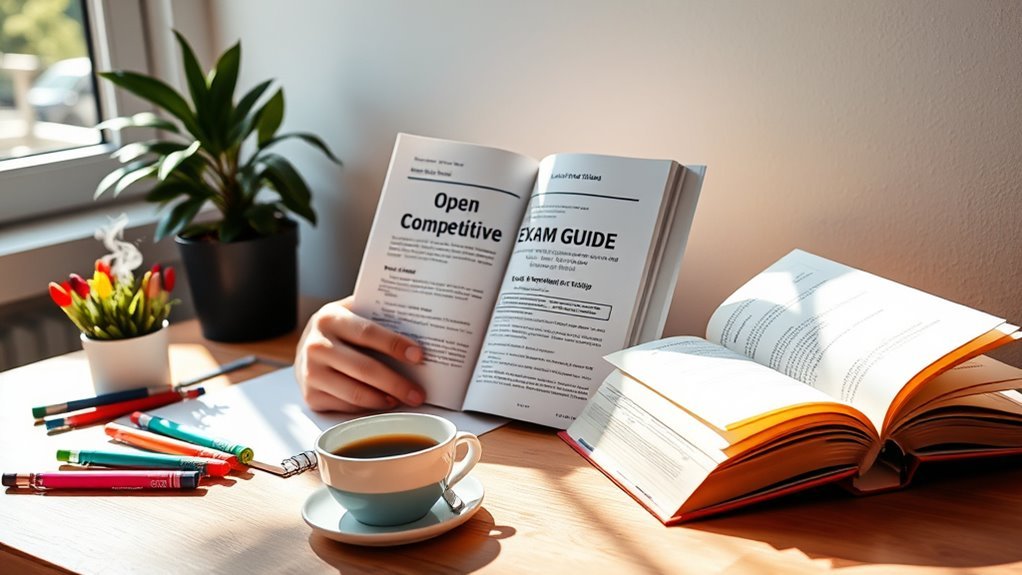
While preparing for competitive exams, you might underestimate the value of combining exam guides with literature. Exam guides provide structured content that builds foundational knowledge while helping you grasp complex concepts needed for tests like IPMAT and JEE. However, literature supplements this by fostering deeper comprehension and enhancing your empathy and emotional intelligence. Engaging with literature can serve as a cognitive shield against brain aging, which is crucial during intense study periods. Additionally, the practice of bibliotherapy through meaningful texts can offer insights that promote emotional resilience. Choosing physical books over digital formats can aid long-term retention, essential for success. By integrating mocking tests alongside these resources, you’ll not only simulate exam pressure, but you’ll also continuously analyze your performance. This hybrid approach balances thorough understanding with practical application, making you more adaptable. Combining both types of reading keeps you engaged, ultimately giving you a competitive edge in both exams and life’s challenges.
Identifying Your Reading Goals and Preferences
To make the most of your reading time, it’s essential to define your reading objectives clearly. Think about what genres you enjoy and how they align with your exam prep materials. Setting achievable reading goals can help you balance both academic and leisure reading effectively. Furthermore, embracing continuous learning through diverse reading can enhance your adaptability in your career journey. Additionally, incorporating regular mock tests into your study routine can enhance your comprehension of the material while maintaining your interest in general literature. Understanding the constitutional framework of governance in India can also enrich your reading experience as you connect general literature themes with civic responsibilities.
Define Reading Objectives Clearly
Defining your reading objectives clearly is vital for effective exam preparation, as it helps you stay focused and organized. Start by setting specific goals aligned with your syllabus sections and marking schemes. This way, you can prioritize higher-weightage topics in your study plan. It’s important to understand the exam pattern, including details like negative marking, to prevent rushing through the syllabus. Focus on conceptual understanding rather than rote memorization, using tools like mind maps and flowcharts. Utilizing strategies like the SQ3R method can further enhance your comprehension and retention of key concepts. Additionally, creating an optimal reading environment will positively impact your focus and engagement with the material. Establish measurable milestones to track your progress, incorporating practice benchmarks through mock tests. Clear comprehension objectives will also help bridge understanding gaps and boost your performance on exam day. By doing this, you’ll guarantee your preparation is structured and efficient. Moreover, utilizing unofficial educational resources can enhance your study experience and provide diverse approaches to your learning objectives.
Explore Personal Genre Preferences
How can you discover your personal reading preferences to enhance exam preparation? Start by evaluating your reading style. If you’re a visual learner, you might prefer resources like diagrams and mind maps to digest information. Auditory learners can benefit from listening to podcasts or recording notes for review. Consider the subjects that spark your curiosity, like politics or science—newspapers can broaden your interests and keep you updated. Assess the types of content you engage with; think about formats like books or articles, which can enhance your vocabulary and comprehension. Additionally, regularly reading current affairs can provide essential context for your studies. It’s also beneficial to adopt a polymathic approach to reading, which encourages exploring various subjects to enrich your knowledge base. Furthermore, creating a structured reading schedule can help you ensure consistent engagement with both exam materials and literature as part of your personal reading journey. Finally, explore different mediums, such as digital tools or videos, to find what truly keeps you motivated. Tailoring your reading to fit your preferences can make a significant difference in your preparation.
Set Achievable Reading Goals
Understanding your reading preferences is just the beginning; now it’s time to set specific reading goals that align with your exam preparation. By defining clear objectives, you can enhance both your motivation and performance. Here are a few steps to help you establish achievable reading goals:
- Identify Specific Reading Objectives: Aim for a number of books that’s realistic for you, setting targets based on last year’s reading volume. This may also involve using book recommendation websites to discover titles that fit your goals.
- Assess Your Current Reading Baseline: Check where you currently stand; this will inform your goal-setting process. Remember that acknowledging your intellectual limitations can help you make more informed decisions in your reading journey.
- Quantify Achievable Targets: Break your goals down into manageable parts, like books per month, to keep yourself on track. A solid reading foundation is crucial for academic success, which ultimately motivates you to engage with both exam guides and general literature effectively.
Key Strategies for Maximizing Exam Guide Comprehension
While approaching competitive exam guides, employing effective reading strategies can greatly enhance your comprehension. Start by previewing the text; scan titles and headings to anticipate topics. Use active reading techniques—read the first paragraph fully and skim the first and last sentences of others to grasp main ideas quickly. Take shorthand notes and utilize visual aids like tree diagrams to boost retention. Identify keywords and signal words during your skimming to focus your understanding. Familiarize yourself with question types, employing a two-pass approach to tackle easier questions first. Finally, practice regularly with official materials and manage your time wisely, allocating about 13 minutes per passage. Stay focused, and you’ll maximize your comprehension effectively. Additionally, mastering specific question types can significantly bolster your overall exam performance.
How to Keep Engaged With Literature

To stay engaged with literature, try exploring diverse reading materials that challenge your perspectives and interests. Setting specific reading goals can help you track your progress and maintain motivation. Engaging with a variety of genres not only keeps things fresh but also enhances your understanding and enjoyment of what you read. Additionally, integrating reading’s benefits into your routine can significantly enrich your engagement and comprehension, making the experience more rewarding.
Diverse Reading Materials
Engaging with literature becomes substantially more rewarding when you explore diverse reading materials that mirror your life and experiences. By incorporating varied texts, you not only enhance your understanding but also foster empathy and representation. Here are three ways to keep engaged with diverse literature:
- Find Characters Who Reflect You: Look for books featuring characters that share your cultural background or identity. It creates a connection that enhances your emotional engagement.
- Explore Different Perspectives: Challenge yourself with stories from various cultures and backgrounds, acting as “windows” to broaden your worldview. This approach helps to address educational equity by exposing readers to different realities and experiences.
- Incorporate Bilingual and LGBTQ+ Titles: These books have shown to raise reading proficiency and make your reading journey more fulfilling. Diverse materials enrich your reading experience and foster a deeper sense of connection.
Setting Reading Goals
Setting clear reading goals can greatly enhance your engagement with literature, as it helps to create a structured approach to your studies. Start by following the SMART principle: guarantee your goals are Specific, Measurable, Achievable, Relevant, and Time-bound. Break larger tasks into smaller milestones for a growth mindset. Set weekly mock tests as targets to track your progress and define your purpose before reading—this could be grasping key concepts or gathering information. Additionally, incorporating diverse topics and structures into your study routine can further enrich your understanding and adaptability, particularly when preparing for competitive exams.
Divide your syllabus according to the time remaining, guaranteeing balanced coverage. Create daily goals within your study timetable and include short breaks. Use active engagement techniques like asking questions and demanding text evidence to deepen understanding. Consistent practice will refine your reading skills and enhance your retention.
How Time Management Boosts Exam Reading Efficiency
Effective time management is essential for boosting your reading efficiency when preparing for competitive exams. By organizing your study sessions and utilizing time effectively, you’ll find reading exam guides much more engaging. Here are three strategies to enhance your efficiency:
- Schedule Specific Time Slots: Dedicate fixed hours to each subject based on your energy levels, ensuring you tackle difficult topics when you’re most alert. This method helps you maintain consistency in your study routine.
- Reverse Planning: Start from your exam date and set weekly and daily goals, which helps prevent last-minute cramming.
- Incorporate Breaks: Use techniques like the Pomodoro Technique to take short breaks, giving your mind a chance to recharge and retain what you’ve learned.
Active Reading Techniques for Enhanced Retention

To boost your retention while reading competitive exam guides, focus on highlighting key ideas as you go. Summarizing each paragraph in your own words can help reinforce what you’ve learned, making it easier to recall later. Don’t forget to predict potential questions related to the content; this keeps your mind engaged and sharp. Incorporating active reading techniques can significantly enhance your overall comprehension and retention, allowing you to make connections across various subjects.
Highlight Key Ideas
As you engage with competitive exam guides, it’s vital to incorporate active reading techniques that help highlight key ideas for better retention. Here are some effective strategies:
- Underline and Annotate: Selectively highlight key phrases, and make marginal notes to summarize, question, or challenge the content.
- Use Sticky Notes: Write thoughts or queries on sticky notes for texts you don’t want to mark permanently.
- Create Questions: Before reading, jot down specific questions you want the text to answer. Engage with the material by questioning its purpose and connections to your study. This approach anticipates being an active reader, which significantly enhances both understanding and retention.
Implementing these techniques not only enhances your understanding but also connects you more deeply to the content, making it easier to recall important information later on.
Summarize Each Paragraph
Summarizing each paragraph can greatly enhance your understanding of competitive exam guides. After you finish a section, recite key points in your own words and jot them down. This helps solidify what you’ve just read. Use marginal annotations for summarizing and raising questions; writing your thoughts engages you deeper than simply highlighting. Periodically check your comprehension by stopping and visualizing descriptions. Create mental snapshots of paragraphs to aid retention. Conduct self-testing to fill knowledge gaps by recalling key ideas from memory. Finally, reflect on the purpose of the content and review your summaries. These strategies will guarantee you retain information effectively while balancing your interest in general literature. Additionally, practicing active reading techniques can further enhance your comprehension and engagement with the text.
Predict Questions Actively
Before diving into competitive exam guides, it is crucial to establish a clear reading purpose. Predicting questions as you read can enhance retention and comprehension. Here’s how to effectively do it:
- Skim the Material: Check headings, topic sentences, and keywords to preview the content.
- Convert: Turn titles and subtitles into questions that guide your reading, focusing on who, what, where, when, and how.
- Annotate: Write questions in the margins, noting specifics and challenging concepts to reinforce understanding. Incorporating active reading strategies enhances the overall comprehension of the material.
Balancing Mock Tests With Enjoyable Literature
While preparing for competitive exams, it’s easy to get lost in the sea of mock tests and practice papers, but balancing this rigorous study with enjoyable literature can be essential for maintaining your mental well-being. Set aside specific times each week for reading fiction or poetry; this break can recharge your mind. You might alternate between mock tests and chapters, using literature as a reward for completing practice sections. A compelling story can serve as a revitalizing escape, reducing stress and preventing burnout. Don’t forget that reading for pleasure can enhance creativity and critical thinking skills, benefits that translate into better exam performance. Additionally, incorporating active learning techniques into your routine can further enrich your understanding and retention, ultimately making your study sessions more effective. Embrace the joy of literature to create a balanced study routine that keeps you motivated.
How to Select Materials for Effective Study and Enjoyable Reading
Managing your study routine involves more than just balancing mock tests with enjoyable literature; it’s also about selecting the right materials for both effective preparation and engaging reading. Here’s how to choose wisely:
- Syllabus Alignment: Analyze your syllabus to identify core subjects and guarantee your materials cover everything without gaps. Focus on high-weightage topics.
- Content Quality Assessment: Opt for resources that offer in-depth explanations and clear examples. Reference trusted books like HC Verma for thorough understanding. Incorporating active learning techniques helps to reinforce concepts and make study sessions more engaging.
- Edition and Update Checks: Always use the latest editions that reflect syllabus changes. Don’t settle for outdated materials; e-books often provide quick updates.
Creating a Balanced Study Schedule With Literature
Creating a balanced study schedule with literature isn’t just about cramming in hours; it’s about designing a routine that seamlessly integrates your competitive exam preparation with your passion for reading. Start your mornings with 2-3 hours focused on theoretical subjects and exam preparation, when your mind is fresh. In the afternoons, shift to board exam syllabus and literature assignments. Reserve evenings for mixed revision and light reading like newspapers. Aim for four days of competitive prep, two for board focus, and one for mock tests. Incorporating a well-structured timetable can significantly enhance your productivity and efficiency, allowing you to juggle both literature and exam preparation effectively. Apply the Pomodoro Technique for effective study sessions, taking breaks to refresh your mind. This structure enhances retention and guarantees you don’t lose sight of your love for literature while pursuing your exam goals.
How to Stay Motivated Throughout Your Reading Journey
Balancing your competitive exam prep with your love for literature sets the stage for a fulfilling reading journey. To stay motivated, implement these strategies:
- Cultivate Intrinsic Motivation: Engage with material that sparks your interest. Research shows intrinsic motivation greatly boosts reading comprehension and satisfaction, which is paramount as declines in leisure-time reading are evident among adolescents.
- Set Clear Goals: Establish achievable reading goals. Break down your tasks into manageable segments, allowing for a sense of accomplishment as you progress.
- Seek Social Support: Join a reading group or discuss books with friends. Social interactions can elevate your motivation, fostering a deeper connection to both exam guides and literature.