
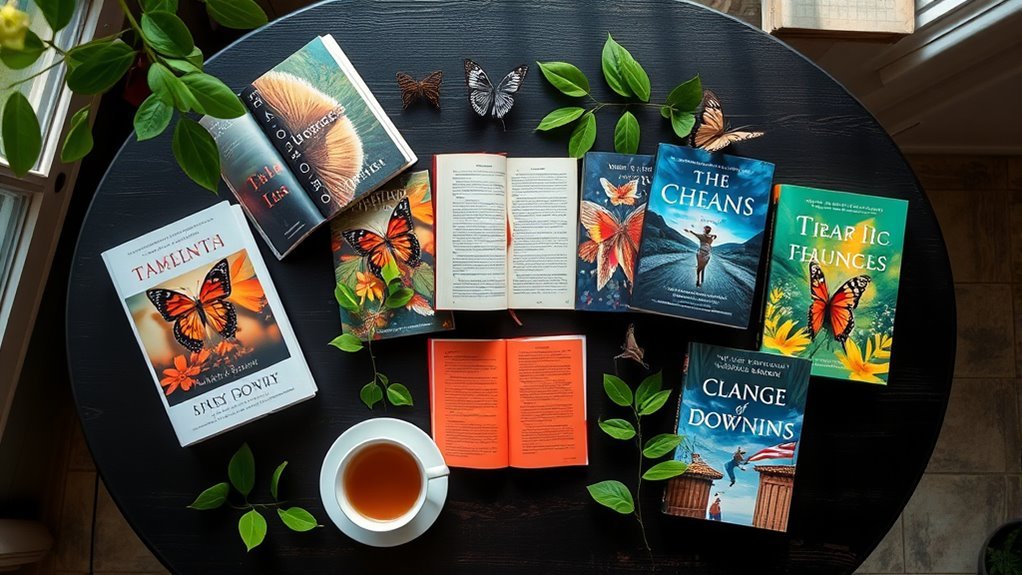
If you’re looking for profound insights into transformation and change, consider “The Metamorphosis” by Franz Kafka, especially the illustrated edition with an audiobook. Susan Bernofsky’s new translation also captures the essence beautifully. Other great options include complete editions with original illustrations and collections like “The Metamorphosis and Other Stories.” Each offers unique perspectives on metamorphosis. You might find additional gems in various formats that enrich your understanding of transformation.
The Metamorphosis

In Franz Kafka’s “The Metamorphosis,” we are introduced to Gregor Samsa, a man waking to find himself inexplicably transformed into a grotesque insect. This surreal narrative invites readers to delve into the profound themes of isolation and alienation as Gregor navigates the strange new reality of his existence and the subsequent changes in his family dynamics. The novella masterfully explores how a drastic turn of fate can unearth latent emotions and alter human relationships.
Key themes include:
- Isolation: The transformation leads to a profound sense of disconnection from family and society.
- Alienation: As Gregor becomes a burden, his family’s escalating disdain highlights their shifting perceptions of him.
- Existential Inquiry: The story compels readers to examine the essence of human identity and purpose amid absurdity.
Kafka’s writing style is both engaging and direct, offering clarity alongside rich symbolism that evokes deep reflection. His prose beautifully captures the absurdity of Gregor’s plight, reflected in poignant quotes such as, “I cannot make you understand. I cannot make anyone understand what is happening inside me. I cannot even understand it myself.”
“The Metamorphosis” is not just a tale of transformation; it’s a thought-provoking exploration of human experience and the fragility of family bonds. This timeless novella is a must-read for anyone intrigued by existential themes and the complexities of life. Don’t miss the opportunity to immerse yourself in this remarkable work that resonates with the struggles of being human in an often confounding world.
The Metamorphosis by Franz Kafka: Illustrated Edition with Audiobook

In Franz Kafka’s “The Metamorphosis,” a gripping and surreal tale unfolds as Gregor Samsa awakes one morning to find himself transformed into a giant insect. This shocking metamorphosis serves as a powerful metaphor for alienation and the struggles of everyday life. As Gregor navigates his bizarre new existence, his family’s reaction unveils profound themes of identity, societal expectations, and the desire for acceptance.
Key themes include:
- The impact of isolation and alienation
- The struggle for self-identity
- The absurdity of societal norms
Kafka’s writing is both haunting and poetic, drawing readers into a world where the surreal collides with the ordinary. His use of vivid imagery and emotional depth ensures that the narrative remains engaging, making you ponder the intricacies of human existence. Passages like, “I cannot make you understand. I cannot make anyone understand what is happening inside me. I cannot even understand it myself,” encapsulate the torment of Gregor’s plight and resonate deeply with the reader.
This illustrated edition, enhanced with an audiobook, provides a rich experience that combines stunning visuals with Kafka’s thought-provoking prose. Despite minor printing concerns, this edition is a worthwhile addition to your bookshelf, inviting you to dive into the poignant complexities of humanity’s struggle through the lens of Gregor Samsa. Whether you are a long-time fan of Kafka or new to his work, “The Metamorphosis” is a profound exploration of transformation that is sure to leave a lasting impression.
The Metamorphosis
In Franz Kafka’s “The Metamorphosis,” we are drawn into the surreal world of Gregor Samsa, who awakens one morning to find himself inexplicably transformed into a monstrous insect. This haunting tale masterfully explores themes of isolation, alienation, and the shifting dynamics within a family. As Gregor grapples with his new reality, his family’s initial concern transforms into resentment and disdain, forcing readers to confront the fragility of human connections.
Key themes to ponder include:
- Isolation and Alienation: The profound impact of being cut off from society and loved ones.
- Identity: The struggle to maintain one’s sense of self amidst overwhelming change.
- Family Dynamics: The delicate balance of love, responsibility, and expectations within family relationships.
Kafka’s writing style is crisp and captivating, drawing readers into the unsettling atmosphere with vivid imagery and precise language. The novella’s structure enhances its emotional impact, giving us a front-row seat to Gregor’s tragic journey. A poignant excerpt that encapsulates the book’s tone is, “I cannot make you understand. I cannot make anyone understand what is happening inside me. I cannot even understand it myself.” This line speaks volumes about the isolation felt by the protagonist.
“The Metamorphosis” is an essential read for those intrigued by existential literature and psychological depth. Kafka’s ability to blend dark humor with profound sadness creates a unique reading experience that lingers long after the last page is turned. If you’re seeking a thought-provoking exploration of identity and the intricate ties of family, this novella is not to be missed.
The Metamorphosis: A New Translation by Susan Bernofsky

In Susan Bernofsky’s “The Metamorphosis: A New Translation,” Franz Kafka’s classic story unfolds with a fresh vibrancy that breathes new life into Gregor Samsa’s bewildering transformation into a giant insect. Bernofsky’s version immerses readers in the nuances of alienation, family dynamics, and the absurdity of existence, inviting both newcomers and longtime fans to explore the rich complexities of Kafka’s work.
Key themes throughout the novella include:
- Alienation and Isolation: Gregor’s inexplicable change mirrors the struggles of feeling disconnected from society and loved ones.
- Communication Barriers: The challenges faced by Gregor highlight the inefficacies of expressing one’s true self.
- Existential Reflection: The story provokes deep questions about identity and purpose, resonating with modern readers.
Bernofsky’s writing style is both accessible and finely attuned to the original text, capturing Kafka’s dark humor while maintaining the emotional weight of each scene. Her insightful foreword and translation notes further enrich the reading experience, helping to illuminate the subtleties that might escape the casual reader. A particularly striking passage reminds us of the human condition: “I cannot make you understand. I cannot make anyone understand what is happening inside me. I cannot even understand that myself.”
Ultimately, Bernofsky’s “The Metamorphosis” stands out as a compelling entry point for anyone looking to delve into Kafka’s world. The combination of its timeless themes and engaging execution makes it a worthy addition to any bookshelf, ensuring that readers come away not only informed but transformed themselves. Don’t miss the chance to experience this captivating reinterpretation of a literary classic.
The Metamorphosis: Complete edition with original illustrations

Franz Kafka’s “The Metamorphosis” is a profound exploration of the human condition, encapsulated in the unsettling yet captivating transformation of Gregor Samsa, who wakes up one morning to find himself inexplicably turned into a monstrous insect. This story delves into themes of alienation, identity, and the frailty of existence, inviting readers to reflect on the nature of humanity and society’s often harsh judgment of those who are different.
Key themes include:
- Alienation: The feeling of being disconnected from family, society, and oneself.
- Transformation: The physical and psychological changes that challenge Gregor’s identity.
- Societal Expectations: The pressure to conform and the repercussions of failure to do so.
Kafka’s writing is both haunting and poetic, merging surrealism with raw emotional depth. His unique narrative style captivates the reader, blending the absurd with the real, which makes Gregor’s plight all the more relatable. As Gregor reflects, “I cannot make you understand. I cannot make anyone understand what is happening inside me. I cannot even understand it myself.”
This complete edition, featuring original illustrations, enhances the reading experience, perfectly complementing the text’s themes and emotions. The quality of the book, with its stunning cover and solid binding, makes it a beautiful addition to any library.
Ultimately, “The Metamorphosis” is not just a tale of an unusual transformation; it is a compelling meditation on the human experience. Its blend of existential inquiry and artistic presentation makes it a must-have for anyone willing to engage with literature that challenges perceptions and evokes deep reflection. Don’t miss the chance to immerse yourself in Kafka’s world; this edition belongs on your shelf.
The Metamorphosis and Other Stories (Dover Thrift Editions: Short Stories)

Franz Kafka’s “The Metamorphosis and Other Stories” invites readers into a world where the boundaries of reality and identity blur, culminating in the haunting transformation of Gregor Samsa. This Dover Thrift edition showcases Kafka’s groundbreaking narrative alongside other gripping tales such as “The Judgement” and “In the Penal Colony.” Each story delves into profound themes that resonate through time, including:
- Alienation: Characters grapple with isolation in a world that feels increasingly foreign.
- Identity: The struggle to define one’s self in the face of existential crises.
- Societal Pressures: A critique of how social expectations shape personal fate.
Kafka’s writing style is both stark and poetic, creating an atmosphere that is simultaneously unsettling and thought-provoking. His ability to convey complex emotions with a few carefully chosen words leaves a lasting impact. One such moment arises when Gregor contemplates, “I cannot make you understand. I cannot make anyone understand what is happening inside me. I cannot even explain it to myself.” This encapsulates the very heart of Kafka’s exploration of the human condition, where language often fails to express our deepest fears and transformations.
The Metamorphosis: And Other Stories (The Schocken Kafka Library)

Kafka’s *The Metamorphosis: And Other Stories* plunges readers into a world where the bizarre meets the profound. At its heart is Gregor Samsa, a man who unexpectedly transforms into a gigantic insect, forcing him and his family to confront their deepest anxieties and societal expectations. This collection includes other powerful narratives, such as *In the Penal Colony*, that explore the complexities of existence, guilt, and isolation.
Key themes in Kafka’s work include:
- Existentialism: Deep reflections on the nature of being and the absurdity of life.
- Societal critique: An exploration of family dynamics and societal roles.
- The human condition: The struggle for identity and connection in an indifferent world.
Kafka’s writing style is both meticulous and unsettling, with an ability to evoke empathy while challenging the reader’s perception of reality. As he famously writes, “I cannot make you understand. I cannot make anyone understand what is happening inside me. I cannot even understand it myself.” This sentiment resonates throughout the collection, drawing readers into the depths of existential introspection.
Ultimately, Kafka’s *The Metamorphosis* is a must-read for anyone willing to confront the transformative and often uncomfortable aspects of human existence. Its intricate narratives and haunting themes invite a closer look at our own lives and the society that surrounds us. For those eager to explore the depths of what it means to be human, this profound collection is not to be missed.
Factors to Consider When Choosing Metamorphosis Books
When you’re selecting books on metamorphosis, think about a few key factors to guarantee a worthwhile read. Consider the quality of the translation, the format of the edition, and the physical quality of the book itself. Also, explore the thematic depth and check out reader recommendations for guidance.
Translation Quality Importance
Choosing the right translation of “The Metamorphosis” is essential for fully grasping the richness of its themes. Different translations can greatly alter your understanding of Kafka’s exploration of alienation, identity, and the absurdity of existence. A high-quality translation, like Susan Bernofsky’s, captures the humor and colloquialisms of the original German, enhancing your experience. In contrast, clunky or inaccurate translations can lessen your appreciation of Kafka’s literary merit and thematic depth. To deepen your understanding, consult forewords and translation notes, as they provide valuable context. The impact of the story varies depending on the translation, so prioritize established versions that are praised for their fidelity to Kafka’s voice and intent. Select wisely to enrich your reading journey.
Edition Format Variations
Selecting the right edition of “The Metamorphosis” goes beyond just translation quality; it also involves considering various format options. Some editions, like Dover Thrift Editions, include additional stories that deepen your understanding of Kafka’s themes and styles. You might prefer illustrated editions, which enhance your reading experience by providing visual engagement that complements the text. Audiobooks can also be a great option, allowing you to absorb the narrative in a more dynamic format. When choosing, consider the accessibility of language; some translations are easier to grasp for younger readers or English learners, making them more enjoyable. Weigh these factors to find the edition that best suits your preferences and enhances your exploration of transformation and change.
Physical Book Quality
The physical quality of a book can greatly enhance your reading experience, especially when delving into Kafka’s “The Metamorphosis.” High-quality editions often feature superior printing and sturdy binding, which makes them more enjoyable to handle and read. You’ll want to pay attention to reviews that highlight aspects like binding and typeface, as these can profoundly affect your engagement with the text. Avoid editions with complaints about print quality or issues like unevenly cut pages, which can detract from the story. Additionally, aesthetic elements such as cover designs and layout can enrich your appreciation for the book. Selecting well-constructed editions guarantees a smoother, more immersive reading experience, letting you fully explore the themes of transformation without distractions.
Thematic Depth Exploration
When exploring books centered around Kafka’s “The Metamorphosis,” it’s important to contemplate the thematic depth they offer. Look for works that resonate with themes of isolation and alienation, mirroring Gregor Samsa’s drastic transformation and its effects on family dynamics. Allegorical interpretations can shed light on issues like disability and societal neglect, which hold relevance today. Consider how authors tackle absurdity and existential crises, as these aspects evoke relatable feelings of entrapment. You’ll want books that evoke empathy and provoke thought regarding identity, worth, and the overwhelming pressure of societal expectations. By prioritizing these themes, you’ll find a rich literary experience that explores the intricate layers of transformation and change.
Reader Recommendations and Insights
Curious about how to choose the best books inspired by Kafka’s “The Metamorphosis”? Start by reading the original novella first. This way, you’ll grasp its essence without spoilers. Afterward, explore different translations, like Susan Bernofsky’s, which can reveal subtle nuances you might miss in older versions. Pay attention to themes of personal growth and changing perspectives, as revisiting the text often evokes deep emotional responses related to family dynamics. You might also enjoy collections featuring “The Metamorphosis,” such as “In the Penal Colony,” for a broader understanding of Kafka’s critique of society. Just keep in mind that while Kafka’s writing is profound, some readers find the pacing slow, which can affect your overall enjoyment of the experience.
Illustrations and Visual Appeal
Exploring illustrated editions of “The Metamorphosis” can greatly enrich your reading experience. Quality illustrations offer visual representations of themes and characters, deepening your understanding of Kafka’s narrative. Engaging graphics can particularly captivate younger audiences or those who lean towards visual storytelling, making the text more accessible. You’ll notice that the artistic style varies widely between editions, influencing the overall tone and how you interpret the novella. Some versions even feature original illustrations that enhance your connection to its literary heritage. Plus, the visual appeal, including well-designed covers, can greatly impact your purchasing decision, drawing you into Kafka’s world and encouraging a closer examination of his work. Choose wisely to maximize your metamorphic journey.
Additional Stories Included
Choosing a version of “The Metamorphosis” that includes additional stories can greatly enhance your understanding of Kafka’s work. Editions containing tales like “The Judgement,” “In the Penal Colony,” and “A Report to an Academy” broaden your exploration of themes such as alienation and identity. Collections like “The Metamorphosis and Other Stories” provide context, enriching your grasp of Kafka’s societal critiques. Look for editions from the Dover Thrift Editions series, which pair “The Metamorphosis” with various short stories, showcasing Kafka’s diverse writing styles. These additional narratives not only illustrate Kafka’s existential questions but also foster comparative analysis, making your reading experience more engaging and insightful. You’ll appreciate the depth that these stories add to the original text.