
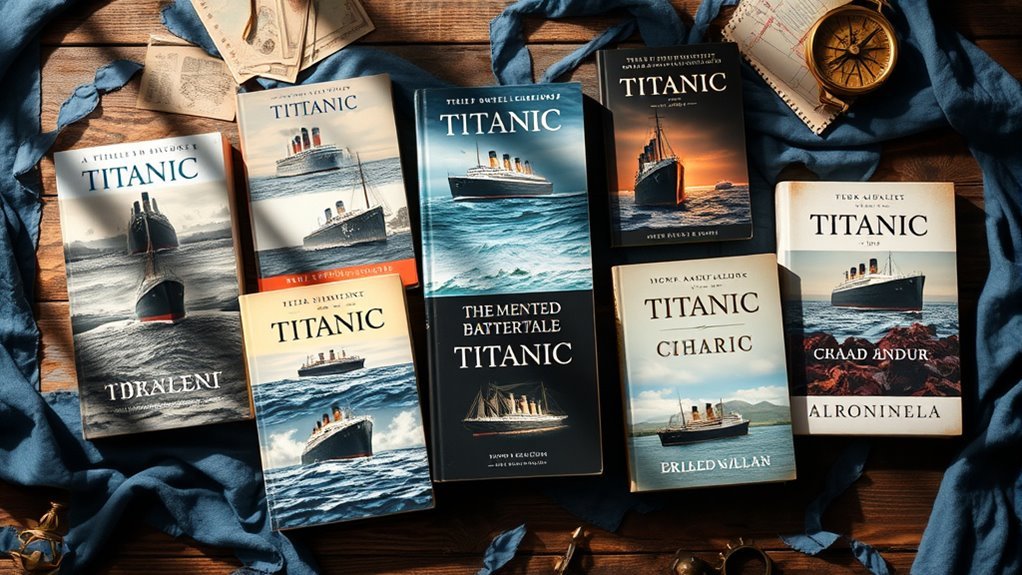
If you’re looking to explore the Titanic’s mesmerizing history and tragedy, you can’t miss these seven books. “Story of the Titanic” gives you a vivid account of its construction and voyage. “882 1/2 Amazing Answers” provides intriguing insights, while “Eyewitness Titanic” makes history accessible for younger readers. “A Night to Remember” recounts the final hours, and “Shadow of the Titanic” shares moving survivor stories. These narratives capture the essence of the Titanic experience and its lasting impact. Keep going to uncover more fascinating details.
Story of the Titanic (DK Panorama)

“Story of the Titanic (DK Panorama)” is a captivating journey through one of history’s most infamous maritime disasters. This beautifully illustrated book takes readers back to 1912, providing a vivid account of the Titanic’s grand construction and its tragic maiden voyage, culminating in the momentous sinking after colliding with an iceberg.
Key themes explored in the book include:
- The sheer magnificence and ambition of the Titanic.
- The human stories of the passengers and crew aboard the ill-fated ship.
- Lessons learned about maritime safety that resonate even today.
The writing is engaging and accessible, making complex historical events feel relatable and poignant. With stunning illustrations by Steve Noon, the narrative immerses readers in the chaos and heroism of that fateful night. One passage that lingers is, “In the face of impending doom, courage shines brightest.” This sentiment perfectly encapsulates the emotional weight of the story, highlighting both despair and bravery.
882 1/2 Amazing Answers to Your Questions About the Titanic

“882 1/2 Amazing Answers to Your Questions About the Titanic” is an enthralling exploration of one of history’s most infamous maritime tragedies. This comprehensive volume offers a trove of knowledge that delves into the Titanic’s grandeur, the fateful voyage, and the societal dynamics at play during its time. With 882 1/2 answers, it’s an invitation to journey through the ship’s fascinating construction, luxurious amenities, and the gripping narratives of survival and disaster.
Key themes include:
- The intricate details of the Titanic’s design and engineering marvels.
- Insights into the harrowing lifeboat crisis faced on that fateful night.
- A dispelling of myths that have clouded the historical narrative about the tragedy.
The writing style is both engaging and informative, making the complex history accessible to a wide audience. With a mix of illustrations and quizzes, the book invites readers to not only learn but also to immerse themselves in the Titanic’s rich legacy. As the authors note, “The Titanic was not just a ship; it was a phenomenon, a reflection of its time.”
In a world where knowledge can often feel shallow, this book stands out as a wellspring of intriguing information about the Titanic. Its balance of factual accuracy and storytelling makes it a must-read for history enthusiasts, maritime lovers, and trivia buffs alike. Dive into this treasure trove of information and discover the many layers of the Titanic’s enthralling story – you won’t regret it!
Titanic (National Geographic Kids Readers, Level 3)

Dive into the fascinating world of maritime history with “Titanic” from National Geographic Kids Readers, Level 3. Released to commemorate the Titanic’s 100th anniversary, this captivating book not only chronicles the ship’s impressive design but also revisits the harrowing events of its fateful journey. Through a mix of stunning photographs and engaging text, young readers are invited to explore the Titanic’s importance in history and learn about Bob Ballard’s momentous 1985 discovery of the wreck, alongside gripping survival stories that breathe life into this iconic tale.
Key themes and highlights include:
- The remarkable engineering and luxurious nuances of the Titanic.
- Firsthand accounts of survival that resonate with emotion and authenticity.
- An exploration of the Titanic’s lasting impact on both maritime history and safety regulations.
The writing style of this book is accessible and inviting, making historical content exciting and approachable for young readers. Each page encourages curiosity, often punctuated with striking imagery that grabs attention and elevates the reading experience. The narrative brings history to life, as exemplified by phrases like “The ship was hailed as unsinkable—until the night it met its fate.”
A Night to Remember: The Titanic’s Final Hours

“A Night to Remember: The Titanic’s Final Hours” is an engrossing chronicle of the moments leading up to the Titanic’s fateful voyage in 1912. First published in 1955, this compelling account captures the tragedy with vivid detail, allowing readers to experience the nail-biting tension as the ship meets its doom. The narrative unfolds in a gripping, minute-by-minute format, drawing you into a world where human bravery and cowardice collide amidst chaos.
This book masterfully explores profound themes such as:
- The fragility of life and the depths of human courage in the face of disaster.
- The contrasting responses of individuals during crises—some selfless, others selfish.
- The lasting impact of this historical event on maritime safety and culture.
The writing style is both straightforward and cinematic, immersing the reader in a haunting retelling of events. As author Walter Lord deftly crafts each moment, he includes poignant observations, such as, “There is no cause for sorrow, for everything is in order. All of you please be calm.” This simple yet powerful statement encapsulates the false sense of security that enveloped so many that night.
Shadow of the Titanic: The Extraordinary Stories of Those Who Survived

“Shadow of the Titanic: The Extraordinary Stories of Those Who Survived” takes readers on an emotional journey through the harrowing events of the Titanic disaster, offering a unique glimpse into the lives of the 705 passengers who endured that fateful night. Through unpublished letters, heartfelt diaries, and firsthand survivor interviews, this compelling work uncovers both well-known figures, like heiress Madeleine Astor, and lesser-known individuals, such as the brave Navratil brothers. The personal accounts not only reveal the resilience of the human spirit but also how deeply the tragedy reshaped the lives of those who lived to recount their experiences.
Main themes include:
- Diverse Perspectives: Offering a tapestry of survivor stories, the book paints a broad picture of the Titanic disaster, merging the paths of the famous and the obscure.
- Historical Insight: Unpublished materials lend authenticity and a rich depth to the narrative, transporting readers to a time of both luxury and despair.
- Emotional Impact: The book poignantly illustrates the emotional journeys of the survivors, allowing readers to connect with their struggles and triumphs intimately.
The writing style is both lyrical and accessible, making the historical content engaging and thought-provoking. With passages that resonate, such as, “We were all afraid, yet we held on to each other,” the book captures the essence of human connection amidst chaos.
“Shadow of the Titanic” is an exceptional read that not only highlights the individual stories of survival but also prompts reflection on resilience and hope. For those captivated by personal histories and the human experience during monumental tragedies, this book is a must-have addition to your collection. It invites readers to explore the depths of human courage, making it a worthwhile investment for anyone intrigued by history and the intertwining of lives.
Titanic (History in Photographs)

In “Titanic: History in Photographs,” readers are transported back to the fateful night of April 14, 1912, through a breathtaking collection of 180 authentic photographs that reveal both the luxury and the tragedy of the Titanic. This book serves as a poignant reminder of the stark disparities between the wealthiest passengers and hopeful immigrants, providing a visual narrative that resonates with profound emotional weight.
The themes of class disparities, survivor testimonies, and maritime safety controversies are skillfully interwoven, inviting reflection on the impact of this disaster on maritime regulations. The book effectively immortalizes the stories of those lost, with each photograph speaking volumes about the human experience amidst tragedy.
Written with a captivating style, the layout draws readers in, allowing them to traverse the harrowing journey of the Titanic while appreciating its grandeur and heartache. As the authors eloquently state, “In the midst of opulence, dreams collided with fates unseen,” encapsulating the duality present within the ship’s legacy.
“Titanic: History in Photographs” is more than just a visual record; it is a heartfelt tribute to those whose lives were forever changed. Whether you are a history enthusiast or simply someone drawn to remarkable stories, this book is a vital addition to your collection, offering insights and reflections that resonate long after the last page is turned. Don’t miss the chance to experience this powerful homage to one of history’s most iconic maritime tragedies.
Eyewitness Titanic

If you’re a young history enthusiast aged 9-12, “Eyewitness Titanic” is an enthralling journey into the world of the iconic ocean liner that every budding historian will want to sail. This captivating book takes you through the ship’s construction, its lavish maiden voyage, and the spine-chilling iceberg encounter that changed history forever. Discover life aboard the Titanic, from the opulent experiences of first-class passengers to the gripping heart-wrenching survival stories that illuminate human resilience in the face of disaster.
Main themes include:
- The opulence and luxury of Titanic’s first-class experience.
- The harrowing survival stories that highlight the spirit of humanity.
- A detailed look at the ship’s lifecycle through vibrant infographics and timelines.
The engaging writing style and clear structure make the complex history of the Titanic accessible and enjoyable, striking a balance between education and storytelling. “The ship was thought to be unsinkable, but on that fateful night, everything changed,” reminds readers of the hubris that surrounded the Titanic. Walls of text are replaced by colorful visuals and timelines that ensure a smooth reading experience, effectively capturing the imagination.
Factors to Consider When Choosing Titanic Books
When you’re picking out Titanic books, think about who will be reading them, since age can really impact what grabs a reader’s attention. You might also want to reflect on the narrative style and whether you’d prefer something with rich visuals or detailed historical content. Understanding these factors will help you find a book that truly resonates with you or your audience.
Audience Age Group
Choosing the right Titanic books for different age groups requires understanding their unique interests and needs. For younger readers, opt for titles aimed at ages 9-12. These books feature age-appropriate content and engaging visuals that make the Titanic story accessible. Teen and adult readers may prefer complex historical analyses or emotional survivor stories, offering deeper insights into the tragedy’s implications. Older audiences benefit from in-depth accounts that explore cultural impacts and safety reforms after the disaster. Additionally, consider their prior knowledge; fans might enjoy detailed trivia, while casual readers may find narrative approaches more appealing. By aligning book selection with the audience’s age and interests, you’ll guarantee a meaningful reading experience.
Narrative Style Preference
Many readers have a personal preference for how they engage with the Titanic narrative, which greatly influences book selection. You might consider whether you lean towards dramatic accounts that detail every minute or prefer a broader exploration filled with trivia and facts. Look for books that weave in personal stories and survivor accounts; these can evoke deeper emotional connections. If you enjoy educational content, seek out titles that use infographics and timelines to make information digestible, especially for younger audiences. Additionally, decide if you’re interested in historical context, discussing societal implications and maritime safety, or if myth-busting narratives are more your style. Each approach can shift your understanding and appreciation of this tragic event.
Visual Content Availability
Visual content plays a significant role in enhancing your understanding and engagement with Titanic narratives. When choosing a book, look for stunning illustrations or authentic photographs that vividly portray the ship, its construction, and the tragic sinking. These visuals help you appreciate the Titanic’s grandeur and grasp the severity of the disaster. Illustrated books featuring cutaway scenes and cross-sections provide insightful details about the ship’s interior layout, bringing historical context to life. Infographics can simplify complex data, offering essential statistics like survival rates that deepen your comprehension of the tragic event. If you’re selecting for younger readers, opt for titles with colorful visuals and educational features that captivate their interest and promote learning about this significant historical moment.
Level of Detail
When exploring Titanic books, it’s crucial to evaluate the level of detail each title offers. Consider how deeply the book dives into historical context, including construction, societal impact, and key events of the voyage and disaster. Look for works that present diverse perspectives, featuring survivor accounts and personal stories that bring the tragedy to life.
Assess the inclusion of visual elements like photographs or illustrations, which can enhance understanding and engagement. It’s also significant to investigate whether the book clarifies common myths versus factual information about the Titanic. Finally, verify the details align with the intended audience’s reading level and interests, making the material accessible and engaging for them.
Historical Accuracy Focus
To truly appreciate the depth of the Titanic’s story, you should prioritize historical accuracy in the books you choose. Look for sources that provide detailed backgrounds on the ship’s construction and voyage, ensuring accurate portrayals of events leading to the disaster. It’s essential to differentiate between common myths, like its unsinkability or lifeboat availability, and factual accounts backed by historical data. Consider books featuring survivor statistics and personal accounts for intimate perspectives on the tragedy. Publications that analyze social inequalities, particularly class disparities in survival rates during the sinking, are also valuable. Finally, seek works that discuss the maritime safety reforms triggered by the disaster, showcasing its lasting influence on sea travel regulations.
Accessibility of Language
Choosing Titanic books means considering the accessibility of language, as not all titles are created equal. Think about the target age group; some books simplify language for kids, while others plunge into complex narratives for adults. You can often find the reading level indicated on the cover or in the description, guiding you toward age-appropriate choices. Look for engaging visuals and illustrations that enhance comprehension, particularly for younger readers. A well-structured book using infographics or excerpts makes the language more accessible, helping you grasp information quickly. If you prefer clear and concise answers to common questions, seek out titles that provide straightforward facts without extensive narratives. These factors will guarantee you find the right Titanic book for your needs.
Unique Perspectives Offered
Exploring Titanic books opens up a myriad of unique perspectives that can deepen your understanding of the tragedy. You might find detailed survivor accounts, offering personal insights into the resilience and experiences of those who faced the disaster. Some titles investigate the social implications of the sinking, highlighting the stark class disparities among passengers and the societal context of the Edwardian era. You’ll discover books that tackle myths surrounding the Titanic, helping you differentiate fact from fiction. Illustrated narratives or visual histories engage readers of all ages, effectively using photographs and graphics. Additionally, in-depth explorations of maritime safety reforms shed light on critical lessons that still influence modern practices today. Each perspective enriches your overall comprehension of this historical event.