

If you’re a philosophy lover, you’ll want to explore these seven essential books on utilitarianism. Start with John Stuart Mill’s “Utilitarianism” to grasp the core principles. “On Liberty, Utilitarianism and Other Essays” offers insights on individual rights. “Utilitarianism and Other Essays” contrasts Mill with Bentham’s views, while “An Introduction to Utilitarianism” links theory to practice. Finally, “Utilitarianism: A Very Short Introduction” simplifies complex ideas. Each book enhances your understanding and could shape your perspective on ethics.
Utilitarianism

If you’re eager to enhance your understanding of ethical philosophy, “Utilitarianism” by John Stuart Mill is a must-read. This seminal text illuminates the principle of utility, asserting that the moral worth of actions is determined by their ability to maximize happiness for the greatest number. Mill artfully navigates the terrain of moral decision-making, compelling readers to reflect on the implications of their choices while distinguishing between higher pleasures, such as intellectual advancement, and mere physical satisfaction.
Key themes explored in the book include:
- The principle of utility as a guiding force in ethics
- The critical difference between higher and lower pleasures
- The balance between the pursuit of happiness and individual rights
Mill’s writing is both clear and thought-provoking, making complex ideas accessible without sacrificing depth. He writes, “Pleasure and freedom from pain are the only things desirable as ends,” a sentiment that encapsulates his utilitarian philosophy and invites readers to ponder their own values and priorities.
On Liberty, Utilitarianism and Other Essays (Oxford Worlds Classics)

“On Liberty, Utilitarianism and Other Essays” is a thought-provoking collection by John Stuart Mill that delves into the intricate interplay between individual freedoms and societal expectations. Mill’s compelling examination of the tension between personal liberty and the will of the majority makes this book not merely a historical artifact but a relevant guide for navigating today’s socio-political landscape.
Key themes explored in Mill’s essays include:
- The justification of interference only to prevent harm to others.
- The importance of individual rights in fostering a just society.
- The balance between social responsibility and personal freedom.
The writing style is both articulate and rich, with Mill’s prose encouraging readers to ponder deeply about the implications of his arguments. His ability to weave philosophy with accessibility is commendable, making complex ideas digestible. One memorable quote, “Over himself, over his own body and mind, the individual is sovereign,” encapsulates Mill’s core belief in personal autonomy.
Utilitarianism

For anyone intrigued by ethical theories, “Best Books on Utilitarianism” serves as an accessible entry point into the thought-provoking world of John Stuart Mill. This exploration reveals Mill’s refined perspective on utilitarianism, where actions must aim to “maximize happiness for the greatest number.” As readers navigate Mill’s complex ideas, they’re prompted to grapple with fundamental questions surrounding ethics and the nature of happiness.
Key themes explored in this book include:
- The foundational principles of utilitarianism, adapted by Mill for contemporary understanding.
- The interplay between happiness and ethics, positioning well-being as central to moral reasoning.
- Critical examinations of how general principles translate into practical applications.
Although the writing style occasionally leans towards density, the journey through Mill’s arguments is rewarding. Couple this with a few formatting quirks, such as small font sizes, and you may experience moments of difficulty. However, moments of clarity shine through, exemplified by thought-provoking lines like, “Actions are right in proportion as they tend to promote happiness.”
Ultimately, “Best Books on Utilitarianism” is an essential read for philosophy lovers eager to dive deep into utilitarian thought and its enduring implications. It’s a compact yet profound reflection that not only enhances understanding but also elevates the reader’s awareness of their ethical stance in the world. If you’re ready to engage with foundational ideas that challenge and inspire, this book is definitely worth your time.
Utilitarianism and Other Essays

“Utilitarianism and Other Essays” is a thought-provoking collection that invites readers to explore the intricate foundations of moral philosophy. This compilation immerses you in the ideological tussle between Jeremy Bentham’s rigid utilitarianism and John Stuart Mill’s more nuanced interpretation, shaped by his personal experiences. The essays not only shed light on the historical significance of utilitarian thought but also demonstrate its profound impact on contemporary social issues like climate change and reproductive rights.
Key themes include:
- The contrast between Bentham’s strict principles and Mill’s flexible approach.
- The influence of utilitarianism on modern liberal political thought.
- Engaging discussions around pressing ethical dilemmas that remain relevant today.
The writing is engaging and accessible, effectively weaving complex philosophical arguments into a narrative that feels both approachable and enriching. Alan Ryan’s insightful introduction sets the stage beautifully, enhancing the overall reading experience.
One passage that resonates deeply is, “It is better to be a human being dissatisfied than a pig satisfied; better to be Socrates dissatisfied than a fool satisfied.” This encapsulates the essence of Mill’s views, igniting curiosity about the complexities of happiness and moral choice.
Utilitarianism (Annotated)

“Utilitarianism” by John Stuart Mill is a thought-provoking exploration of the moral philosophy that advocates for the greatest good for the greatest number. Mill delves into the underpinnings of ethical decision-making, illustrating how actions should be evaluated based on their consequences. This edition promises to illuminate Mill’s ideas with annotations that enhance understanding, guiding readers through the intricacies of utilitarian thought.
Key themes and ideas include:
- The definition of utility and its central role in ethical deliberation.
- The distinction between higher and lower pleasures.
- The imperative of moral actions leading to the overall happiness of society.
Mill’s writing is both accessible and incisive, encouraging readers to reflect critically on their own moral frameworks. His famous assertion that “actions are right in proportion as they tend to promote happiness” is a powerful reminder of the philosophy’s core principle.
While some readers may find that this annotated edition falls short in providing the expected annotations, the text itself remains a vital resource in understanding utilitarianism. Mill’s eloquence and logical structuring make the philosophical arguments resonate, drawing readers into vital conversations about ethics that remain relevant today.
An Introduction to Utilitarianism: From Theory to Practice
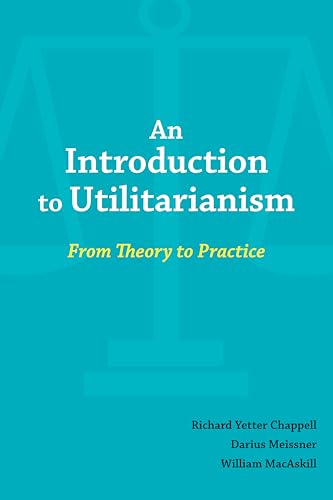
“An Introduction to Utilitarianism: From Theory to Practice” by Prof. Richard Chappell is a compelling exploration of ethical decision-making that reveals the transformative potential of utilitarianism. This book elegantly articulates the principle that actions are deemed right if they maximize well-being, while debunking common misconceptions that often cloud this philosophy. With practical applications like adopting a flexitarian diet or donating to charitable causes, Chappell invites readers to reflect on their own moral choices and the broader implications of their actions.
Key themes and ideas include:
- The clarity of utilitarian ethics and its role in guiding ethical behavior.
- Practical recommendations for ethical living and personal responsibility.
- A challenge to rethink and engage with moral philosophy in contemporary contexts.
The writing style is both accessible and engaging, making complex ethical theories relatable and easy to digest. Chappell’s ability to weave theory with practice shines through: “To act ethically is to consider the well-being of others and the ripple effects of our choices.” Such insights encourage readers to not only ponder moral philosophy but to actively incorporate it into daily life.
Utilitarianism: A Very Short Introduction

“Utilitarianism: A Very Short Introduction” is a must-read for anyone curious about ethical theory or looking for a clear yet thought-provoking entry into utilitarianism. Authored by the esteemed Peter Singer and Katarzyna de Lazari-Radek, this compact guide dives into the foundational principles of utilitarian thought while tackling common criticisms with finesse. By exploring the works of seminal philosophers such as Jeremy Bentham and John Stuart Mill, readers will uncover enduring themes that continue to shape moral philosophy today.
Key themes covered in the book include:
- The historical development of utilitarianism.
- Distinctions between Preference and Classical Utilitarianism.
- An examination of contemporary objections and responses.
Singer and de Lazari-Radek present the material in a straightforward, engaging manner that makes even the most intricate ideas accessible to newcomers. Their clear and concise writing, combined with an inviting structure, allows readers to absorb the nuanced discussions without feeling overwhelmed. As Singer eloquently states, “The greatest happiness is the measure of right and wrong,” encapsulating the essence of this moral framework.
Factors to Consider When Choosing Utilitarianism Books
When you’re choosing books on utilitarianism, you’ll want to reflect on the author’s expertise and perspective to guarantee you’re getting reliable insights. It’s also important to look for clarity in writing style and whether the book discusses the historical context of utilitarianism. Finally, think about how well the book explains complex theories and their practical applications in real life.
Author Expertise and Perspective
While exploring books on utilitarianism, you’ll want to evaluate the author’s academic credentials and expertise. Established philosophers like John Stuart Mill and Jeremy Bentham provide foundational insights that distinctly shape the theory. In contrast, contemporary writers such as Richard Chappell and Peter Singer often emphasize practical applications, tackling modern ethical dilemmas. Look for books that balance historical context with present-day relevance, as this can deepen your understanding of ongoing debates. Pay attention to the author’s approach; some defend utilitarianism against critiques, while others engage critically with its limitations. Additionally, authors who incorporate personal anecdotes or case studies may enhance your practical understanding and prompt reflections on applying utilitarian ethics in everyday life.
Clarity of Writing Style
Authors’ expertise sets the groundwork for your exploration of utilitarianism, but the clarity of their writing style can make all the difference in how you understand these complex concepts. Clear writing enhances accessibility, helping you engage with utilitarian principles more easily. Books like John Stuart Mill’s “Utilitarianism” demonstrate that lucid explanations cater to both scholars and newcomers, showing the impact of effective communication. Texts that blend real-life examples with theoretical arguments profoundly boost your comprehension and application of utilitarianism in daily life. An accessible style encourages critical thinking and self-reflection, challenging your existing beliefs and helping you form your ethical perspectives. Remember, dense prose can hinder understanding, so prioritize clarity in your reading choices.
Historical Context Provided
Understanding the historical context of utilitarianism is essential for grasping its nuances and implications. Originating in the 18th century, key figures like Jeremy Bentham and John Stuart Mill shaped its foundational principles during the transformative Victorian era. This period of social and political change greatly influenced ideas about individual rights and societal happiness. Initially tied to reform movements addressing injustices like slavery and women’s rights, utilitarianism aimed to enhance societal well-being. However, its decline in the late 19th and early 20th centuries was partly due to associations with social Darwinism and eugenics. Today, as utilitarianism resurges in ethical debates, understanding its historical evolution is crucial for appreciating its relevance and addressing contemporary moral dilemmas.
Complexity of Theories Explained
When exploring the complexity of utilitarianism, consider the varying depth and approaches each book offers. Some texts provide straightforward explanations focused on maximizing happiness, while others investigate intricate discussions on higher and lower pleasures, as John Stuart Mill articulated. Keep in mind that critiques often highlight the challenges of measuring happiness and applying the principle of utility to real-life dilemmas. Also, the historical context shapes different interpretations, with Jeremy Bentham’s rigid approach contrasting with Mill’s emphasis on individual rights. Misunderstandings may arise from its perceived justification of harmful outcomes, making it essential to examine its moral framework. Finally, gauge the accessibility of each book, as some require a solid foundation in philosophy to fully appreciate their arguments.
Practical Applications Discussed
As you explore books on utilitarianism, consider how practical applications influence your choice. Utilitarianism emphasizes maximizing happiness and minimizing suffering, making it a valuable framework for ethical decision-making in various contexts, from public policy to personal lifestyle choices. Look for books that not only explain the principles but also showcase real-world applications, such as adopting a flexitarian diet or supporting initiatives that alleviate global poverty. Understanding the principle of utility can help you evaluate actions based on their consequences for overall well-being. Be mindful of misconceptions surrounding the focus on outcomes, and seek texts that clarify how utilitarianism promotes ethical behavior and social progress through personal reflection and critical evaluation of contemporary issues.
Target Audience Consideration
Choosing the right book on utilitarianism means considering who will be reading it. Think about your audience’s familiarity with philosophy; some may need a foundational understanding, while others might be beginners. Different texts cover various interests, like historical context or practical applications, so it’s important to match the depth and complexity with your readers. Also, assess their preferred reading level—some books are dense and academic, while others are clearer and more accessible. Determine if they seek a thorough overview, practical examples, or critical examinations, as these focuses can vary between authors. Finally, consider annotated editions; they can be beneficial for newcomers, providing extra context and explanations to enhance understanding.
Critical Reception and Influence
Understanding the critical reception and influence of utilitarianism can prominently shape your choice of books on the subject. John Stuart Mill’s “Utilitarianism” is both praised for its clarity and critiqued for its dense writing. When exploring “On Liberty, Utilitarianism and Other Essays,” you’ll find it well-received, especially for its relevance to modern democracy and individual rights. It’s important to note that utilitarianism greatly influenced liberal politics, focusing on maximizing happiness without always acknowledging its philosophical roots. Unfortunately, its association with negative ideologies like social Darwinism tarnished its reputation in the late 19th and early 20th centuries. Contemporary works, such as “An Introduction to Utilitarianism,” directly address these critiques, providing a more balanced view and encouraging personal moral reflection.
Thematic Depth and Relevance
When exploring books on utilitarianism, it’s important to reflect on thematic depth and relevance, particularly how they address the moral implications of maximizing happiness and minimizing suffering. Look for texts that delve into the complexities of pleasure, especially John Stuart Mill’s differentiation between higher and lower pleasures. This understanding can enhance your ethical decision-making. Engaging with contemporary critiques helps clarify utilitarianism’s practical applications in modern issues like climate change and individual rights. Additionally, books that contextualize utilitarianism within historical and philosophical frameworks offer an all-encompassing perspective on its evolution and challenges. Don’t overlook discussions on individual rights and liberty, as these themes are vital for balancing societal welfare with personal freedoms in utilitarian thought.