
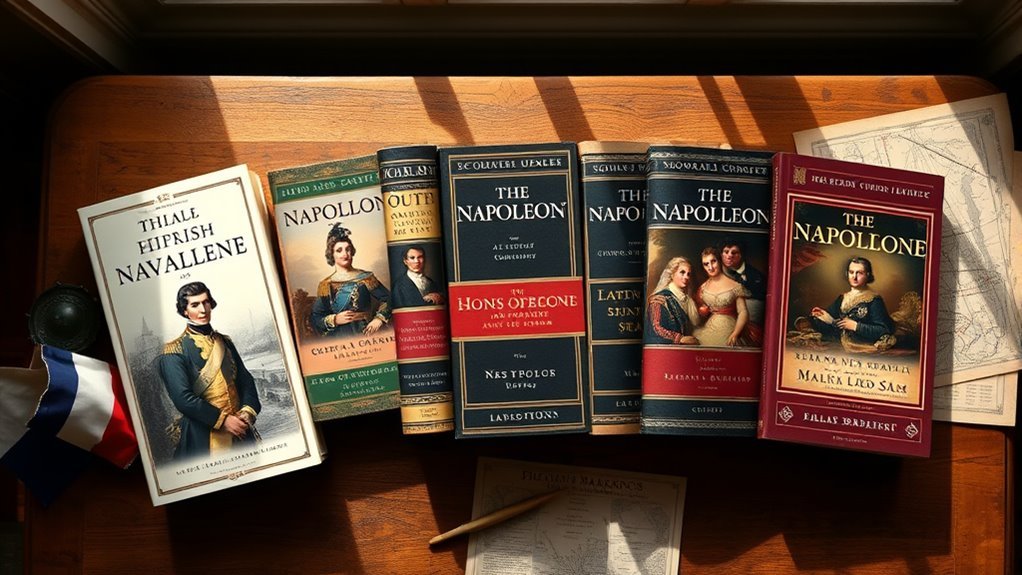
Napoleon Bonaparte rose from a minor Corsican family to emperor of France, redrew the map of Europe, gave the world the Napoleonic Code and ended his days in exile on St Helena. Thousands of books have been written about him, and they range from admiring portraits to sharp criticism, and from short introductions to huge military histories. The right one depends on how deep you want to go.
Here are the seven Napoleon books worth reading, what each one covers and which reader it suits best.
As an Amazon Associate we earn from qualifying purchases. Prices change often, so check the latest price in each book box.
Quick picks
Napoleon: A Life by Andrew Roberts
A gripping, detailed one-volume life drawing on Napoleon’s own letters.
Napoleon: A Life by Adam Zamoyski
A clear-eyed biography that cuts through the myths.
The 7 books compared
| Book | Author | Type | Best for |
|---|---|---|---|
| Napoleon: A Life | Andrew Roberts | Full biography | Most readers |
| Napoleon: A Life | Adam Zamoyski | Full biography | A balanced view |
| Napoleon | Vincent Cronin | Classic biography | The man behind the legend |
| The Campaigns of Napoleon | David G. Chandler | Military history | Battles and strategy |
| Bonaparte: 1769–1802 | Patrice Gueniffey | Scholarly biography | The early years in depth |
| The Age of Napoleon | J. Christopher Herold | Narrative history | The whole era |
| Napoleon: A Very Short Introduction | David A. Bell | Short overview | A quick, smart start |
1. Napoleon: A Life by Andrew Roberts
Roberts’ biography is the most popular modern life of Napoleon in English. It draws heavily on Napoleon’s own letters, which lets you follow his thinking day by day, and Roberts visited many of the battlefields himself.
The book covers everything from Corsica to St Helena, with vivid battle scenes and a clear account of his reforms, including the Napoleonic Code. Roberts admires Napoleon and makes the case for his greatness, so some readers find it too generous. At around 900 pages it is long, but it reads quickly. Skip it if you want a critical view first.
- Gripping, readable style
- Built on Napoleon’s own letters
- Strong on battles and reforms
- Admiring of its subject
- Long
Our verdict: The best single biography for most readers.

2. Napoleon: A Life by Adam Zamoyski
Zamoyski sets out to strip away the legend, both the hero and the monster, and show Napoleon as a real, flawed man shaped by his times.
He is especially good on Napoleon’s insecurities, his family and the European politics around him. The tone is cooler and more critical than Roberts’, which many readers find refreshing. It is a little less vivid on battles. Read it alongside Roberts if you want both sides of the debate. Skip it if you want military detail.
- Balanced and myth-busting
- Strong on character and politics
- Well written
- Less battle detail
- Pricier hardcover
Our verdict: The best biography for a clear, unromantic view.

3. Napoleon by Vincent Cronin
First published in 1971, Cronin’s biography is a much-loved classic that focuses on Napoleon the man: his loves, friendships, reading and private life.
Cronin writes beautifully and is sympathetic to his subject, sometimes too much so for modern historians. It spends less time on battles and more on character, which makes it a great read for those who find war history dry. Pair it with a more critical book for balance. Skip it if you want the latest research.
- Elegant writing
- Focus on Napoleon’s personal life
- Easy to read
- Very sympathetic
- Older research
Our verdict: The most enjoyable portrait of Napoleon the man.

4. The Campaigns of Napoleon by David G. Chandler
Chandler taught military history at Sandhurst, and this huge book has been the standard work on Napoleon’s wars for decades.
It explains how Napoleon organised his armies, planned his campaigns and won or lost each major battle, with many maps. If you want to understand why he was such a successful commander, this is the book. It is massive, more than a thousand pages, and best read in sections. Skip it if you are not interested in military detail.
- Definitive military study
- Detailed maps
- Explains Napoleon’s methods
- Very long
- Military focus only
Our verdict: Essential for readers who love battles and strategy.

5. Bonaparte: 1769–1802 by Patrice Gueniffey
Gueniffey is a leading French historian, and this translated volume covers Napoleon’s early life and rise to power in rich detail, up to 1802.
It is excellent on the French Revolution and how a young officer turned it to his advantage. The writing is thoughtful and full of insight, but it is long and covers only the first part of his life. It suits readers who already know the basics. Skip it if you want the whole story in one book.
- Deep look at the early years
- French scholarly perspective
- Strong on the Revolution
- Covers only up to 1802
- Expensive
Our verdict: The best in-depth book on how Napoleon rose to power.

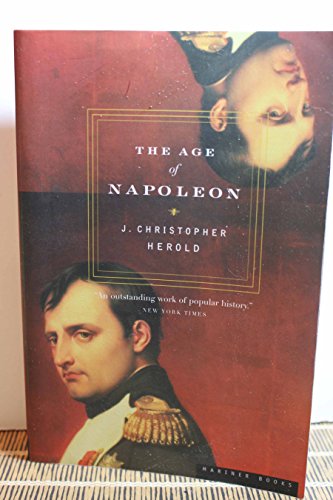
6. The Age of Napoleon by J. Christopher Herold
Herold looks beyond the emperor to the whole age he dominated: the people, ideas, art and wars that shaped Europe from the Revolution to Waterloo.
It is lively, witty and very readable, which is why it has stayed in print for decades. You get a sense of what life was like across Europe, not just inside Napoleon’s head. Some interpretations are dated. Skip it if you want a detailed personal biography.
- Covers the whole period
- Witty, engaging writing
- Affordable
- Older interpretations
- Less personal detail
Our verdict: A great way to understand the world Napoleon changed.
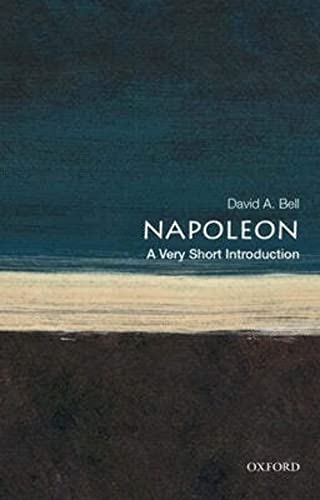
7. Napoleon: A Very Short Introduction by David A. Bell
Bell is a respected historian of France, and in about 150 pages he explains who Napoleon was, what he achieved and why he still matters.
It is the perfect starting point if a 900-page biography feels daunting, or a smart refresher for students. Bell balances achievement and cost fairly and points you to further reading. The short length means little room for stories or detail. Skip it if you already know the basics.
- Short and clear
- Balanced view
- Great for students
- Little detail
- Few personal stories
Our verdict: The best quick introduction to Napoleon.
How to choose
New to Napoleon?
Start with Bell’s Very Short Introduction, then read Roberts.
Want one big biography?
Roberts for drama, or Zamoyski for a cooler, more critical view.
Love military history?
Chandler’s The Campaigns of Napoleon.
Want the bigger picture?
Herold’s The Age of Napoleon, or Gueniffey for the Revolution years.
FAQ
What is the best biography of Napoleon?
Andrew Roberts’ Napoleon: A Life is the most popular modern biography. Adam Zamoyski’s is the best alternative for a more critical view.
What is the best book on Napoleon’s battles?
David Chandler’s The Campaigns of Napoleon is the classic military history.
Is there a short book on Napoleon?
Yes. David A. Bell’s Napoleon: A Very Short Introduction covers his life and legacy in about 150 pages.
Are Roberts and Zamoyski’s books the same?
No. They share a title but are different books with different views. Roberts is more admiring, Zamoyski more critical.
Which Napoleon book is easiest to read?
Bell’s short introduction, or Cronin’s elegant classic biography.