
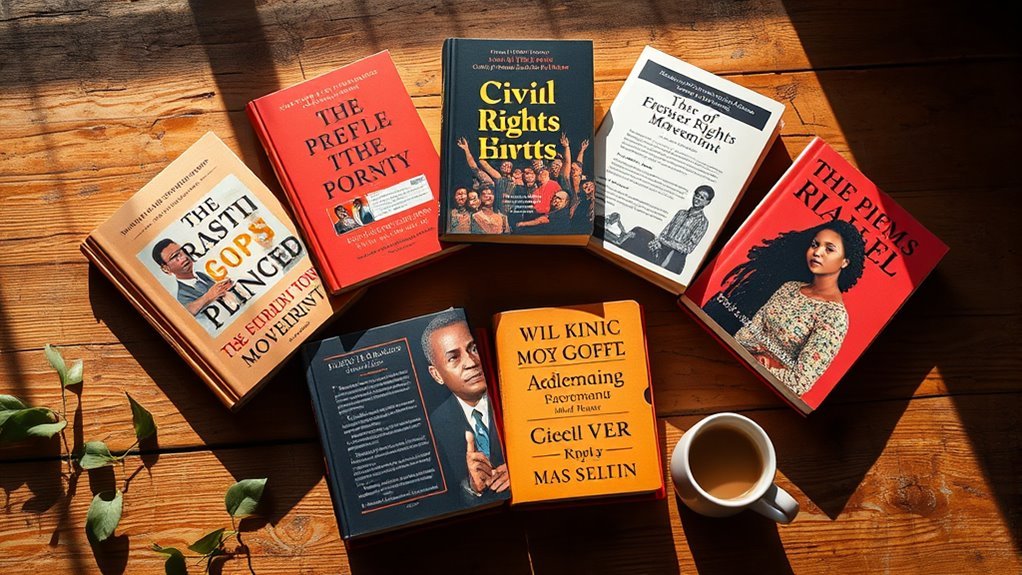
If you’re looking to understand the civil rights movement and its lasting impact, you’ll find inspiration in these seven essential books. Titles like “Walking with the Wind” and “The Movement” capture the bravery and resilience of those who fought for justice. You’ll discover personal narratives and historical insights that emphasize community action and individual courage. These works not only chronicle the past but also motivate you to engage in today’s ongoing struggle for equality and justice.
Walking with the Wind: A Memoir of the Movement

“Walking with the Wind: A Memoir of the Movement” by John Lewis offers a profound glimpse into the life of a civil rights icon, chronicling his journey from a humble cotton farm in Alabama to the halls of activism in Nashville. This compelling memoir invites readers to witness the transformative power of nonviolence and courage in the face of systemic injustice, illuminating pivotal moments like the Selma marches and the Freedom Rides.
Key themes that resonate throughout the book include:
- The importance of nonviolence as a method of resistance
- The power of community and collective action
- The personal cost of standing up for justice
Lewis’s writing style is both evocative and accessible, intertwining vivid narrative with reflective insights that engage the reader deeply. His poignant words, such as “If you see something that is not right, you must say something,” serve as a rallying cry that encapsulates the essence of his journey and the ongoing struggle for equality.
This memoir is not only a recounting of historical events but also a heartfelt call to action, reminding us of the resilience required to challenge injustice. “Walking with the Wind” is essential reading for anyone eager to understand the legacy of the civil rights movement and the enduring fight for justice today. Embrace this opportunity to walk alongside John Lewis and be inspired to carry the torch of change forward.
Before the Movement: The Hidden History of Black Civil Rights

In “Before the Movement: The Hidden History of Black Civil Rights,” Dylan C. Penningroth unveils a rich and often overlooked narrative of Black engagement with the law prior to the Civil Rights era. This insightful work reveals how Black individuals navigated a landscape of oppression, actively asserting their rights through property, marriage, and community organizations. Penningroth masterfully challenges the notion that legal exclusion defined their experiences, weaving together personal stories and historical accounts to illustrate their resilience and agency.
Key themes in this compelling narrative include:
- The exploration of legal challenges faced by Black Americans.
- The assertion of rights through everyday engagements with the law.
- A revisionist perspective that highlights the complex realities of Black life.
The writing style is both engaging and accessible, making complex legal concepts understandable for readers across various backgrounds. Penningroth’s ability to combine rigorous historical research with evocative storytelling leads to moments such as when he notes, “Every legal victory, no matter how small, was a testament to the enduring spirit of those who refused to be invisible.”
“Before the Movement” is essential reading for anyone interested in the nuances of Black civil rights history and the foundational legal experiences that paved the way for future advocacy. This book not only enlightens but inspires, revealing the profound impact of the past on the current legal landscape. Don’t miss this transformative account that reshapes our understanding of Black history and resilience.
Civil Rights Movement: A History from Beginning to End

“Civil Rights Movement: A History from Beginning to End” is a powerful exploration of America’s relentless pursuit of equality. This book takes readers through the journey of the civil rights movement, detailing its humble beginnings and the pivotal moments that shaped the course of American history—from the early advocacy efforts to the passage of the Civil Rights Act.
Key themes include:
- The historical roots of the movement and its evolution over time
- The resilience displayed during key events like Bloody Sunday and the tragic assassination of Martin Luther King Jr.
- The ongoing struggle against systemic racism and the relevance of the movement in today’s society
The writing style is both engaging and informative, making complex historical events accessible to readers of all backgrounds. The structure allows for a seamless flow that keeps you invested from start to finish. As the author poignantly states, “The struggle for justice is far from over,” a reminder that each generation must continue the fight for equality.
This book is more than just a history lesson; it’s a call to action for those passionate about social justice. With its insightful examination of past challenges and ongoing battles, “Civil Rights Movement: A History from Beginning to End” is a must-read for anyone eager to understand the significance of civil rights in shaping our present and future. Embrace the journey towards justice; pick up this compelling resource today!
The Civil Rights Movement: A Photographic History, 1954–68

*The Civil Rights Movement: A Photographic History, 1954–68* is a visually arresting chronicle that immerses readers in the heart of the civil rights struggle. Curated by Steven Kasher, this collection of impactful photographs captures moments of bravery and urgency, from the transformative Montgomery bus boycott to the persuasive voice of Malcolm X. Each chapter unfolds a fast-paced narrative complemented by evocative imagery, creating a rich experience that honors the movement’s legacy.
Key themes include:
- Bravery and Urgency: Highlighting pivotal events that spurred change.
- The Power of Visual Storytelling: Using photography to evoke emotional responses and understanding.
- Deep Reflections: Offering insights from activists and photographers to enhance context and appreciation.
The writing style is dynamic and engaging, seamlessly weaving narrative and imagery into a compelling exploration of the era. As Kasher eloquently notes, “The images are not just pictures; they are testimonies of resilience.” This tone reminds readers of the hope and hardship that characterized this critical juncture in American history.
Origins of the Civil Rights Movement: Black Communities

If you’re eager to dive into the foundations of the Civil Rights Movement, this collection of works centered on Black communities is an essential resource. It reveals the untold stories and pivotal moments, such as Rosa Parks’ defiant stand in 1955, which served as a catalyst for a nationwide movement. The authors illuminate how grassroots organizations not only mobilized protests but also forged a united front demanding systemic change.
Key themes include:
- The transformative power of community action in driving civil rights.
- Firsthand experiences that capture the emotional and strategic struggles of the movement.
- Recognition from prominent leaders, showcasing the ongoing relevance of these narratives.
Written in a compelling and accessible style, the book interweaves personal testimonies with historical analysis, making it both engaging and educational. One striking quote encapsulates the resilience of the era: “Our struggle is not just for rights, but for recognition and respect.”
This collection is not merely a historical account; it’s a profound reminder of the strength found in unity and activism. By shedding light on the crucial contributions of Black communities, this book not only informs but inspires, making it a must-read for anyone looking to understand the heartbeat of civil rights in America. Whether you’re a history buff or newly curious about social justice, this book will leave you more informed and empowered.
The Movement: The African American Struggle for Civil Rights

Book Review: The Movement: The African American Struggle for Civil Rights
“The Movement: The African American Struggle for Civil Rights” is a powerful exploration of the oft-overlooked stories that form the backbone of this vital chapter in American history. It illuminates the immense impact of grassroots participation, revealing how everyday individuals—rather than just iconic figures—shaped the fight for civil rights against a backdrop of formidable legal and political barriers. This book invites readers to appreciate the collective spirit of activism and resilience that powered the movement.
Key themes in the book include:
- The pivotal role of ordinary individuals in driving social change.
- A nuanced exploration that challenges common misconceptions about the civil rights movement.
- An emphasis on the interconnectedness of individual acts of courage and collective action.
The writing style is engaging and accessible, making complex historical dynamics approachable without compromising depth. The structure allows for a seamless flow of stories that weave together personal anecdotes and broader historical context. Notable passages resonate with their urgency and authenticity, such as, “In the struggle for justice, it’s the quiet voices who often make the loudest echoes.”
What Is the Civil Rights Movement? (What Was?)

The Civil Rights Movement book is an enlightening read for young audiences eager to dive into the fight for equality in America. Born out of the post-slavery era, this pivotal movement challenged the deep-rooted segregation and racial discrimination that persisted for decades. Through gripping firsthand accounts and captivating illustrations, readers will witness the bravery and resolve of African Americans who risked their lives to transform their second-class citizenship into real civil rights.
Key themes explored in the book include:
- The struggle against racial discrimination and segregation
- The power of unity and resilience in collective action
- The importance of ongoing efforts for justice and equality in America
The writing style is accessible and engaging, making history come alive for younger minds. With vivid descriptions and a narrative that flows seamlessly, the book captures the essence of a crucial period in U.S. history. One memorable passage reflects the sentiment of the era: “Courage is often found in the most surprising places, especially when people stand together for what’s right.”
Factors to Consider When Choosing Civil Rights Movement Books
When choosing books about the Civil Rights Movement, you should think about several key factors. Consider the historical accuracy, the perspectives presented, and how engaging the writing style is. Also, look for authors who bring relevant backgrounds and use visual materials to enhance your understanding.
Historical Accuracy Importance
Choosing books about the Civil Rights Movement isn’t just about finding engaging stories; it’s also vital to affirm historical accuracy. Accurate representation affirms you receive a truthful account of the events and figures who fought for equality. Look for reliable texts that draw from primary sources, like original documents and interviews with key participants, enhancing the narrative’s authenticity. Accurate representations challenge traditional views, highlighting the proactive roles Black individuals played in the legal system before the movement. By providing detailed accounts of both significant events and everyday struggles, well-researched works foster a deeper appreciation of the resilience of those involved. Ultimately, historical accuracy counters misconceptions and promotes informed dialogue about civil rights, encouraging ongoing advocacy and understanding of current issues related to race and justice.
Diverse Perspectives Included
Incorporating diverse perspectives is essential for a well-rounded understanding of the Civil Rights Movement. When choosing books, look for those that highlight the voices of ordinary grassroots participants alongside well-known leaders. Such narratives reveal the continuum of struggles faced by Black Americans, showcasing their historical awareness and resilience. Personal stories challenge dominant themes of oppression, offering insights into the emotional landscape of the African American experience. Photographic histories can add a powerful visual dimension, illustrating the bravery of individuals involved. Additionally, books that include both primary sources and scholarly analyses enrich the narrative, providing a nuanced depiction of the complex dynamics at play. This multifaceted approach deepens your understanding and appreciation of the movement.
Engaging Narrative Style
A mesmerizing narrative style transforms the way you connect with the Civil Rights Movement, making historical events resonate on a personal level. When choosing books, look for those that blend personal stories with historical analysis, as these create relatable and impactful experiences. Stories that weave together individual testimonies and broader legal narratives illustrate the resilience of communities during the struggle. Vivid descriptions and emotional accounts enhance your connection to the material, making the context more accessible. A well-structured narrative highlights key events framed within personal experiences, showcasing the human element behind history. Ultimately, an engaging narrative style captivates you, deepening your understanding of the Civil Rights Movement and inspiring change today.
Visual Materials Utilized
An engaging narrative style brings history to life, but the visual materials used in Civil Rights Movement books amplify that connection even further. Photographs and illustrations capture emotional moments, creating a visceral link to this essential struggle for equality. Black-and-white illustrations and photo inserts contextualize narratives, making the history more accessible and relatable. Look for thorough photographic collections that feature both renowned and lesser-known photographers to experience a diverse range of perspectives. When images are paired with narratives or analyses, your understanding deepens, revealing the significance behind each event. These visual materials don’t just document history; they enrich storytelling, allowing you to appreciate the bravery and commitment of those who fought for justice.
Author’s Background Relevance
Considering the author’s background can greatly enhance your understanding of Civil Rights Movement books. Look for authors who have personal experiences or involvement in the movement, as their narratives often provide authentic insights. Authors conducting extensive research and using primary sources, like interviews or historical documents, bring a more thorough perspective. It’s also wise to select works from recognized scholars or those who’ve received accolades, as their credibility speaks volumes. Plus, understanding the historical context that shaped an author’s background can deepen your appreciation of their themes. Finally, note the author’s writing style—whether personal narrative, historical analysis, or a blend—since it considerably influences how the movement’s story resonates with you.