
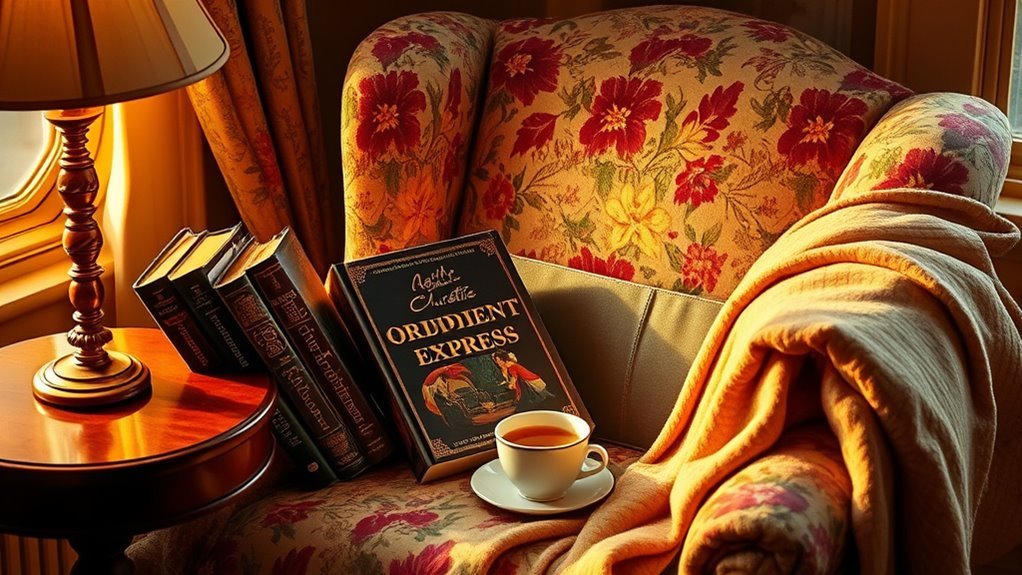
If you want to unravel the mysteries of Agatha Christie, start with *And Then There Were None* and the *Agatha Christie Poirot Collection*. *Murder on the Orient Express* is a must for suspense, while *The ABC Murders* keeps you guessing with its clever twists. Don’t miss out on the *Miss Marple Complete Mysteries Collection* and *Peril at End House* for more intrigue. Each story offers unique puzzles that challenge your wit, and there’s even more to discover!
And Then There Were None

If you enjoy suspenseful tales brimming with intricate mysteries, Agatha Christie’s “And Then There Were None” is an absolute essential. Set in an isolated mansion on the eerie Indian Island, this novel introduces ten guests, each concealing dark secrets. As ominous events transpire and guests begin to vanish, the atmosphere thickens with tension, compelling you to unravel the identities and motives hidden behind their façades. With an interplay of fear and accountability, the question lingers—who among them is the murderer?
Key themes include:
- The psychological complexity of human nature
- The weighing of guilt and morality amidst dire circumstances
- Isolation and its effect on relationships and truth
Christie’s writing style is both engaging and meticulously crafted, weaving a tapestry of suspense that keeps readers on the edge of their seats. Her ability to delve into the psyche of her characters allows for rich exploration of their moral dilemmas. One striking passage encapsulates this tension: “They were being hunted. They were all of them being hunted.” The interplay of language enhances the chilling atmosphere.
Agatha Christie Poirot Collection (Books 1 to 6 in Slipcase)
The Agatha Christie Poirot Collection (Books 1 to 6 in Slipcase) offers a captivating journey into the world of Hercule Poirot, the beloved Belgian detective. This exquisite collection invites readers to dive into some of Poirot’s most engaging cases, including timeless masterpieces like *The Mysterious Affair at Styles* and *The Murder of Roger Ackroyd*. With each turn of the page, you’ll find yourself unraveling cleverly constructed plots filled with surprising twists that will keep you guessing until the very end.
Key highlights of this collection include:
- Intricately woven mysteries that challenge your intellect.
- Unforgettable characters and situations that make each case unique.
- The opportunity to experience the evolution of crime fiction through Christie’s superb storytelling.
Christie’s writing style is elegant and engaging, blending suspense with moments of wit and charm. Her ability to create atmospheric settings and complex characters adds depth and realism to the tales. As Poirot himself famously states, “It is the brain, the little grey cells on which one must rely.” This reminder of the detective’s analytical prowess perfectly encapsulates the essence of these thrillers.
Murder on the Orient Express: A Poirot Mystery

In “Murder on the Orient Express: A Hercule Poirot Mystery,” Agatha Christie weaves a suspenseful tale aboard a luxury train immobilized by a blizzard, where the illustrious millionaire Samuel Edward Ratchett is found murdered in his locked compartment. With twelve intriguing suspects, each harboring their own motives for murder, Poirot is faced with unraveling a complex web of secrets.
Key themes include:
- Justice and morality
- The nature of truth and deception
- Human psychology and the facades we maintain
Christie’s writing is meticulous and elegantly crafted, allowing readers to immerse themselves in both the richly developed characters and the enigmatic plot. Lines like, “It is the impossible that happens,” echo throughout the narrative, giving readers a taste of the intricate dynamics at play.
Ultimately, Christie’s classic novel is not merely a whodunit; it’s a masterclass in character development and plot construction, leaving readers guessing until the very last page. Whether you’re a seasoned mystery aficionado or a newcomer to Poirot’s world, this book is an essential read that captures the essence of mystery in its finest form. Dive in and experience the thrill of deductive reasoning and unexpected revelations—it’s an unforgettable journey you won’t regret taking.
The ABC Murders: A Hercule Poirot Mystery

In “The ABC Murders: A Hercule Poirot Mystery,” Agatha Christie crafts a tantalizing narrative that hooks readers from the start. When a mysterious serial killer begins targeting victims in alphabetical order, fear grips the nation as the infamous detective Hercule Poirot is called upon to crack the case. With each murder, the stakes rise and Poirot must navigate an intricate web of clues, all while the killer grows increasingly brazen.
Themes of psychological tension and the battle of wits play a central role in this enthralling story:
- Unique Murder Scheme: The alphabetical nature of the crimes adds an innovative twist that keeps readers guessing.
- Intellect Over Intuition: Poirot’s meticulous attention to detail and strategic thinking underscore the importance of intellect in solving mysteries.
- Mystery and Suspense: The ebb and flow of tension provide a rhythm that captivates, ensuring the reader’s engagement until the final reveal.
Christie’s writing is both economical and evocative, blending sharp dialogue with detailed characterization that breathes life into the narrative. One of the book’s striking moments showcases Poirot’s signature insight: “What was the order in the chaos? There lies the puzzle.” This not only sets the tone for Poirot’s methodical approach but also invites readers to become active participants in unraveling the mystery.
Miss Marple Complete Mysteries Collection by Agatha Christie

If you’re a fan of expertly crafted mysteries, the Miss Marple Complete Mysteries Collection by Agatha Christie is an absolute treasure. This collection brings together all 14 stories featuring the beloved amateur sleuth, Miss Marple, who navigates the quaint yet deceptive village of St. Mary Mead. From her first case in “The Murder at the Vicarage” to her final intriguing mysteries in “Miss Marple’s Final Cases,” readers are drawn into a world where no detail is too small and every character has a secret.
In each tale, Christie masterfully weaves themes of deception, morality, and the nuances of human nature, making you question the motives of each character. Here are a few highlights:
- Intricate Puzzles: Each story challenges readers to piece together the clues alongside Miss Marple.
- Rich Characterization: While the focus remains on Miss Marple, the supporting cast brings depth and intrigue.
- Witty Insights: Not just a puzzle, the stories offer commentary on society and human behavior.
Christie’s writing style is both elegant and accessible, effortlessly drawing readers into her vividly painted landscapes. Her keen observations and deft dialogues are punctuated by moments of humor, like when Miss Marple cleverly notes, “The trouble is that you can never be sure what you see until the final curtain falls.”
The Miss Marple Complete Mysteries Collection is more than just a set of mysteries; it’s an invitation to lose yourself in a world of betrayal, cunning plots, and delightful revelations. Whether you’re revisiting Miss Marple or experiencing her captivating adventures for the first time, this collection is a must-have for any lover of classic detective fiction. Dive in and prepare to be delighted and surprised— Agatha Christie’s ingenious plots are sure to keep you guessing until the very last page!
Miss Marple Mysteries Series Books 1-5 Collection Set
The Miss Marple Mysteries Series Books 1-5 Collection Set invites readers into a world of compelling mysteries steeped in village intrigue and the keen observations of the iconic Miss Marple. From the shocking murder of Colonel Protheroe in “The Murder at the Vicarage” to the unsettling unfolding of events in “A Murder is Announced,” these stories masterfully blend clever plotting with psychological depth, engaging readers in a tantalizing game of deduction.
Key themes in this collection include:
- Human Nature: Each character is thoughtfully crafted, revealing the complexities of human relationships and motivations.
- Justice and Morality: Miss Marple’s pursuit of truth raises questions about social justice within the tight-knit community setting.
- Secrets and Disclosure: With each mystery, the stories delve into the secrets people hide and the consequences that arise when they are revealed.
Agatha Christie’s writing style is as sharp as it is elegant, with a focus on dialogue that breathes life into her characters while creating an air of suspense. Her ability to drop subtle hints is exemplified in a memorable line: “It is to the small things that we owe the great comforts of life.” This highlights how the ordinary can conceal extraordinary truths, drawing readers deeper into the narrative.
Peril at End House: A Hercule Poirot Mystery

In “Peril at End House,” Agatha Christie weaves a thrilling tale of mystery that unfolds against the picturesque backdrop of the Cornish Riviera. The story revolves around Nick Buckley, a spirited young woman who miraculously survives a series of alarming incidents, hinting at a dangerous plot against her life. With the brilliant detective Hercule Poirot on the case, readers are drawn into a captivating world of suspense, filled with clever twists and elusive clues that will keep you guessing until the very last page.
Key themes include:
- The intricacies of human relationships and deception.
- The battle between good and evil within the realm of criminal intent.
- The quest for truth amidst complex motivations.
Christie’s writing style is engaging and rich, with a keen eye for detail that brings both characters and settings to life. For instance, her description of Poirot’s methodical approach is both charming and intriguing: “It is the little things that matter.” This mastery of subtlety and suspense creates an immersive reading experience, allowing readers to fully engage with the story.
“Peril at End House” stands out as a quintessential detective novel, reminding us why Agatha Christie remains a beloved figure in literature. If you appreciate finely crafted mysteries that challenge your wits, this book is an essential addition to your collection. Prepare to be captivated by its elegance and intrigue, as you unravel the layers of deception along with Poirot.
Factors to Consider When Choosing Agatha Christie Books
When choosing an Agatha Christie book, consider your personal reading preferences to find a story that resonates with you. Think about the genre and theme you enjoy, whether it’s a classic whodunit or a psychological thriller, and the complexity of the plot you want to tackle. You should also reflect on which characters intrigue you and how the historical context might enhance your reading experience.
Personal Reading Preferences
Which aspects of a mystery do you find most compelling? Consider the type of puzzle you enjoy; whether it’s a closed-room scenario or an intricate plot with multiple suspects. You might prefer psychological thrillers that explore character secrets, or classic whodunits focused on solving the riddle. Don’t forget to think about your favorite detectives. Hercule Poirot and Miss Marple each have unique styles that can shape your reading experience. Additionally, evaluate the themes that resonate with you, like isolation in “And Then There Were None” or cunning in “The ABC Murders.” Finally, decide if you lean toward standalone novels or series for deeper character development or quick, engaging stories. Tailor your choices to match your preferences!
Genre and Theme
How do the themes and genres of Agatha Christie’s works influence your reading experience? Christie’s novels blend mystery and detective fiction, which keeps you on the edge of your seat. You’ll encounter themes of secrecy, accountability, and the consequences of past actions, adding moral depth to each story. As iconic detectives like Hercule Poirot and Miss Marple guide you through intricate plots, you’ll wrestle with character motives and navigate lies to uncover the truth. The unpredictable twists and clever resolutions challenge your intellect, making each book a rewarding puzzle to solve. Plus, the settings—often isolated or quaint—enhance the suspense, immersing you in a world where every detail matters, amplifying your overall enjoyment.
Character Focus
Choosing an Agatha Christie book often hinges on your preference for the characters who drive the narrative. If you’re drawn to sharp intellect, Hercule Poirot captivates with his meticulous logic and razor-sharp “little grey cells.” On the other hand, Miss Marple might appeal to you if you appreciate intuition and observation wrapped in the guise of an unassuming elderly woman. Both characters, with their distinct personalities, guide you through intricate plots while revealing their pasts and hidden secrets. You’ll find that Christie carefully crafts each character, imbuing them with unique backgrounds and motivations. This depth not only enhances the mystery but also enriches the reading experience, making character choice a key factor in your selection.
Plot Complexity
When selecting an Agatha Christie book, the complexity of the plot can be as enthralling as the characters themselves. Christie’s intricate mysteries often feature multiple suspects and red herrings, drawing you into the narrative as you engage with the clues presented. You’ll find her iconic detectives, like Hercule Poirot or Miss Marple, employing clever reasoning to unravel these layered storylines and hidden motives. Themes of secrets and accountability add depth, forcing characters to confront their pasts and face the consequences of their actions. Expect suspenseful twists that keep you guessing until the final reveal, especially in works like “And Then There Were None,” where isolation amplifies the urgency to solve the enthralling mystery before it’s too late.
Historical Context
Understanding the historical context of Agatha Christie’s works can enhance your reading experience. Born in the early 20th century, Christie wrote during a time when detective fiction was booming, shaped by societal upheavals and technological changes. The interwar period, especially the 1920s and 1930s, defined her peak, echoing themes of post-war disillusionment and complex motives behind crimes. Her female protagonists, like Miss Marple, reflect the shifting roles of women post-World War I, challenging traditional norms. Furthermore, as the Great Depression impacted society, her plots often examined moral ambiguity and social fragility. After World War II, her stories offered escapism, meeting the growing desire for mystery and entertainment as society rebuilt. Consider these contexts when choosing your next read!