
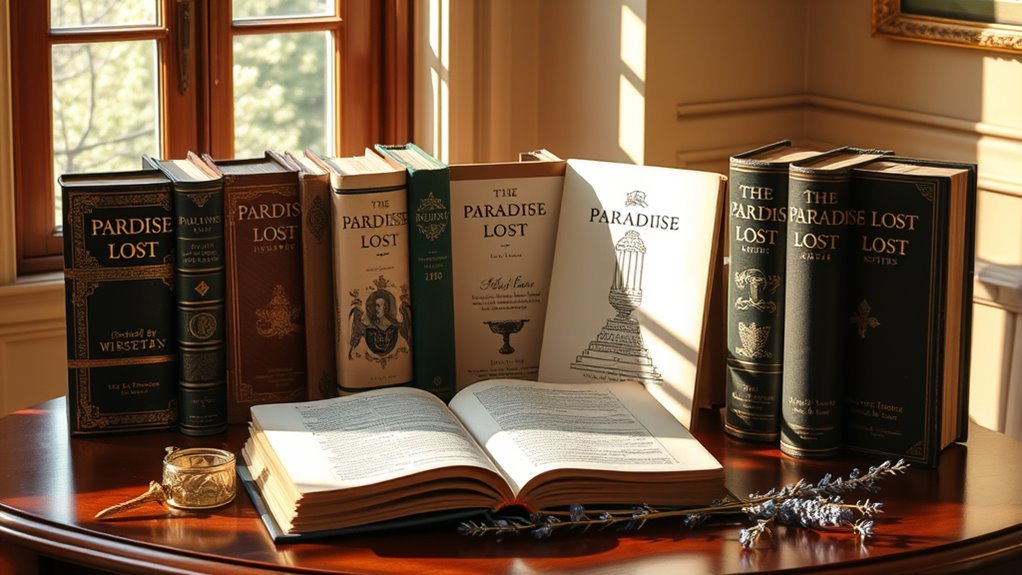
If you’re a literature lover, you should own key editions of *Paradise Lost* to enhance your experience. Consider the *Legacy Edition Clothbound Hardcover* for its stunning illustrations and craftsmanship. The *Penguin Classics* and *Penguin Clothbound Classics* editions provide insightful context and notes. For modern accessibility, try the *Hackett Classics*. Don’t miss the *Signet Classics* edition that pairs *Paradise Lost* with *Paradise Regained*. Stick around to explore more fabulous options and what makes each unique!
Paradise Lost: Legacy Edition Clothbound Hardcover
“Paradise Lost: Legacy Edition Clothbound Hardcover” is an exquisite and timeless retelling of John Milton’s epic poem that delves into the Biblical story of the Fall of Man. First published in 1667, this unabridged edition invites readers into a world where themes of divine redemption, the complexities of evil, and the profound experiences of Adam and Eve unfold in poetic brilliance. With each turn of the page, you’ll find yourself contemplating the nature of humanity and the choices that define our existence.
Highlights of the book include:
- The eternal struggle between good and evil
- The exploration of free will versus predestination
- Rich character portrayals that breathe life into biblical figures
Milton’s writing style is both grand and lyrical, seamlessly weaving together intricate narrative and rich language that captivates the reader’s imagination. His use of vivid imagery and compelling dialogue not only brings the story to life but also encourages deep reflection on moral and philosophical questions. “What though the field be lost? All is not lost—the unconquerable will, and study of revenge, immortal hate.” This quote encapsulates the essence of defiance and resilience that permeates the text.
The “Legacy Edition” enhances this classic read through its stunning craftsmanship, featuring 50 vintage illustrations by Gustave Doré that transport you further into Milton’s world, alongside a beautiful cloth cover adorned with gold foil and a convenient ribbon page marker.
Paradise Lost (Penguin Classics)
John Milton’s *Paradise Lost*, as presented by Penguin Classics, invites readers to delve into the rich tapestry of the epic poem that explores the profound themes surrounding the Fall of Man. The narrative unfolds with an intriguing portrayal of characters like the charismatic Satan and the innocent Adam and Eve, providing a fresh lens through which to examine humanity’s most profound struggles.
Themes to ponder:
- Redemption and the Fall: The moral complexities of sin and grace.
- Free Will: The tension between destiny and the choices of individual characters.
- The Nature of Good and Evil: Character reflections on virtue and vice.
Milton’s artistry shines through in the poem’s structure and language, which, while rooted in the 17th century, resonate powerfully with contemporary readers. The Penguin Classics edition enhances this experience with thoughtful introductions and notes by esteemed scholars, giving context to Milton’s intentions and enriching our understanding. One cannot help but be captivated by verses such as, “The mind is its own place, and in itself can make a heaven of hell, a hell of heaven.”
Paradise Lost (Penguin Clothbound Classics)
John Milton’s “Paradise Lost” is an extraordinary epic poem that delves deep into the themes of free will, temptation, and the nature of good and evil, as it narrates the story of Adam and Eve’s fateful decision in the Garden of Eden. This timeless masterpiece offers a profound exploration of humanity’s quest for knowledge, authority, and redemption, making it a compelling read for anyone intrigued by the complexities of moral choice.
Key themes include:
- The Fall of Man: A reflection on human vulnerability and the consequences of disobedience.
- Authority and Subversion: Examining power dynamics within the divine and human realms.
- Free Will vs. Predestination: The struggle between divine foreknowledge and personal choice.
Milton’s writing is characterized by its rich imagery and intricate verse, drawing readers into a world where poetic language dances with philosophical inquiry. The powerful lines resonate deeply: “What though the field be lost? All is not lost—the unconquerable will.” This captures the human spirit’s resilience against despair, a central tenet of the poem.
In its “Penguin Clothbound Classics” edition, “Paradise Lost” is not only a treat for the eyes with its stunning design but also an invaluable companion for readers seeking deeper insights with scholarly introductions and annotations. By exploring the text, you will not only appreciate Milton’s artistry but also engage with the timeless questions surrounding morality and existence. This beautifully crafted edition is a must-have for both collectors and newcomers alike, ensuring that Milton’s profound narrative continues to inspire and provoke thought for generations to come.
Paradise Lost (Hackett Classics)
In “Paradise Lost,” John Milton invites readers into a grand cosmic narrative that explores the fall of humanity through the lens of epic poetry. The Hackett Classics edition makes this seminal work more accessible than ever, presenting the original 1674 text with modernized spelling and punctuation. This thoughtful curation not only brings the timeless themes of free will, temptation, and redemption to life but also provides clarity on Milton’s intricate language.
Themes to explore include:
- The struggle between good and evil
- The complexity of free will and predestination
- The nature of temptation and sin
- The portrayal of divine and human characters
Milton’s writing style is both lofty and lyrical, weaving together vivid imagery and profound philosophical inquiry. The addition of marginal glosses and extensive annotations heightens the reading experience, offering insights into the poet’s syntax and allusions that might otherwise escape modern readers. As Milton writes, “The mind is its own place, and in itself can make a heaven of hell, a hell of heaven”—a powerful reminder of the duality of human experience and choice.
Paradise Lost and Paradise Regained (Signet Classics)
*Paradise Lost and Paradise Regained* (Signet Classics) offers a compelling journey through the themes of temptation, redemption, and the human condition, crafted by the unparalleled genius of John Milton. In these epic poems, he reimagines the stories of Adam and Eve, the fall of humanity, and the figure of Satan, inviting readers to delve into profound biblical narratives that resonate with timeless relevance.
Key themes explored in this edition include:
- The nature of free will and its implications for humanity.
- The struggle between good and evil as depicted through Milton’s characters.
- The exploration of divine justice and mercy in a flawed world.
Milton’s writing is a masterclass in poetic structure and language, with a rhythmic cadence that draws readers into the emotional depths of his characters’ struggles. His innovative use of blank verse and vivid imagery creates a tapestry of meaning that resonates long after the last page is turned. A memorable passage encapsulates this experience: “The mind is its own place, and in itself can make a heaven of hell, a hell of heaven.”
This enchanting edition not only highlights Milton’s literary prowess but also provokes contemplation on the essence of existence and moral dilemmas that define humanity. Whether you are a student, a literary enthusiast, or simply someone intrigued by the complexities of faith and reason, *Paradise Lost and Paradise Regained* is a thought-provoking addition to any literary collection, beckoning readers to engage deeply with its themes and ultimately enriching their understanding of classical literature.
Paradise Lost: Origins of Evil and Freedom
“Paradise Lost” by John Milton is an epic poem that delves into the profound complexities of evil and the nature of freedom, all set against the backdrop of a cosmic struggle between good and evil. The tale invites readers to witness the fall of man and the rebellion of Satan, exploring themes of ambition, divine will, and moral consequences. Milton’s masterful storytelling and rich imagery compel us to ponder the consequences of choice and the depths of human nature.
- Main Themes:
- The battle between light and darkness, symbolizing the eternal conflict of good versus evil.
- The personal and psychological struggles of characters caught between divine law and their desires.
- An exploration of the origins of evil and its moral implications on humanity.
Milton’s use of elevated, poetic language enhances the impact of the narrative, transforming abstract concepts into vivid emotional experiences. Phrases such as “What though the field be lost?” resonate deeply, inviting readers to reflect on resilience in the face of despair. The poem’s rich allegory and intricate symbolism offer layers of meaning, ensuring that each reading unravels further insight.
“Paradise Lost” remains a timeless classic, inviting fresh interpretation and discussion across generations. Its exploration of philosophical ideas and spiritual epics makes it a must-read for anyone intrigued by the moral complexities surrounding freedom and evil. This profound work will not only challenge your understanding but also enrich your perspective on the human condition. Don’t miss the chance to immerse yourself in Milton’s enduring masterpiece.
Paradise Lost: With bonus material from The Demonologist by Andrew Pyper
“Paradise Lost: With Bonus Material from The Demonologist by Andrew Pyper” offers readers a remarkable fusion of classic literature and modern storytelling. In this compelling edition, John Milton’s timeless exploration of good and evil is paired with a gripping excerpt from Pyper’s upcoming literary horror novel, “The Demonologist,” which follows Professor David Ullman’s harrowing quest to rescue his daughter while grappling with deep-seated skepticism.
The intertwining themes of demonic mythology and moral conflict resonate throughout, inviting readers to contemplate the intricacies of faith and doubt. Key ideas include:
- The eternal struggle between good and evil as depicted in Milton’s classic.
- The relevance of demonic narratives in both historical and contemporary contexts.
- Pyper’s exploration of skepticism in the face of extraordinary circumstances.
The writing style is both poetic and thought-provoking, capturing the essence of Milton’s original text while seamlessly integrating Pyper’s fresh voice. A particularly resonant passage reads, “What can we trust when even our beliefs are tested in the darkest shadows?” This encapsulates the essence of uncertainty and fear that permeates both works.
Ultimately, this edition is a must-read not only for fans of “Paradise Lost,” but for anyone intrigued by the interplay of classic themes and modern interpretation. With its rich content and thoughtful insights, it promises to deepen your understanding of humanity’s oldest stories while captivating your imagination. Don’t miss the chance to explore the demonic landscapes that loom over both Milton’s and Pyper’s narratives; this book is a treasure for literary and horror enthusiasts alike.
Factors to Consider When Choosing Paradise Lost Books
When you’re choosing a Paradise Lost book, consider what type of edition suits your needs, whether you prefer annotations, illustrations, or modernized spelling. The author’s background can also impact your understanding and appreciation of the work. Make sure to look for contextual notes that enhance your reading experience.
Edition Type Preferences
How do you decide which edition of *Paradise Lost* to choose? First, think about the style you prefer. A clothbound edition with genuine cloth and gold foil can elevate the book’s aesthetic appeal on your shelf. Next, look for editions that include supplementary features—explanatory notes and scholarly introductions can deepen your understanding. Do modernized spelling and punctuation matter to you? Some editions offer updated language, making it easier to navigate the text. You might also want to take into account illustrations; vintage artwork can enhance your reading experience. Finally, check for bonus materials or essays that provide additional insights into the poem’s cultural impact. Each of these factors will help you find the perfect edition for your collection.
Author’s Background Importance
Choosing the right edition of *Paradise Lost* involves not just style and supplemental features, but also understanding the author’s background, which can greatly enrich your reading experience. John Milton, a 17th-century poet, lived during a time of political upheaval, and his views on liberty and authority shape the poem’s depth. His personal trials, including blindness and disappointment with the Restoration, provide essential context for exploring themes of justice and suffering. Milton’s extensive knowledge of classical and biblical texts enhances the profound allusions throughout the work. Recognizing Milton’s active role as a critic of tyranny will prompt you to reflect on the complexities of obedience and rebellion, making your reading of *Paradise Lost* more rewarding.
Illustrations and Artwork
Artistic elements in a *Paradise Lost* edition can considerably enhance your reading experience. For instance, editions like the *Legacy Edition* feature vintage illustrations by Gustave Doré, bringing a unique visual flair that aligns beautifully with contemporary sensibilities. You’ll find that the complete *Paradise Lost* includes 50 illustrations that vividly capture pivotal themes and moments in the narrative. If you prefer a tactile experience, consider clothbound editions with artistic cover designs, complete with gold foil prints that elevate aesthetic appeal. Remember that different editions may showcase various artworks or cover designs, impacting both the book’s beauty and collectible value. Having artwork alongside explanatory notes enriches your understanding of the text and its historical context, making it an enticing option.
Contextual Notes Availability
While reading *Paradise Lost*, having access to contextual notes can considerably enhance your understanding of the text. Editions that offer extensive annotations clarify Milton’s syntax and poetics, making complex passages much more accessible. You’ll find that marginal glosses for unfamiliar words help you navigate the poem smoothly, allowing you to grasp its themes without unnecessary interruptions. Biographical content, such as Edward Phillips’ early biography of Milton, sheds light on the author’s influences, enriching your perspective. Additionally, scholarly introductions discuss interpretative issues and provide context, grounding the poem in both its historical milieu and modern relevance. Choosing an edition with these contextual features guarantees a more rewarding reading experience and deepens your appreciation for Milton’s masterpiece.
Modernized Spelling Relevance
Access to contextual notes is just one way to enhance your reading experience of *Paradise Lost*. Choosing an edition with modernized spelling can greatly improve accessibility, especially if you’re daunted by the original 17th-century English. These updates make understanding Milton’s complex themes and characters easier, allowing you to dive deeper into discussions on morality and divine justice. Many modernized texts also include annotations that clarify archaic references, enriching your comprehension while preserving the poem’s essence. Simplified spelling and punctuation can draw in a wider audience, from students to casual readers, making classic literature feel approachable. By balancing authenticity with readability, these editions foster a more inclusive literary journey.
Thematic Focus and Depth
Choosing the right edition of *Paradise Lost* involves understanding the thematic focus and depth that each version offers. The poem dives into profound themes like the Fall of Man, good versus evil, and the nuances of free will and divine justice. You’ll find that characters such as Satan, Adam, and Eve embody elements of human experience, showcasing temptation, innocence, and rebellion’s consequences. Different editions may emphasize various aspects, reflecting both historical contexts and contemporary issues. Each version highlights the psychological struggles these characters face and how those conflicts shape their moral choices. By considering these themes, you can choose an edition that resonates with your perspective and enriches your reading experience.
Binding and Physical Quality
The physical quality and binding of *Paradise Lost* can greatly impact your reading experience, so it’s worth paying attention to these details. Consider the binding type; genuine cloth covers offer durability and elegance, while paperback options are more affordable. Clothbound editions often feature gold foil print and ribbon page markers, enhancing both aesthetics and functionality. Keep an eye out for modernizations in spelling and punctuation that may affect accessibility. Annotations, glosses, or explanatory notes can help you grasp unfamiliar words and literary references, differing across bindings. Finally, evaluate the weight and size: pocket-sized versions are convenient for travel, whereas larger, sturdier editions are perfect for display on your bookshelf. Choose wisely to enrich your reading journey!
Bonus Materials Consideration
When exploring editions of *Paradise Lost*, consider how bonus materials can significantly enrich your reading experience. Look for collections that include essays or Q&A sessions with contemporary authors; these can provide valuable insights. Some editions offer excerpts from related literary works, helping you understand the broader themes that resonate with Milton’s poem. Extensive annotations and glosses clarify challenging vocabulary and allusions, enhancing your comprehension of the text. Additional essays and biographies often examine Milton’s life and historical context, which can deepen your appreciation. Finally, consider editions that highlight connections between *Paradise Lost* and modern interpretations, showcasing the poem’s enduring impact on contemporary thought. These features can transform your reading journey into a richer exploration.