
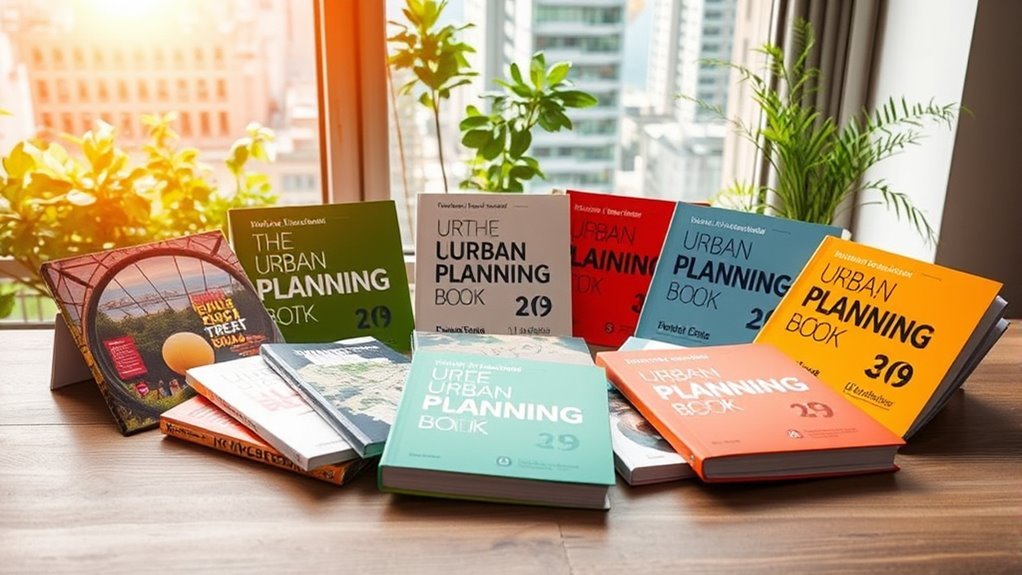
If you’re looking for inspiration in urban planning, check out these seven must-read books: “Happy City,” which connects urban design to happiness; Jane Jacobs’ classic, “The Death and Life of Great American Cities”; “The 99% Invisible City,” a guide to everyday design; and “The Color of Law,” which tackles segregation. Don’t miss “Urban Planning For Dummies,” “Walkable City,” and “Planning and Urban Design Standards.” Each offers valuable insights that can shape your vision for future cities. Explore more to uncover their unique perspectives.
Happy City: Transforming Our Lives Through Urban Design

“Happy City: Transforming Our Lives Through Urban Design” by Charles Montgomery is an eye-opening exploration of how our urban spaces influence our happiness and well-being. As cities increasingly become the focal point of modern life, Montgomery makes a compelling case for dense living over car-dependent suburbs, urging readers to rethink their environment and its impact on their daily lives. With examples from Bogotá’s stylish public transit to Paris’s innovative street transformations, the book is filled with inspiration that shows the power of urban design to foster a sense of community and joy.
Key themes include:
- The benefits of urban density in enhancing quality of life.
- The role of community empowerment and grassroots activism in shaping urban landscapes.
- Integration of psychological principles with urban planning for happier cities.
Montgomery’s engaging writing style combines research with personal anecdotes, making complex ideas accessible to a broad audience. He writes, “Cities can be designed to enhance our ability to connect with others,” a line that perfectly encapsulates his vision for urban living. This thoughtful narrative structure draws readers into a conversation about the potential for change in our shared spaces.
In a world where urbanization is rapidly increasing, “Happy City” is a vital read for anyone interested in creating environments that promote connection and happiness. Montgomery offers not just insights, but a hopeful vision for the future of our cities, making this book a deserving addition to your reading list.
The Death and Life of Great American Cities

In “The Death and Life of Great American Cities,” Jane Jacobs takes readers on an eye-opening journey through the intricate world of urban living. With a penetrating gaze, she explores the fundamental elements that can either cultivate thriving neighborhoods or allow them to falter under the weight of poverty and neglect. This classic, published in 1961, examines the importance of street safety, the value of diversity, and the complexity of urban spaces, challenging the boundaries of traditional urban planning.
Key themes include:
- Vibrant Urban Environments: The necessity of liveliness in city life.
- Street Safety: How pedestrian-friendly spaces promote community.
- Diversity’s Role: The critical impact of varied populations on neighborhood health.
Jacobs’ writing is both compassionate and incisive, making complex topics accessible to a broad audience. Her ability to weave anecdotal evidence with keen observations keeps readers engaged and encourages them to reconsider their views on urban design. One particularly notable passage states, “Cities need old buildings so badly it is probably easier to create new buildings than to look after the old ones.” This underscores her belief in the necessity of nurturing urban history to foster vibrant communities.
The 99% Invisible City: Everyday Design Field Guide

“The 99% Invisible City: Everyday Design Field Guide” invites readers on an enlightening exploration of the unnoticed yet impactful elements that shape urban environments. This compelling guide encourages urban explorers and design aficionados alike to delve into the stories behind mundane features, from the signage cluttering our streets to the intricate power grids hidden from view.
Key themes include:
- The intriguing narratives woven into everyday city design
- The interplay between urban spaces and human experience
- An appreciation for the subtleties of design that often go unnoticed
The writing style is both engaging and accessible, enriched by beautifully illustrated line drawings that enhance each narrative. The well-researched entries are structured to draw readers in, making urban design feel both relatable and fascinating. As the authors remind us, “Every detail has a story, and every story has a meaning,” underscoring the rich tapestry of urban life.
The Color of Law: Segregation in America

If you’re curious about the intricate ways that government actions have shaped racial segregation in America, “The Color of Law: A Forgotten History of How Our Government Segregated America” by Richard Rothstein is a must-read. This compelling book delves into the systematic policies that reinforced segregation, from zoning laws to public housing schemes, challenging the common belief that segregation was merely a result of individual prejudices or economic dynamics.
Key themes you can explore in this groundbreaking work include:
- The historical realities of government-imposed segregation.
- The role of housing policies in urban planning.
- The necessity for reparative changes in how we approach city landscapes today.
Rothstein’s writing is both accessible and thought-provoking, utilizing robust historical analysis combined with powerful illustrations that solidify his arguments. He aptly states, “Segregation was not a product of private prejudice but rather the result of government action.” This eye-opening assertion not only invites readers into the conversation but also compels us to reflect on the responsibilities we bear in addressing America’s past.
In essence, “The Color of Law” is more than just a historical account; it’s an urgent call to action for anyone interested in social justice, urban development, or American history. Engage with this vital narrative to understand the depth of systemic racism and the critical need for reform. You won’t just read this book; you’ll feel inspired to be part of the solution.
Urban Planning For Dummies

“Urban Planning For Dummies” is a captivating guide that serves as a beacon for budding urban planners and those intrigued by the complexities of city design. This accessible introduction unpacks the intricate relationship between land-use, transportation, and the diverse elements that contribute to the vibrancy of urban life. Readers will journey through the influences of demographics, economic development, and community needs on city landscapes, while discovering the profound impacts of urban design on public health and overall well-being.
Key themes include:
- Essential concepts in land-use and transportation planning
- The interplay between community needs and urban development
- Career opportunities across public, nonprofit, and private sectors
The writing style is engaging and straightforward, making complex topics understandable and inviting. Chapters are structured in an easy-to-follow format, ensuring that both novices and those with some experience find value in the content. As the author puts it, “A well-designed city is not just a place; it’s a thriving community where every voice matters.” This sentiment resonates throughout the book, emphasizing the importance of inclusive planning practices.
Walkable City: Downtown Can Save America

“Walkable City: How Downtown Can Save America, One Step at a Time” by Jeff Speck is an enlightening exploration into the transformative power of walkability in urban spaces. Speck, an acclaimed urban planner, deftly illustrates how prioritizing pedestrian-friendly designs can breathe new life into American cities. The Tenth Anniversary Edition enriches this perspective with over 100 pages of contemporary insights, addressing pressing issues like housing equity and the importance of urban forests.
Key themes include:
- Revitalizing city life: Speck argues that walkable communities enhance livability and create more vibrant urban experiences.
- Actionable strategies: The book is replete with practical advice aimed at inspiring tangible changes in city design, making it a valuable resource for urban planners and advocates alike.
Speck’s engaging writing style is accessible yet packed with deep analysis, making complex ideas resonate with readers. His conversational tone invites you to consider your own surroundings: “The first step in getting more walking is to make it easier and safer.” With such memorable lines, Speck effectively combines data-driven insights with passionate advocacy.
Planning and Urban Design Standards

“Planning and Urban Design Standards” is an essential guide for students aspiring to make their mark in the fields of urban planning and design. This comprehensive resource is filled with over 1,400 illustrations and practical concepts that equip readers with the tools necessary for effective land-use evaluation. Delving into pivotal topics such as environmental planning, transportation, and the creation of parks, the book emphasizes how these elements collectively contribute to vibrant communities.
Key themes and ideas include:
- Environmental Planning: Learn strategies for sustainable landscapes.
- Transportation: Understand the impact of mobility on urban environments.
- Parks and Recreation: Discover the role of green spaces in community health and engagement.
The writing style is clear and engaging, expertly blending technical insights with accessible language, making complex concepts more digestible for readers. One standout passage notes, “A well-planned community is a reflection of its values, aspirations, and commitment to sustainability,” capturing the essence of the book’s mission.
This guide stands out not just by offering knowledge, but also by inspiring passion for creating better urban environments. For anyone looking to build a fulfilling career in urban planning, “Planning and Urban Design Standards” serves as a must-have resource that not only informs but also motivates readers to envision innovative urban landscapes.
Factors to Consider When Choosing Urban Planning Books
When you’re choosing urban planning books, consider the author’s expertise and credentials to guarantee you’re learning from the best. Think about whether you prefer practical guidance or theoretical insights, as both have their place in urban design. Finally, look for books that emphasize community engagement and include relevant case studies to bring concepts to life.
Author Expertise and Credentials
Choosing the right urban planning books often hinges on the author’s expertise and credentials. Evaluating an author’s background can deepen your understanding of urban planning concepts. Experienced professionals typically weave in real-world applications and case studies, grounding their insights in practice. Look for authors with advanced degrees in urban planning or related fields, as they usually possess a strong grasp of essential theoretical frameworks and methodologies. Credibility often stems from proven involvement in urban projects, offering you valuable firsthand perspectives. Recognition through awards and influential publications also signals authority in the field, suggesting a deeper comprehension of urban planning challenges. Additionally, authors involved in policy development can provide critical insights into the community impacts of planning decisions.
Focus on Urban Design
An author’s understanding of urban design can markedly enrich your perspective on effective city planning. Look for books that explore how urban design influences psychology and neuroscience, impacting residents’ behaviors and happiness. Key components like walkability, public space arrangements, and greenery are essential for enhancing community well-being and social interactions. Selecting titles that include innovative designs focused on accessibility not only promotes environmental sustainability but also reduces car reliance. Additionally, consider authors who discuss grassroots movements that shape livable spaces through community advocacy. Finally, understanding the historical context surrounding urban design can shed light on the effects of government policies on segregation and the cultivation of diverse, equitable environments. This depth will guide your planning knowledge effectively.
Practical vs. Theoretical Approaches
While understanding urban planning theories is essential, knowing how to apply those concepts in real-world scenarios is equally important. Practical urban planning books typically offer hands-on techniques and case studies, making them ideal for professionals who want to implement strategies effectively. These resources emphasize immediate solutions and measurable outcomes. On the other hand, theoretical texts provide crucial frameworks and methodologies, focusing on long-term vision and ideation, appealing to those interested in critical analysis. To make the best choice, consider your goals: if you’re more interested in skill-building and direct application, go for practical texts. If you crave innovative thinking, theoretical books might suit you better. Blending both approaches can provide a well-rounded understanding of urban planning.
Community Engagement Emphasis
When it comes to urban planning books, understanding community engagement is essential for making the right selection. Look for books that highlight how to empower residents, fostering grassroots movements that inspire active participation in neighborhood redesign. Engaged communities influence urban design decisions, ensuring solutions reflect local needs and cultural values. By choosing texts that emphasize this engagement, you’ll discover strategies for enhancing accountability, as community members can hold planners responsible for the quality of urban projects. These resources often showcase community-driven initiatives that tackle specific challenges like safety and inclusivity. Ultimately, books that focus on engagement promote ownership and pride, contributing to social cohesion and a higher quality of life in urban spaces.
Case Studies Included
Community engagement is just one aspect of urban planning literature that can greatly enrich your understanding. When choosing urban planning books, look for those that include case studies. These studies often showcase successful urban transformations and highlight innovative design solutions from various cities worldwide. They’ll demonstrate how community engagement and grassroots movements influence urban design, helping you grasp the complexities of urban dynamics. By examining these cases, you’ll see how neighborhoods have thrived or overcome challenges due to planned interventions. Authors reference these powerful examples as best practices, offering tangible evidence of principles discussed in the text. Diverse case studies can expose you to multifaceted issues surrounding urban development, aiding you in developing a holistic planning approach.
Cross-disciplinary Insights Offered
Understanding urban planning requires insights from various disciplines, as these cross-disciplinary approaches can greatly enhance your perspective. Urban planning intersects with psychology and neuroscience, showing how environmental design can influence behavior and improve well-being. By exploring the ties between urban features and quality of life, interdisciplinary methods reveal design choices that promote happiness and community engagement. Lessons from social sciences also tackle systemic issues like segregation and resource access, leading to equitable urban outcomes. Additionally, integrating historical context and analyzing government policies help clarify urban dynamics and guide sustainability reforms. Cross-disciplinary insights spotlight everyday design elements, enriching urban planning by emphasizing the importance of seemingly minor details that impact daily urban experiences.
Latest Trends Addressed
As urban environments evolve, you should consider the latest trends in urban planning when selecting books to guide your knowledge. Look for resources that emphasize sustainability and walkable communities, as they’re key to improving quality of life and reducing carbon footprints. Pay close attention to discussions on housing equity and inclusive design, especially in the wake of challenges highlighted by the COVID-19 pandemic. Books covering technology integration, such as autonomous vehicles and smart city infrastructure, are essential for understanding modern methodologies. Additionally, the rising importance of community engagement and grassroots activism cannot be overlooked. Finally, seek interdisciplinary approaches that incorporate insights from psychology and environmental science to create happier, more livable urban spaces.
Visual and Illustrative Content
When selecting urban planning books, consider the visual and illustrative content they offer. Effective texts use a mix of maps, diagrams, and photographs to clarify complex concepts, making it easier for you to understand key ideas. Infographics can summarize data and trends, helping you grasp statistics related to urban design quickly. Look for illustrations that demonstrate real-world applications of planning principles, allowing you to visualize different design strategies’ impacts. High-quality visuals not only engage you but also maintain your interest through their aesthetic appeal. Additionally, thorough visual resources can act as quick reference points, giving students and professionals easy access to standards and best practices in the field. Choose books that prioritize clear, impactful visual elements.