
The Art of War is only about 6,000 Chinese characters long, but it has been translated into English dozens of times. The translations differ a lot. Some read like a military manual, some like a book of Taoist wisdom, and some bury the short text under pages of notes. Pick the wrong one and a 2,500-year-old classic can feel dull or confusing.
Here are the eight translations worth buying, what each one is really like to read, and which reader it suits best.
As an Amazon Associate we earn from qualifying purchases. Prices change often, so check the latest price in each book box.
Quick picks
Thomas Cleary
Clear, simple English with the Taoist ideas behind the text explained. Small enough for a pocket.
Samuel B. Griffith
A Marine general who also studied Chinese. Reads cleanly as strategy, with a solid introduction.
Ralph D. Sawyer
The most thorough scholarly translation, with a long history of warfare in ancient China.
The 8 translations compared
| Translator | First published | Style | Best for |
|---|---|---|---|
| Thomas Cleary | 1988 | Easy, philosophical | First-time readers |
| Samuel B. Griffith | 1963 | Military, clean | Strategy and leadership |
| John Minford | 2002 | Literary | Readers who love classics |
| Ralph D. Sawyer | 1994 | Scholarly | History and military students |
| Roger T. Ames | 1993 | Scholarly | Readers curious about the oldest manuscripts |
| Victor H. Mair | 2007 | Scholarly, literal | Students of Chinese |
| Peter Harris | 2018 | Modern, readable | Gifts and bookshelves |
| Lionel Giles | 1910 | Classic, older English | Readers on a budget |
1. Thomas Cleary (Shambhala)
Cleary’s version is the one most often recommended to first-time readers. His wording is plain and short, and he links the book to Taoist classics like the Tao Te Ching, so it reads as much about life and conflict as about armies.
Cleary keeps Sun Tzu’s lines short and plain, then adds brief comments from the traditional Chinese commentators after many passages. The effect is like reading the text with a patient teacher beside you. His introduction explains the Taoist ideas of yielding, timing and winning without a fight, which is why many readers say this version feels useful in everyday life, not just in war. The pocket edition is genuinely small, so it is easy to carry and dip into. Skip it if you want a strictly military or word-for-word translation.
- Easiest translation to understand
- Includes notes from the classic Chinese commentators
- Pocket edition is small and cheap
- The Taoist reading is Cleary’s own angle
- Military readers may want a more literal version
Edition shown: Shambhala Pocket Classics paperback.
Our verdict: The easiest way into The Art of War, and the best first copy for most readers.

2. Samuel B. Griffith (Oxford)
Griffith was a US Marine Corps general who also earned a doctorate in Chinese studies. His 1963 translation was the first to treat Sun Tzu seriously as a working military text, and it remains a favourite for its clean, direct style.
Griffith’s text reads quickly because he keeps the commentators’ notes to a minimum and lets Sun Tzu speak. His long introduction covers the armies, weapons and politics of the Warring States period, and the book was published with a foreword by the military historian B. H. Liddell Hart. Because Griffith was a soldier, he translates with an eye to how the advice would work in a real campaign, which strategy and business readers tend to like. Skip it if you want the newest scholarship, since newer translators have corrected some of his readings.
- Reads smoothly, with fewer interrupting notes
- Strong introduction on the warfare of Sun Tzu’s time
- Respected by military readers for decades
- Some scholars have questioned parts of its accuracy
- The introduction feels dated in places
Edition shown: Oxford University Press paperback.
Our verdict: A clean, soldier’s translation that has stood the test of time. Our pick for most readers who want strategy.

3. John Minford (Penguin Classics)
Minford captures how short, sharp and almost poetic the original is. He gives you the text twice: first on its own so you can read it straight through, then again with commentary for a slower second reading.
Minford is a respected translator of Chinese literature, and it shows. His first section gives you Sun Tzu’s text alone, in short, almost poem-like lines you can read in an hour. The second section repeats each chapter with traditional commentary and his own notes, so you can go deeper only where you want to. The result feels like a classic of literature rather than a manual. Skip it if you want a compact book, since the two-part approach makes it longer than most.
- Most enjoyable to read as literature
- Clever two-part layout
- Easy to find, and the Penguin paperback is affordable
- Reading the text twice makes the book longer
- Less focused on military detail
Edition shown: Penguin Classics paperback.
Our verdict: The most enjoyable translation to read, and a great choice if you love classic literature.

4. Ralph D. Sawyer (Westview)
Sawyer is the translator serious students turn to. His long introduction explains the wars, weapons and politics of ancient China, so you understand why Sun Tzu wrote what he did. He also translated the wider set known as the Seven Military Classics.
Sawyer is a specialist in Chinese military history, and his edition is built for readers who want to understand the world Sun Tzu lived in. The historical introduction is long and detailed, covering how warfare changed in early China and how the text was put together. His translation is careful and consistent, and he explains key terms rather than smoothing them over. If you later want more, his Seven Military Classics of Ancient China places Sun Tzu beside six other classic strategy texts. Skip it for a quick, casual read.
- Most rigorous scholarly translation
- Rich historical background
- Careful, accurate wording
- The introduction is longer than the text itself
- Too heavy for a casual first read
Edition shown: Westview Press paperback.
Our verdict: The best choice for serious study and the most rewarding second translation to own.

5. Roger T. Ames, The Art of Warfare
Ames was the first to bring the Yinqueshan bamboo texts into an English translation. These early manuscripts were found in a Han dynasty tomb in 1972. If you want to know how the book looked closer to Sun Tzu’s own time, this is the edition.
In 1972, archaeologists found bamboo slips in a Han dynasty tomb at Yinqueshan in Shandong, including an early copy of Sun Tzu’s text and related writings. Ames built his translation on these finds, so his version reflects the book as it circulated over 2,000 years ago, and he includes extra material discovered with it. His introduction reads Sun Tzu as philosophy as much as strategy. It is academic in tone, but it shows you something no older translation can. Skip it if you just want a smooth first read.
- Uses the recently discovered bamboo texts
- Includes extra chapters found with them
- Thoughtful philosophical introduction
- Academic tone
- Not the first choice for a quick read
Our verdict: The edition to read if you care about the oldest surviving form of the text.

6. Victor H. Mair (Columbia)
Mair is a scholar of Chinese language, and his version stays very close to the original wording. Detailed notes explain hard terms and the history of the text. It suits readers who want to see exactly what the Chinese says.
Mair is a professor of Chinese language and literature, and his translation tries to keep Sun Tzu’s original word choices and rhythm rather than paraphrasing. His introduction tackles big questions, such as when the book was really written and whether one person wrote it at all. The notes are detailed and explain tricky Chinese terms clearly. This makes it a great companion for readers learning Chinese or comparing translations. Skip it if you find literal translations stiff, because this one stays very close to the source.
- Close to the original Chinese
- Excellent notes on language and history
- Fresh modern scholarship
- Literal style can feel stiff
- More than most casual readers need
Our verdict: The closest you can get to the Chinese original without reading it yourself.

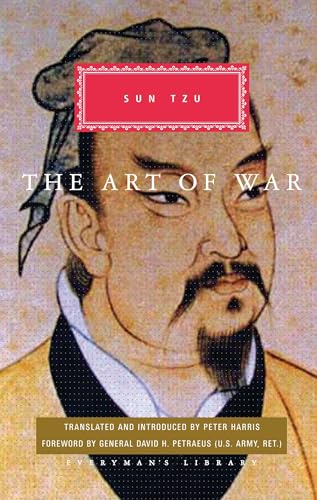
7. Peter Harris (Everyman’s Library)
Harris’s 2018 translation is modern and readable, and the Everyman’s Library hardcover is a handsome, well-made book. It is the one to buy as a gift or keep on the shelf for years.
Harris writes in clear, current English that is easy to follow without feeling simplified. The Everyman’s Library edition is a sturdy cloth hardcover with a ribbon marker and good paper, the kind of book that lasts for decades. His introduction sets the text in its historical setting and explains why it still matters today. It has fewer notes than the scholarly editions, so it is best read for the ideas rather than for detailed study. Skip it if you want the cheapest copy.
- Quality hardcover with ribbon marker
- Clear, up-to-date English
- Helpful introduction
- Fewer notes than scholarly editions
- Costs more than paperbacks
Our verdict: The best-looking edition and a smart gift for students, managers or anyone who loves classics.
8. Lionel Giles (1910)
Giles’s 1910 translation is still the most widely read in English, and many later versions rely on it. It is out of copyright, so it is free online and very cheap in print. The English is older, but the meaning is solid.
Giles was a British scholar at the British Museum, and his 1910 translation was the standard English version for more than fifty years. Many later translators started from his work, and most of the famous quotes people share come from it. The original edition included long notes, some of them sharply criticising the earlier translation by Captain Calthrop. Modern printings like Barnes and Noble Classics add a fresh introduction. Skip it if older English slows you down, as the wording can feel formal today.
- Free or very cheap
- The standard version most people quote
- Barnes & Noble Classics edition adds an introduction
- Old-fashioned English
- Some notes argue with earlier translators
Our verdict: The classic, budget-friendly version. Perfect if you want the text everyone quotes.

How the translations differ: one example
Sun Tzu’s key idea is mixing two kinds of force: the expected move and the surprise move. Each translator puts it differently:
| Translator | Wording |
|---|---|
| Lionel Giles | direct and indirect |
| Ralph D. Sawyer | orthodox and unorthodox |
| Roger T. Ames | straightforward and surprise |
None of these is wrong. They show why it helps to choose a translator whose style matches how you like to read.
How to choose
Reading it for the first time?
Start with Cleary or Minford. Both are short, clear and easy to finish in a weekend.
Interested in strategy, business or leadership?
Griffith reads most like a strategy manual. Pair it with our pick of books on Machiavelli’s The Prince or Chanakya’s Arthashastra, India’s own classic on statecraft.
Studying history, China or the military?
Choose Sawyer for background, Ames for the oldest manuscripts, or Mair for the closest reading of the Chinese.
Buying a gift?
The Everyman’s Library hardcover by Peter Harris looks and feels the part.
FAQ
Which Art of War translation is the most accurate?
Sawyer, Ames and Mair are the most careful scholarly translations. Mair stays closest to the original wording, and Ames uses the oldest known manuscripts.
Which translation is easiest to read?
Thomas Cleary’s is usually the easiest. John Minford’s is also clear and is the most pleasant to read as literature.
Is the free Lionel Giles version good enough?
Yes, for a first look. It is the most widely read translation in English. Its English is old-fashioned, so a modern version may be easier to follow.
Is “The Art of Warfare” a different book?
No. It is Roger Ames’s title for the same work, based on the bamboo manuscripts found in 1972, with some extra chapters.
Is The Art of War useful outside the military?
Many readers apply it to business, sport and negotiation. Its main lessons, such as knowing yourself and your opponent and winning without fighting where possible, apply well beyond war. For more timeless wisdom, see our list of Marcus Aurelius books.