

Storytelling plays an essential role in early childhood cognitive development. It enhances imagination, boosts vocabulary, and strengthens critical thinking skills. As children engage with stories, they learn to connect emotionally with characters, which improves empathy and emotional intelligence. Additionally, storytelling aids memory retention through immersive experiences. By fostering creativity and problem-solving abilities, storytelling lays a solid foundation for lifelong learning. Discover how you can incorporate storytelling effectively for even greater benefits.
Key Takeaways
- Storytelling enhances imagination and creativity, essential for cognitive processes and lifelong learning in early childhood development.
- Engaging with narratives develops problem-solving skills through abstract thinking and emotional exploration.
- Exposure to varied stories increases vocabulary acquisition by up to 25%, improving language fluency and complexity.
- Storytelling fosters emotional intelligence and empathy by connecting children to characters’ feelings and experiences.
- Interactive storytelling practices promote critical thinking, listening skills, and communication abilities essential for cognitive growth.
How Storytelling Enhances Child Development

While many people may overlook the impact of storytelling, it plays an essential role in enhancing child development. Engaging with stories stimulates your child’s imagination and creativity, stretching their cognitive boundaries. By exposing them to fantastical elements, they’ll begin to think abstractly and develop problem-solving skills. When children listen to stories, they learn to predict outcomes and understand cause-and-effect relationships, which boosts critical thinking. Additionally, interactive storytelling allows them to ask questions and foster a love of learning. As they immerse themselves in narratives, children not only improve their memory, but they also develop emotional intelligence by connecting with characters and situations. Ultimately, storytelling lays the groundwork for healthier cognitive processes and lifelong learning. Furthermore, listening to stories expands children’s vocabulary, enhancing their language skills and comprehension.
How Stories Expand Vocabulary and Language Skills
When you share stories with your child, you’re not just entertaining them; you’re also helping them grow their vocabulary. Rich, narrative language provides context for new words, making it easier for them to understand and remember. Plus, age-appropriate stories guarantee the learning experience is engaging and effective, fostering a love for language. Additionally, storytelling naturally expands vocabulary and improves listening and comprehension skills by immersing children in meaningful contexts.
Vocabulary Acquisition Through Narratives
Stories serve as powerful tools for expanding vocabulary and enhancing language skills in young children. Research shows that storytelling techniques lead to a significant 25% increase in vocabulary through immersive and engaging narratives. Around 70–80% of preschoolers learn new words during these sessions, as stories provide meaningful contexts that help integrate vocabulary naturally. This fosters a deeper understanding and better retention compared to rote memorization. Not only do stories enhance vocabulary, but they also improve sentence complexity and fluency. Additionally, storytelling boosts motivation and encourages active participation, making language learning enjoyable. Children become more confident in their oral communication skills, which contributes to a positive attitude toward language exploration and development. Furthermore, storytelling fosters emotional and social awareness, which enhances children’s ability to connect with and use new vocabulary in diverse contexts. Engaging in storytelling can also serve as a cognitive shield against brain aging, promoting lifelong cognitive health and development. In addition, children who develop a love for reading can experience long-term educational benefits, further solidifying their language skills throughout their lives.
Rich Language Input Benefits
Building on the vocabulary gains achieved through storytelling, rich language input offers even deeper benefits in language acquisition. When you share stories, your child’s vocabulary can improve by up to 25%. Complex language in storytelling enhances comprehension by around 20%, providing words in context that strengthen their language foundation. You’ll notice they retain information better, with a 15-20% increase in memory recall. Engaging narratives not only boost expressive and receptive language skills but also stimulate phonological awareness and listening abilities. As they actively participate in retelling stories, their communication flourishes. Ultimately, incorporating rich storytelling into your routine creates lasting impacts, paving the way for improved literacy and academic success throughout their educational journey. The findings of a recent study show that maternal language complexity plays a crucial role in children’s language and literacy success. Additionally, the practice of reading aloud can further enhance these cognitive benefits by reinforcing memory and comprehension skills. Moreover, studies suggest that bibliotherapy can offer unique insights into language development and emotional well-being, fostering a nurturing environment for young readers.
Age-Appropriate Story Effects
Effective storytelling plays an essential role in expanding vocabulary and language skills in young children. When stories suit their developmental level, kids can grow their vocabulary by up to 25%. Introducing new words in context helps with understanding, while frequent exposure reinforces learning. Here are some key effects of age-appropriate stories:
- Contextualized narratives improve retention over rote learning.
- Regular storytelling sessions boost listening and summarization skills.
- Interactive read-alouds enhance sentence construction and oral comprehension.
- Tailored content keeps children engaged and interested.
- Retelling stories encourages the use of complex sentences and conversational skills. Additionally, storytelling engages children by introducing problem-resolution techniques, which further supports their cognitive development. Furthermore, building meaningful connections through shared reading experiences can enhance children’s emotional and social skills.
Why Storytelling Boosts Critical Thinking Skills
While engaging with narratives, young children naturally enhance their critical thinking skills. By employing questioning strategies aligned with Bloom’s taxonomy, teachers guide kids aged 5-6 to recall and analyze key information. Fundamentally, this creates a foundation for critical thinking. Low-order questions spark interest, while higher-order inquiries push children to evaluate stories and think independently. As they confront dilemmas and moral conflicts in narratives, kids learn to reflect on choices and consequences, honing their problem-solving abilities. In addition, through interactive storytelling and role-playing, cognitive flexibility flourishes. Ultimately, storytelling embodies a rich context that encourages children to explore different perspectives and develop analytical skills, all vital components of effective critical thinking. Additionally, stories foster empathy and emotional awareness, which enhances children’s understanding of characters’ decisions and consequences in narratives, as this engagement with diverse characters and narratives deepens their capacity to understand and share feelings, illustrating the profound influence of storytelling on empathy. Furthermore, regular reading habits can further enhance these critical thinking skills, as diverse stories challenge young minds to analyze various viewpoints and synthesize information effectively.
The Role of Imagination and Creativity in Learning
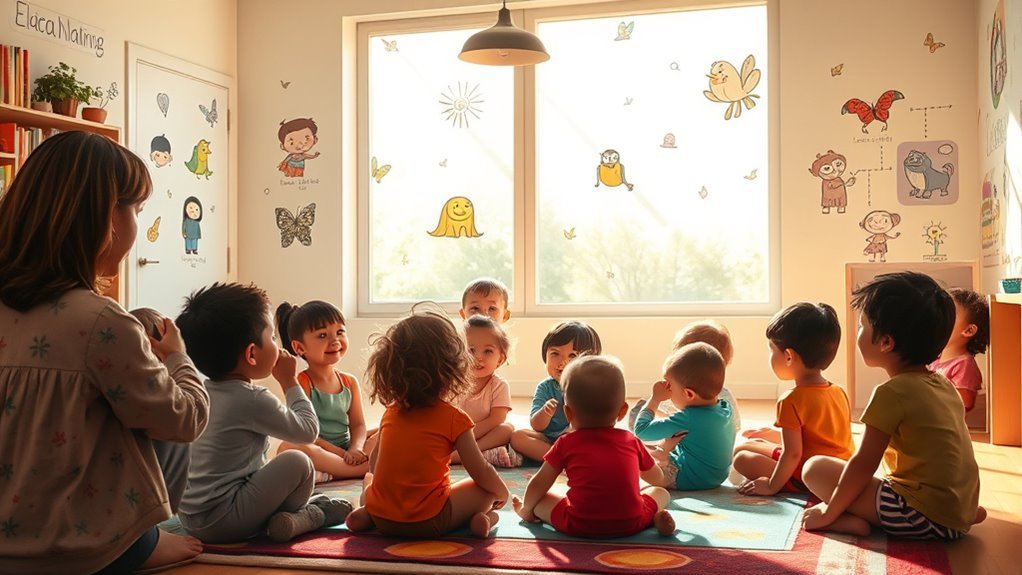
Imagination and creativity are at the heart of meaningful learning experiences for young children. When kids engage in imaginative play, they not only express themselves creatively but also strengthen their problem-solving skills and form emotional connections with others. This natural exploration encourages them to think outside the box, building a foundation for lifelong learning and collaboration. Additionally, by immersing themselves in diverse narratives, nurturing creativity from the preschool stage is essential for maximizing their cognitive development. Furthermore, exposing children to interdisciplinary knowledge can stimulate their curiosity and inspire innovative thinking, enhancing their overall learning journey.
Fueling Creative Expression
Creative expression thrives in early childhood, especially during the preschool years when kids’ imaginations reach their peak. This crucial stage fosters creativity, allowing children to explore their thoughts and ideas in innovative ways. Flexible preschool programs support this growth, catering to their interests and talents. Here are some ways you can fuel your child’s creative expression:
- Encourage art activities and imaginative play.
- Incorporate storytelling into daily routines.
- Participate in group plays to enhance collaboration and creativity.
- Offer opportunities for sensory and motor games.
- Use drama and role-playing to expand language and emotional skills. Additionally, high levels of creativity can lead to increased welfare and more opportunities for children during this formative stage. This creativity can be further stimulated by engaging in deep work practices, which allow children to concentrate and immerse themselves in imaginative activities.
Enhancing Problem-Solving Skills
When it comes to enhancing problem-solving skills in early childhood, fostering imagination and creativity plays an essential role in a child’s development. Engaging in creative play activates the prefrontal cortex, boosting cognitive flexibility and helping kids adapt to new challenges. As they explore multiple perspectives in imaginative scenarios, they learn to generate various solutions to problems. Furthermore, this kind of imaginative play is encouraged in child-centred educational settings, which promote holistic development.
Moreover, imaginative play strengthens their understanding of cause and effect, aiding in logical reasoning and decision-making skills. When children face obstacles, they practice evaluating options and effectively choosing the best course of action. Environments rich in novelty and hands-on experiences encourage this exploration, ultimately leading to greater creativity and adaptability in their problem-solving abilities.
Building Emotional Connections
While engaging in imaginative play, children often discover profound emotional connections that enhance their learning experiences. This process not only fosters creativity but also promotes essential emotional skills. Through role-playing and cooperative play, kids learn to navigate their emotions, build empathy, and develop self-awareness. Here’s how imaginative play aids emotional connection:
- Provides safe spaces to experiment with problem-solving.
- Encourages empathy by allowing children to experience different perspectives.
- Boosts emotional regulation, helping kids manage feelings effectively.
- Fosters positive social behaviors, enhancing communication skills.
- Cultivates resilience and adaptability for future challenges. Additionally, imagination boosts the ability to understand social norms, which further enriches children’s emotional connections and interactions with others.
How Storytelling Boosts Memory Retention

Storytelling greatly enhances memory retention by actively engaging various parts of the brain, making information more memorable. It stimulates the prefrontal cortex, maintaining attention and cognitive processing, which isn’t the case with standard picture-book reading. By activating auditory, visual, and emotional regions, storytelling creates stronger neural connections, allowing you to remember details more vividly. Research shows that facts integrated into stories are 20 times more likely to be retained, improving memory retention by up to 40% compared to traditional methods. Plus, storytelling’s structured narrative helps organize and store new information more effectively. Emotional engagement further solidifies these memories, ensuring you recall essential concepts long after the story concludes. Furthermore, storytelling’s ability to foster emotional engagement enhances motivation and leads to more meaningful learning experiences.
Why Storytelling Fires Up Our Brains
How does storytelling ignite our brains and engage us on multiple levels? When you listen to a story, your brain mirrors the storyteller’s, creating neural coupling that links both of your experiences. This synchronization activates various brain regions, allowing for emotional connections and anticipation of outcomes.
Here are some key points about storytelling’s impact:
- Oxytocin boosts empathy, deepening your emotional ties to the narrative.
- Dopamine enhances your enjoyment, making you crave storytelling.
- The Default Mode Network helps you simulate characters and situations.
- Motor and sensory areas engage, making stories feel real.
- Mental simulation allows you to practice emotional skills in a safe space. Effective communication strategies can enhance storytelling experiences.
These processes transform storytelling into a powerful cognitive tool for growth.
Long-Term Benefits of Storytelling Skills
When you engage with storytelling, you’re not just entertaining your child; you’re laying the groundwork for early literacy and emotional intelligence growth. These skills blossom as your child learns to express themselves creatively and connect with others. It’s amazing how a simple story can enrich their future communication and understanding of the world around them. Furthermore, storytelling enhances cognitive skills by encouraging your child to organize life events and fosters critical thinking as they analyze the narratives.
Early Literacy Development
While many parents may not realize it, engaging in storytelling can greatly enhance a child’s early literacy development. By sharing stories, you’re not just having fun; you’re helping lay a solid foundation for future reading and writing skills. Here are some key benefits you can expect:
- Using complex language during storytelling boosts vocabulary and comprehension.
- Listening to stories improves your child’s recall and reading skills.
- Storytelling teaches narrative structure, enhancing writing abilities.
- Regular storytelling cultivates critical thinking and sequencing skills.
- The practice of storytelling supports sustained academic success. Furthermore, research has shown that storytelling can enhance children’s information behavior, reinforcing the importance of this practice in early literacy development.
Incorporating storytelling into your daily routine will considerably contribute to your child’s literacy trajectory, setting them up for success well into their school years.
Emotional Intelligence Growth
Storytelling isn’t just a fun activity; it plays an essential role in developing a child’s emotional intelligence. Through narratives, you provide emotional experiences that help shape your child’s empathy. When they engage with characters’ feelings, it promotes a deeper understanding of human behavior, enhancing their emotional insight. By participating in storytelling, children reflect on their own emotions and learn to manage them better. Puppet storytelling can further boost their self-awareness and self-management skills. Group storytelling, particularly in collaborative settings, fosters social connections and builds trust among peers, improving their communication and problem-solving abilities. Overall, these storytelling practices lay a strong foundation for long-lasting emotional intelligence that will benefit them throughout their lives. Furthermore, recent studies show that digital storytelling significantly enhances students’ social-emotional skills, indicating a modern approach to harnessing storytelling’s benefits.
Enhanced Creative Skills
As children immerse themselves in storytelling, they unfasten a treasure trove of enhanced creative skills that extend far beyond the initial experience. This creative growth isn’t just an ephemeral phase; it lays the groundwork for lifelong benefits. Engaging with stories nurtures their imagination and problem-solving abilities, enabling them to express thoughts in innovative ways.
Here are some key long-term benefits of storytelling for creativity:
- Develops narrative construction skills for better reading and writing.
- Strengthens memory retention, making recall easier and more vivid.
- Encourages imaginative expression through dramatic play.
- Fosters critical thinking and cooperation in problem-solving scenarios.
- Enhances the ability to connect diverse ideas, driving creativity forward through collaboration.
Age-Appropriate Stories: What Works Best?
Choosing age-appropriate stories can greatly influence a child’s cognitive development and interest in reading. For infants, rhythmic storytelling and vibrant pictures create neural connections. Toddlers benefit from concise stories that hold their attention, while preschoolers engage with picture books that foster vocabulary and empathy. As children enter early school age, illustrated narratives enhance learning and cognitive skills. Research indicates that storytelling enhances children’s imagination, vocabulary, and communication skills.
Here’s a quick overview of age-appropriate stories:
| Age Group | Key Features | Benefits |
|---|---|---|
| Infants (0-2) | Rhythmic cadence, colorful pictures | Builds neural connections, enhances vocab |
| Toddlers (2-3) | Concise, illustrated stories | Boosts comprehension, maintains attention |
| Preschoolers (3-5) | Diverse picture books | Promotes empathy, strengthens creativity |
| Early School (5-7) | Interactive narratives | Enhances learning, fosters theory-of-mind |
Practical Storytelling Techniques for Daily Learning
When integrating storytelling into daily learning, it is essential to use techniques that capture children’s attention and enhance their understanding. Here are some effective methods to incorporate into your routine:
- Use traditional storybooks for high comprehension and engagement.
- Leverage digital and audio-visual tools, like teacher-designed e-storybooks, to boost focus and fluency.
- Engage in interactive formats, such as dialogic reading and dramatization, to encourage participation.
- Implement narrative retelling practices to enhance language skills and memory. Effective storytelling techniques are crucial for maximizing the impact of these methods.
- Utilize Learning Stories for documenting progress and sharing children’s interests with families.
Encouraging Emotional Intelligence Through Storytelling
Storytelling plays an essential role in nurturing emotional intelligence in young children since it provides them with a safe space to explore and understand complex feelings. Through stories, kids encounter various emotions like joy, fear, and sadness, learning to identify and name these feelings. When you encourage discussions about characters’ emotions, it validates their own emotional experiences and fosters empathy. Interactive storytelling invites children to share thoughts, enhancing both self-awareness and comprehension of others. By mirroring real-life interactions, narratives help kids grasp social dynamics and expected behaviors. Resilience-themed tales teach coping strategies, allowing kids to manage emotions better. Ultimately, storytelling strengthens emotional regulation while building the foundation for healthy social relationships. Furthermore, engaging with diverse characters in stories enhances empathy and understanding, enabling children to relate to others’ feelings and perspectives.