
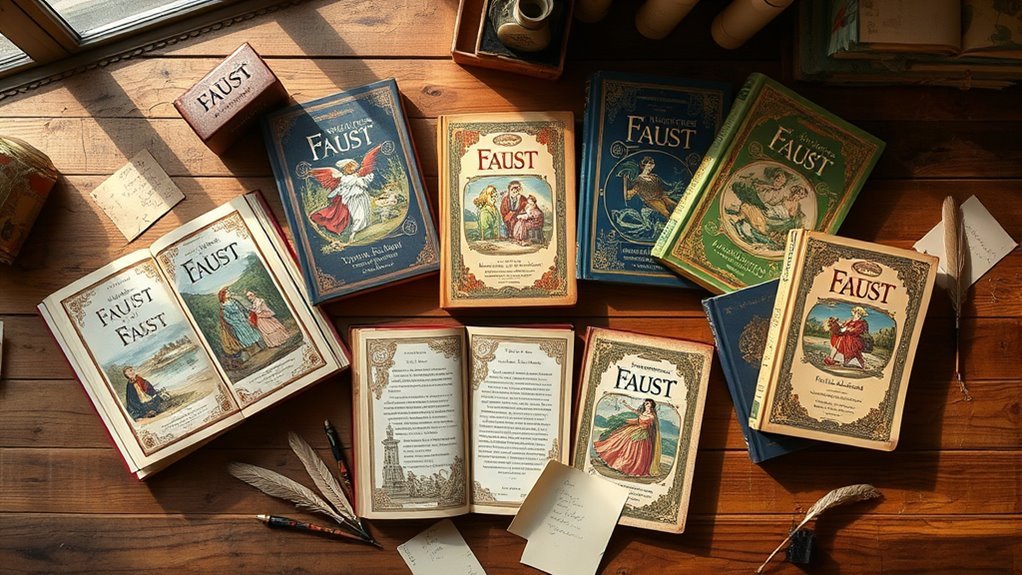
If you’re looking for enchanting reads, you’ve got to check out Goethe’s “Faust” and its various editions. Start with “Faust: A Tragedy, Parts One and Two,” which is fully revised for clarity. “Faust (Oxford World’s Classics)” is another great choice for its scholarly insights. Each version offers unique translations that enhance the themes of ambition and morality. Stick around to discover even more selections that bring this timeless tale to life.
Faust: A Tragedy, Parts One and Two, Fully Revised

In Martin Greenberg’s “Faust: A Tragedy, Parts One and Two, Fully Revised,” readers are invited into a world where desire, ambition, and the quest for knowledge converge in a gripping narrative. Goethe’s iconic tale follows the brilliant but disillusioned scholar Faust as he makes a fateful pact with the devil in search of ultimate fulfillment. This translation breathes new life into Goethe’s profound exploration of the human condition, encapsulating enduring themes of ambition, morality, and existential longing.
Key themes include:
- The search for meaning in life
- The nature of good and evil
- The duality of human experience—tragedy and comedy intertwined
Greenberg’s writing style strikes a remarkable balance between accessibility and poetic authenticity, allowing readers to engage with the rich layers of meaning while enjoying the lyrical beauty of the text. His adept recreation of various meters and rhymes ensures that the emotional depth and complexity of Goethe’s work resonate throughout. As Faust reflects, “Two souls, alas, are housed within my breast,” the reader is drawn into the internal struggle that defines human existence, a sentiment that is both timeless and relatable.
This revised edition is an invitation to immerse yourself in one of literature’s foundational works. Greenberg’s translation not only honors Goethe’s legacy but also makes it approachable and engaging for both new readers and seasoned literary enthusiasts. If you seek an exploration of timeless themes wrapped in captivating prose, this volume of “Faust” is an essential addition to your collection.
Goethe’s Faust

Goethe’s “Faust” is a captivating exploration of the profound duality of human nature, weaving a tale of ambition, desire, and the eternal struggle between good and evil. Dive into the journey of Faust as he grapples with his insatiable thirst for knowledge and the enticing yet perilous deal he makes with Mephistopheles. This masterpiece not only challenges readers to ponder the complexity of morality, but also immerses them in rich philosophical reflections.
Key themes in “Faust” include:
- The conflict between aspiration and consequence
- The quest for self-knowledge and fulfillment
- The nature of good, evil, and redemption
Goethe’s writing style is both lyrical and powerful, showcasing his mastery of the poetic form that resonates deeply even today. With Walter Kaufmann’s translation, readers will find themselves entranced by the rhythmic beauty and intricate details of the narrative. One of the most memorable lines reminds us, “Two souls, alas, are housed within my breast,” encapsulating Faust’s internal turmoil.
Ultimately, “Faust” is not just a story; it is an invitation to reflect on our own desires and the moral choices we face. This essential work of world literature is a must-read for anyone interested in the complexities of the human experience. Experience Goethe’s literary genius firsthand and discover the rich layers of meaning in this iconic tale—you won’t be disappointed.
Faust I & II, Volume 2: Goethe’s Works

“Faust I & II, Volume 2: Goethe’s Works” delves into the complex tapestry of ambition, morality, and the intricacies of the human experience through the life of a man who forms a pact with the Devil. Goethe’s masterpiece serves as a reflective cautionary tale, inviting readers to ponder the price of relentless aspiration.
Key themes include:
- The duality of ambition: How the desire for power can lead to both enlightenment and despair.
- Morality versus desire: The struggle between ethical choices and personal gratification.
- The quest for knowledge: A thought-provoking exploration of what it means to truly understand oneself and the world.
Stuart Atkins’s translation artfully captures Goethe’s poetic nuances in a modern, accessible English, allowing readers to engage with the rhythmic and philosophical complexity of the text. Coupled with David Wellbery’s enlightening introduction, this edition not only enriches your comprehension but breathes life into Goethe’s iconic characters and their journeys. One unforgettable moment occurs when Faust muses about the nature of existence, prompting readers to challenge their own perceptions: “Two souls, alas, are housed within my breast, and each will wrestle for the mastery there.”
Faust – A Tragedy in Two Parts
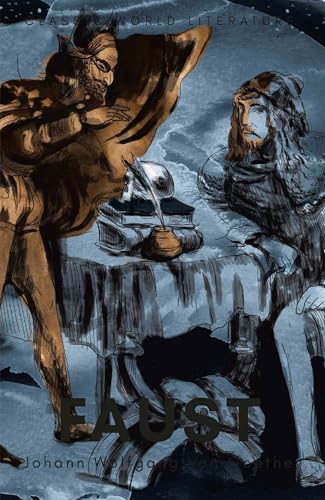
Goethe’s “Faust – A Tragedy in Two Parts” is a profound exploration of ambition, desire, and the quest for meaning that delves into the human experience unlike any other. The narrative follows Faust, a scholar who makes a fateful pact for knowledge and power, leading him into a whirlwind of tragic love with Gretchen and ethereal encounters with figures like Helen of Troy. This duality of personal and epic struggle serves as a canvas for the eternal conflict against nihilism and the search for purpose in a complex world.
Key themes abound in this classic:
- The pursuit of knowledge and the moral consequences of ambition.
- The duality of love and sacrifice illuminated through Faust’s relationship with Gretchen.
- A critique of modern civilization’s struggles and depths.
Goethe’s writing is marked by its lyrical brilliance and philosophical depth, making it not just a story, but an intellectual journey. His poetic structure captures emotions and ideas that resonate through time, and memorable lines such as “All that is transitory is but a metaphor” encapsulate the essence of the human condition, inviting readers to reflect on the transient nature of our pursuits.
Faust (Oxford World’s Classics)

“Faust” is a stunning exploration of ambition, desire, and the eternal struggle between good and evil, as captured through the tragic journey of its protagonist, Heinrich Faust. In a quest for ultimate knowledge and pleasure, Faust makes a fateful pact with the devil, leading to profound consequences that echo through time and across the human experience.
At the heart of Goethe’s masterpiece are themes that resonate deeply with readers:
- The quest for knowledge and the limits of human understanding.
- The duality of human nature and moral conflict.
- The pursuit of happiness and its often elusive nature.
The writing style in “Faust” is remarkable, combining lyrical beauty with striking philosophical depth. David Luke’s new translation of Part Two revitalizes this classic, making it both engaging and poignant. Goethe’s intricate verse-forms and compelling dialogue provide a mesmerizing reading experience, keeping you captivated with every turn of the page.
One of the most memorable lines, “Two souls, alas, are housed within my breast,” encapsulates the profound conflict that lies at the core of Faust’s character. This reflects the universal struggle between our aspirations and moral integrity, a theme that remains relevant today.
Ultimately, “Faust (Oxford World’s Classics)” is an essential read for anyone interested in the complexities of the human experience and the quest for meaning. With its rich annotations and scholarly insights, this edition offers not just a story, but a chance to delve deeper into the timeless questions that Goethe boldly addresses. Whether you are a long-time admirer or new to this iconic work, you’ll find that “Faust” invites you to reflect on your own desires and motivations, making it a worthwhile addition to any literary collection.
Faust: Parts I & II

*Faust: Parts I & II* is a timeless exploration of the depths of human ambition and the moral quandaries that accompany it. Johann Wolfgang von Goethe crafts an intricate tale centered on Faust, a scholar who, disillusioned with the limitations of earthly knowledge, makes a perilous pact with Mephistopheles. As he embarks on a journey of desire, ambition, and ultimate redemption, readers are drawn into a world where passion collides with consequence, particularly in the tragic seduction of Gretchen.
The play delves into profound themes, including:
- The complexities of human desire and its repercussions.
- The ongoing struggle with ethical dilemmas.
- The quest for spiritual redemption in a morally ambiguous world.
Goethe’s writing is both poetic and philosophical, inviting readers to engage deeply with his characters’ inner conflicts. The distinctive structure of the narrative, especially in Part II, diverges from traditional storytelling, offering a tapestry of classical themes interwoven with esoteric discussions. As you immerse yourself in the text, you’ll encounter memorable lines that echo the soul’s yearning, such as Faust’s poignant reflection, “The moment you say, ‘I want,’ you are no longer free.”
Faust: Parts One and Two (Dover Thrift Editions: Plays)
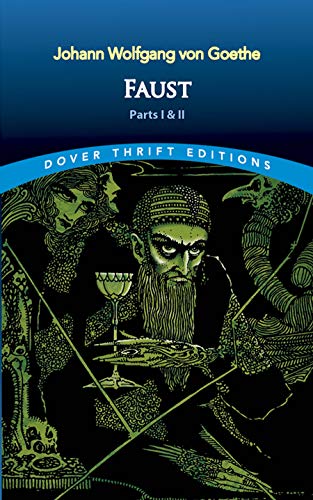
“Faust: Parts One and Two” by Johann Wolfgang von Goethe is a monumental exploration of ambition, desire, and the human condition. This timeless tale follows the scholar Faust, who makes a fateful pact with the devil, Mephistopheles, sacrificing his soul in pursuit of ultimate knowledge and experience. Through a whirlwind of romance with the innocent Gretchen in Part One and a progression into the grander themes of politics, art, and spirituality in Part Two, Goethe masterfully captures the complexity of human existence.
Key Themes:
- The Quest for Knowledge: Faust’s insatiable hunger for understanding drives the narrative.
- Desire vs. Morality: The tension between personal fulfillment and ethical boundaries is a central conflict.
- The Nature of Redemption: Explores possibilities of salvation and the consequences of one’s choices.
Goethe’s writing style is both lyrical and profound, making philosophical ideas accessible to readers. The translation by Bayard Taylor shines, offering fluidity that enhances the text’s emotional resonance. As Goethe writes, “Knowing is not enough; we must apply. Wishing is not enough; we must do.” This sentiment encapsulates Faust’s struggle and the broader human experience the play reflects.
Reading “Faust: Parts One and Two” is more than just engaging with a classic; it’s an invitation to reflect on our own desires and the moral implications of our choices. For anyone interested in the intricacies of life, love, and the relentless pursuit of ambition, this literary masterpiece is absolutely worth exploring. Dive into Goethe’s world and uncover the layers of meaning that have fascinated readers for centuries.
Factors to Consider When Choosing Faust Books
When choosing a Faust book, you should consider the quality of the translation, as it can greatly affect your understanding and enjoyment. Don’t overlook the literary significance and thematic depth of the edition you pick; these elements offer valuable insights. Also, think about the edition’s features and how accessible and readable it is for you.
Translation Quality Importance
Choosing the right translation of Goethe’s “Faust” can greatly shape your understanding and enjoyment of this literary masterpiece. The translation’s quality plays a vital role in capturing the intricate poetic beauty and complexity of Goethe’s language, ensuring you don’t miss the thematic depth. A faithful translation maintains varied meter and rhyme, reflecting the work’s irony, humor, and tragedy. You might also appreciate contemporary translations that use modern idioms, making the text more accessible and relatable. Look for translators who replicate the original’s verse forms; this can enhance your engagement with the musicality intended by Goethe. Additionally, high-quality editions often include insightful notes and introductions, guiding you through the philosophical and literary significance of the text.
Literary Significance Considerations
As you explore the literary significance of Goethe’s *Faust*, consider how its exploration of profound themes shapes your understanding of the text. Recognized as a singular work of German literature, *Faust* investigates the complexities of good and evil, making it a cornerstone of world literature. This dramatic structure, rich in philosophical content, has influenced countless writers and thinkers. The struggle between enlightenment and nihilism resonates broadly with human experiences, enhancing its relevance. In addition, Goethe’s blend of satire, irony, and tragedy reflects the multifaceted nature of life. By integrating various cultural and historical influences, *Faust* serves as a sharp commentary on modern European civilization, inviting readers from different contexts to engage with its enduring significance.
Thematic Depth Evaluation
Exploring the thematic depth of *Faust* can greatly enhance your understanding and appreciation of the text. Focus on the struggle between good and evil, which resonates deeply in Faust’s tragic love affair with Gretchen. This personal redemption reflects the consequences of choices, while the second part broadens to include societal and philosophical themes. Look for rich symbolism, particularly in Faust’s pact with Mephistopheles, representing humanity’s desire for power and knowledge beyond moral boundaries. Notice how Goethe’s narrative serves as a moral commentary on ambition’s hazards and modernity’s existential conflicts. The evolution of themes from romantic ideals in Part One to a more expansive worldview in Part Two mirrors Goethe’s artistic growth and cultural influences, enriching your reading experience.
Edition Features Comparison
Understanding the thematic richness of *Faust* sets the stage for selecting the right edition that best suits your reading needs. Consider if you prefer editions with facing-page translations, which allow you to engage with both the original German text and its English interpretation. Different translations offer varying levels of fidelity to Goethe’s poetic language, so think about how much you value that authenticity. Look for editions that include introductions, notes, or scholarly commentary, providing helpful context about the themes and characters. Some versions might also feature drafts or excerpts from Goethe’s other works, deepening your understanding. Finally, decide whether a thorough volume containing both parts is ideal for you, or if you prefer focused selections.
Accessibility and Readability
How accessible is the translation of *Faust* you’re considering? Look for translations that preserve the poetic meter and rhyme; this enhances the flow for modern readers. Editions featuring facing pages of the original German text alongside the English translation can help you grasp the nuances of the language better. Evaluate the readability—some translations are lively and engaging, while others may use archaic language that feels cumbersome. Detailed notes and introductions can clarify context and make the text more approachable, especially for newcomers. Finally, consider the arrangement of content; shorter selections can be easier to digest than lengthy, complex versions. Ultimately, choosing the right translation makes all the difference in enjoying Goethe’s masterpiece.
Cultural Context Relevance
When considering which *Faust* book to explore, it’s essential to grasp the cultural context that shapes Goethe’s masterpiece. The work reflects significant historical influences, merging elements from European literature, philosophy, and theater. Understanding this backdrop enriches your appreciation of its depth. The pact between Faust and Mephistopheles represents not just individual ambition but broader societal tensions around knowledge and progress, relevant in various cultural conversations. Characters like Faust and Gretchen showcase moral dilemmas intrinsic to their contexts, illuminating the human condition across eras. By delving into the interplay of mythology, religion, and philosophy in *Faust*, you’ll gain insight into Goethe’s critique of Enlightenment ideals and Romanticism, engaging with pivotal themes of good versus evil and the quest for meaning.