

In 2025, you should check out essential books like “Capital (Das Kapital)” in the Fingerprint Classics edition, “Capital: A Critique of Political Economy” in Penguin Classics, and the illustrated version of “Das Kapital” for visual engagement. Don’t miss “Marx’s Das Kapital For Beginners” for accessible insights and “The Communist Manifesto and Das Kapital” for a combined perspective. These selections will deepen your understanding of economic theory and worker exploitation, helping you explore capitalism’s complexities further.
Capital (Das Capital): Includes Vol.1,2,3 (Fingerprint Classics)

“Capital (Das Kapital): Includes Vol.1,2,3 (Fingerprint Classics)” by Karl Marx is a profound exploration of the capitalist system, dissecting its components and highlighting the often-overlooked relationships between labor and capital. This monumental work invites readers on a journey through the mechanics of economic dynamics and the realities of worker exploitation, challenging conventional understandings of value and societal structure.
Main themes include:
- The Labor Theory of Value: Understanding how labor impacts the creation of value and wealth.
- Worker Exploitation: A critical examination of the capitalist’s relationship with labor and the struggles workers face.
- Commodity Fetishism: Delving into how commodities can obscure the social relationships behind their production.
Marx’s writing style is dense yet impactful, demanding engagement from readers while rewarding them with transformative insights. His meticulous analysis often resonates with clarity, as shown in powerful quotes like, “The accumulation of wealth at one pole is, therefore, at least in part, the accumulation of misery, agony of toil, slavery, ignorance, brutality, mental degradation, at the opposite pole.”
This book is not just a treatise on economics; it is a call to understand our world through a more critical lens. If you seek to unravel the complexities of capitalism and its far-reaching social implications, “Capital” is an essential read that promises to reshape your perspective on economic and societal realities like never before. Don’t miss the chance to engage with one of history’s most influential critiques of capitalism—it’s a journey worth taking.
Capital : A Critique of Political Economy (Penguin Classics) (Volume 2)

“Capital: A Critique of Political Economy (Volume 2)” is a must-read for anyone eager to decode the complexities of capitalism. Delving deep into market dynamics, Karl Marx meticulously explores the interplay between buyers and sellers, revealing the foundational principles that govern economic interactions. This volume, while more concise and approachable than its predecessor, invites readers to confront the underlying limitations of capitalist systems.
Key themes include:
- Market Interactions: A scientific examination of how economic actors engage within the marketplace.
- Marxist Principles: An insightful dive into one of the most influential critiques of capitalism, ideal for those intrigued by economic theory.
- Critical Reflection: Encourages contemplation of current economic realities and inspires thought on alternative systems.
The writing style is rigorous yet accessible, blending complex ideas with clear explanations that make them more digestible for both newcomers and seasoned readers. As Marx notes, “The realm of freedom does not commence until the point is passed where labor under the compulsion of necessity and of external will is required.” This thought-provoking perspective adds depth to the overarching discussion.
Ultimately, “Capital: Volume 2” is not just an academic text; it’s a powerful tool for understanding socio-economic structures that shape our world. Its blend of rigorous analysis and engaging discourse makes it an invaluable addition to the library of anyone seeking to grasp the intricacies of capitalism. Don’t miss the chance to enrich your perspective and consider how these ideas resonate in today’s landscape.
Capital (Das Capital): Includes Vol.1,2,3 (Fingerprint Classics)
“Das Kapital,” penned by Karl Marx, serves as a foundational text in understanding the intricate mechanics of capitalism. This monumental work, divided into three volumes, presents a critical examination of capitalist society, emphasizing the exploitation of labor and the distribution of wealth. As you delve into Marx’s exploration of the labor theory of value—where he asserts that the value of a commodity is determined by the labor invested in it—you’ll begin to question many modern economic assumptions.
Key themes include:
- Exploitation of Labor: Marx’s analysis of how workers are compensated versus the value they create.
- Wealth Dynamics: Insights into the accumulation and concentration of capital within a capitalist system.
- Societal Impacts: A critical look at how capitalism shapes social relations and structures.
The writing style, though dense, is thought-provoking and richly detailed, inviting readers to engage deeply with the text. Marx’s use of language, while challenging, is often poetic; for instance, he asserts that “the capitalist system…is a society of production based on the exploitation of labor,” encapsulating his critique with clarity.
“Das Kapital” is not just a work of economic theory; it is a transformative journey through the very principles that govern our societies today. This classic is essential for anyone aiming to grasp the profound implications of capitalism, making it a must-read for students, scholars, and curious minds alike. Prepare to be challenged, enlightened, and possibly transformed by Marx’s incisive insights.
Capital: A Critique of Political Economy
“Capital: A Critique of Political Economy” is a groundbreaking exploration of capitalism penned by Karl Marx, inviting readers to uncover the deep-rooted mechanisms of economic systems that shape our society. At its core, this seminal work dissects the nature of commodities, class struggle, and how traditional economic frameworks often bolster the interests of the elite while marginalizing the working class. Even today, its insights resonate powerfully in discussions about modern capitalism.
Key themes include:
- The Nature of Commodities: Analyzing how value is assigned and the implications for production and consumption.
- Class Struggle: Examining the ongoing conflict between different societal classes and its impact on worker exploitation.
- The Role of Capital: Critiquing how capital accumulation influences social relations and power dynamics.
Marx’s writing is both dense and lyrical, weaving complex ideas with a passionate critique of societal norms. The structure may challenge readers, yet it offers profound moments that spark critical thought. One of Marx’s memorable assertions is, “The production of too many useful things results in too many useless people,” a poignant reflection on the consequences of capitalist production.
In essence, “Capital” remains a vital read for anyone eager to grasp the intricacies of political economy and social development. Its themes transcend time, prompting reflection on contemporary economic practices and their ramifications. For students, scholars, and curious minds alike, this book is not just a historical artifact; it’s a lens through which we can analyze our present and envision a more equitable future. Don’t miss the opportunity to dive into this essential text that challenges and inspires critical discourse on capitalism.
Das Kapital (Illustrated)

“Das Kapital (Illustrated)” offers a fascinating gateway into Karl Marx’s thoughtful critique of capitalism, making it a must-read for anyone intrigued by economic theories and their historical implications. This edition uniquely combines visual elements with Marx’s dense concepts, inviting readers to explore the ideals surrounding labor, value, and economic systems. While navigating the complexities of Marxism, it is imperative to approach the text with an awareness of its typographical errors due to an OCR scan, which may detract from the overall clarity.
Key themes that permeate the book include:
- The critique of capitalist exploitation and how labor shapes value.
- An exploration of economic interactions that challenge the notion of individual agency.
- The significance of historical context in understanding Marx’s ideological perspectives.
The writing style is both analytical and engaging, offering an accessible entry point for those new to economic philosophy. The illustrations enhance understanding, though the book’s editorial imperfections occasionally blur its insights. A memorable quote that stands out is when Marx asserts, “The worker becomes all the poorer the more wealth he produces.” This powerful statement encapsulates his argument about the alienation of labor under capitalism.
The Communist Manifesto and Das Kapital (Chartwell Classics)
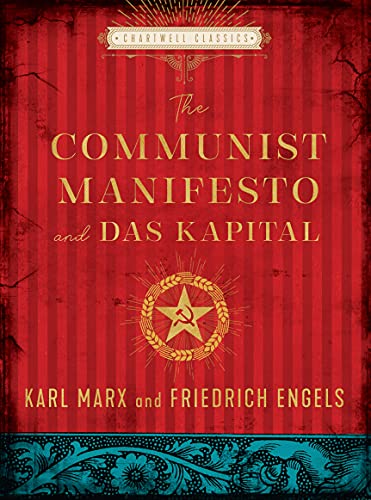
“The Communist Manifesto and Das Kapital (Chartwell Classics)” presents an intriguing opportunity for those eager to delve into the core of Marxist theory. This compact collection features two pivotal texts that have shaped political thought and social movements across the globe. However, readers should be aware that the edition includes a significantly abridged version of Das Kapital, omitting substantial portions of Volume I, which could limit a deeper understanding of Marx’s arguments.
Key themes explored in these texts include:
- The critique of capitalism and its inherent class struggles.
- The concept of historical materialism and the evolution of societies.
- The call for collective action and the vision of a classless society.
The writing style in both texts is direct and potent, reflecting the urgency of Marx’s ideas during his time, while still retaining relevance today. As Marx famously noted, “The history of all hitherto existing society is the history of class struggles,” a reminder of the ongoing relevance of these discussions.
Despite its shortcomings, “The Communist Manifesto and Das Kapital” remains a vital introductory resource for anyone interested in understanding the frameworks of political theory and socialist thought. For newcomers to the subject, it’s an accessible starting point that provokes reflection and discussion. Consider it a springboard into the expansive world of Marxist literature, urging readers to explore further, despite its limitations.
Marxs Das Kapital For Beginners
“Marx’s Das Kapital For Beginners” by Michael Wayne offers an accessible gateway into the intricate world of Marx’s economic theories, designed specifically for intelligent students aged 15 and older. In this engaging introduction, Wayne brilliantly unpacks essential concepts such as exchange, surplus value, and commodity fetishism across eight dynamic chapters. The book provokes thought on labor structures and their impact on our world today, making it a valuable resource for both learners and the intellectually curious.
Key themes explored in this book include:
- Surplus Value: Understanding the profits derived from labor.
- Commodity Fetishism: Analyzing how social relationships are obscured by the objects we buy.
- Implications of Labor Structures: Encouraging readers to think critically about modern economic systems.
Wayne’s writing style is both lively and engaging, making complex ideas feel approachable and thought-provoking. His use of relatable examples illuminates hard-hitting theories, and quotes like “Capital is a social relation of production” resonate deeply as they invite readers to ponder the essence of capitalism itself.
Factors to Consider When Choosing The Capital Books
When you’re picking books about the capital, consider what you want to learn. Think about the depth of content, the historical context, and the author’s perspective. It’s also important to check the clarity of the language and the quality of the edition.
Content Depth and Complexity
Considering the depth and complexity of Karl Marx’s “Capital” series is essential for anyone looking to explore his critique of capitalism. When you choose a volume, know that Volume 1 is dense and foundational, emphasizing the labor theory of value. It’s challenging but vital for understanding. Volume 2 is shorter and more straightforward, focusing on market dynamics and buyer-seller interactions, making it more accessible while still offering rich analysis. Each volume builds on the last, addressing different aspects of capitalism. Be prepared to engage with critical terms like surplus value and commodity fetishism; these require careful study for full appreciation. Supplementary materials can greatly enhance your comprehension of these complex concepts.
Historical Context Relevance
Understanding the historical context surrounding Karl Marx’s “Das Kapital” greatly enhances your reading experience. Written during the rise of industrial capitalism in the 19th century, it reflects the economic and social upheavals of that time. Recognizing the critique of exploitation and labor dynamics is essential since these issues of economic inequality are still relevant today. Marx’s analysis highlights the impact of capitalism on the working class, echoing struggles for workers’ rights that began in his era and continue to resonate now. Additionally, his observations on speculative capital, which have intensified since then, warrant your attention for modern economic analysis. Familiarity with the philosophical debates during Marx’s time shapes your understanding of his critique.
Author’s Perspective and Intent
To grasp the significance of “Das Kapital,” you need to contemplate Karl Marx’s perspective and intent behind the work. He aims to provide a scientific critique of capitalism, laying bare the exploitation inherent in the system, particularly regarding labor’s role in production. His analysis reveals how goods often obscure the labor that created them, a concept known as commodity fetishism. You’ll notice Marx emphasizes class struggle to expose systemic inequalities that benefit the bourgeoisie while disadvantaging the proletariat. Each volume meticulously showcases his methodical examination of capitalism’s nature and development, challenging prevailing economic narratives through his labor theory of value. By understanding these intentions, you can truly appreciate “Das Kapital’s” relevance to contemporary socio-economic discussions.
Language and Terminology Clarity
Marx’s “Das Kapital” is packed with intricate language and terminology that can be a hurdle for many readers. The dense prose often requires a solid grasp of economic theory to navigate concepts like “use-value,” “exchange-value,” and “commodity fetishism.” These terms can be obscure, making it essential for you to seek supplementary resources for clarity. Some adaptations of “Capital” aim to simplify these terms for accessibility but may strip away important nuances from the original text. Additionally, outdated terminology can render some ideas less relevant, highlighting the need for a contextual understanding of historical debates. Engaging with modern interpretations or guides can help demystify Marx’s language, translating his ideas into a more relatable context for today’s readers.
Edition Quality and Accuracy
When choosing an edition of “Das Kapital,” you should consider several factors that can greatly influence your reading experience. First, confirm the edition is thoroughly edited and free from typographical errors. Poor OCR scanning can hinder your comprehension. Look for editions that include annotations or supplementary information to help unpack complex concepts, especially if you’re new to Marxist theory. Verify the edition accurately represents the original text, as some abridged versions may omit significant arguments. Check for a clear index and references for easier navigation. Finally, consider editions with historical context or critical essays; they provide valuable insights into Marx’s influence and current interpretations, enriching your understanding of the text.
Supplementary Readings Recommendations
Finding the right supplementary readings can enhance your understanding of “Das Kapital” considerably. Start by exploring Richard Wolff’s “Contending Economic Theories” to clarify Marxist concepts and dispel misconceptions about communism and socialism. To grasp capitalism’s foundational principles, consider reading Adam Smith’s “The Wealth of Nations” before diving into Marx. David Harvey’s lectures and writings provide valuable insights, making complex ideas more accessible to today’s issues. If you’re new to economic theory, introductory texts like Michael Wayne’s “Marx’s Das Kapital For Beginners” can simplify key concepts such as surplus value and commodity fetishism. Delving into diverse interpretations of Marx enriches your understanding, enabling a more thorough grasp of capitalism’s economics and its societal implications.
Accessibility for Modern Readers
To fully appreciate “Das Kapital” and its relevance today, it’s essential to examine the accessibility of different editions available. While the original text can be complex and dense, simplified interpretations like “Marx’s Das Kapital For Beginners” offer clarity for modern readers. Be cautious, though; some editions contain typographical errors and outdated terms, which can hinder understanding. To enhance your experience, consider engaging with supplementary resources, such as lectures and guides. Also, reading foundational texts like Adam Smith’s “The Wealth of Nations” can provide significant context. Remember that abridged versions may omit important insights, so choose well-reviewed editions to fully grasp Marx’s critique of capitalism and its modern implications.
Thematic Focus and Coverage
Understanding the thematic focus of each volume in Marx’s “Das Kapital” is essential for selecting the right edition for your needs. Volume 1 dives into the nature of commodities and labor, highlighting key concepts like surplus value and commodity fetishism. On the other hand, Volume 2 focuses on capital circulation between buyers and sellers, offering a more straightforward perspective for some readers. As you evaluate these works, pay attention to Marx’s critiques, particularly his labor theory of value and class struggle. Consider the complexity and accessibility of each volume, as understanding Marx’s critique of political economy requires grappling with dense theories. Finally, look for supplementary materials that enhance your grasp of contemporary critiques and alternative economic systems.